check

check

check

check
check
check
check
check

check

check
In an era where precision and accuracy are paramount across industries, the evolution of sensing technology has taken a monumental leap forward. Among the vanguard of this revolution is the Range LiDAR Sensor, a sophisticated tool redefining the boundaries of measurement, mapping, and environmental interaction. This article delves into the core of this technology, exploring its mechanisms, diverse applications, and the transformative impact it holds for the future, with a particular focus on the capabilities encapsulated by the KJTDQ designation.
LiDAR, which stands for Light Detection and Ranging, operates on a principle similar to radar but uses laser light instead of radio waves. A LiDAR sensor emits rapid pulses of laser light towards a target and measures the time it takes for each pulse to bounce back. By calculating this time-of-flight and knowing the speed of light, the sensor can determine the distance to the object with exceptional accuracy. A "Range" LiDAR specifically emphasizes its capability to measure distances over a defined span, from very short to very long ranges, depending on its design and power. The integration of these sensors into compact, efficient units like the KJTDQ model marks a significant achievement in miniaturization and performance optimization.
The applications of Range LiDAR Sensors are vast and growing. In the automotive sector, they are the eyes of autonomous vehicles, creating high-resolution 3D maps of the surroundings in real-time to navigate complex environments safely. This allows cars to detect pedestrians, other vehicles, and obstacles with a reliability that cameras or radar alone cannot match. In robotics, from warehouse logistics drones to sophisticated manufacturing arms, these sensors provide the spatial awareness necessary for precise movement and object manipulation, preventing collisions and enhancing operational efficiency.
Beyond mobility, the technology is pivotal in topographic surveying and forestry. Archaeologists and geologists use terrestrial and airborne LiDAR to penetrate dense foliage and map hidden terrain features, uncovering ancient ruins or monitoring erosion. In the construction industry, Range LiDAR Sensors facilitate accurate site surveys, volume calculations, and progress monitoring, reducing errors and saving time. Furthermore, they are becoming integral to smart infrastructure, enabling systems to monitor structural health, manage traffic flow, and even guide agricultural machinery for precision farming, optimizing resource use like water and fertilizers.
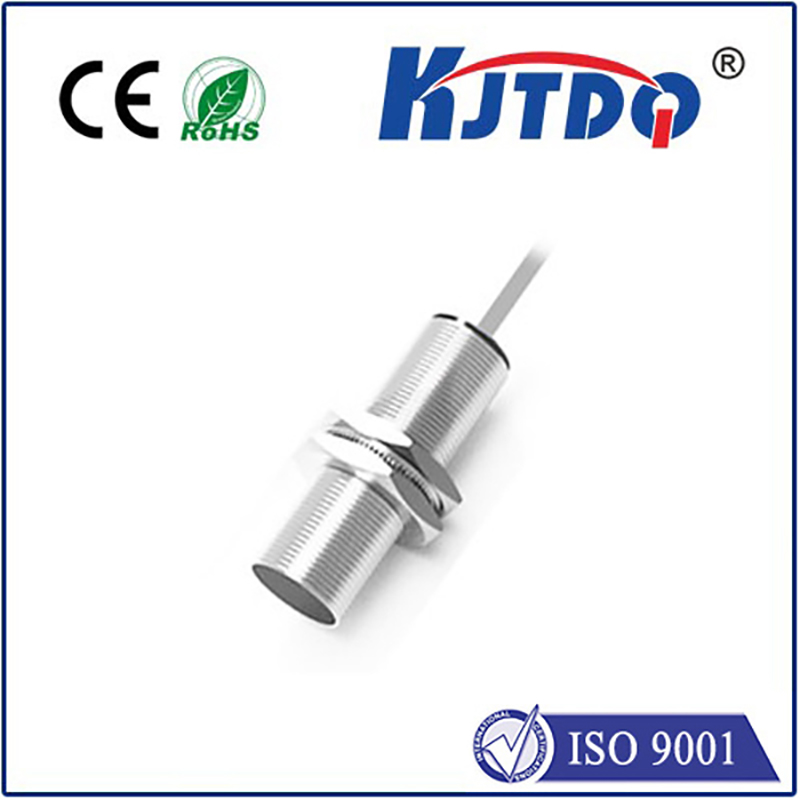
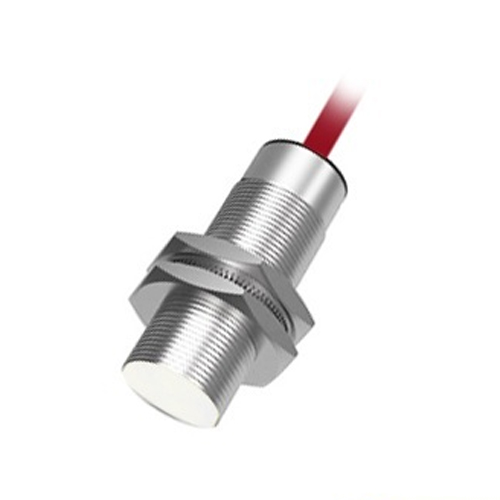
The KJTDQ Range LiDAR Sensor represents a specific iteration that likely embodies advancements in key performance metrics. These may include an extended operational range, higher measurement frequency for denser point clouds, improved accuracy under various lighting and weather conditions, and enhanced durability for industrial or outdoor use. Its design probably emphasizes low power consumption and seamless integration capabilities with other systems, such as GPS, IMUs (Inertial Measurement Units), and central processing units. This makes it not just a sensor, but a critical component within a larger ecosystem of data acquisition and analysis.
One of the most compelling advantages of modern Range LiDAR is its ability to generate precise three-dimensional data. This point cloud data can be used to create digital twins of physical environments, essential for simulation, planning, and virtual reality applications. As the technology continues to mature, costs are decreasing, making it accessible for broader commercial and even consumer applications. The future points towards solid-state LiDAR, which, unlike mechanical spinning units, has no moving parts, promising greater reliability, smaller form factors, and lower costs—a trend that models like KJTDQ are at the forefront of.
However, challenges remain, such as performance degradation in heavy fog, rain, or snow, and the ongoing need for robust data processing algorithms to interpret the vast amounts of information generated. Despite these hurdles, the trajectory is clear. The Range LiDAR Sensor, exemplified by innovations like the KJTDQ, is more than a measuring device; it is a foundational technology enabling a smarter, more automated, and data-driven world. Its continued evolution will undoubtedly unlock new possibilities, from enhancing personal safety devices to revolutionizing how we interact with and understand our physical environment on a granular level.