check

check

check
check
check
check
check
check

check

check
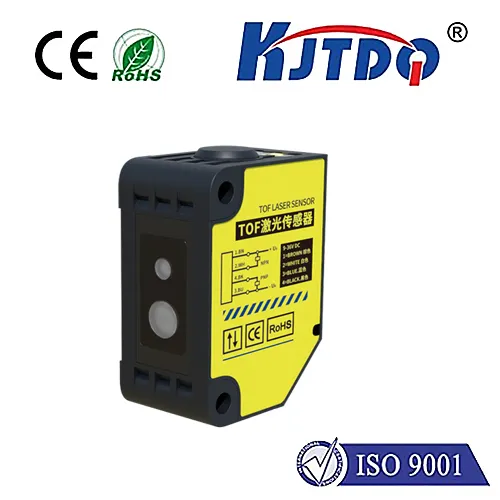
In the world of precision measurement, accuracy is not just a goal; it's a fundamental requirement. From construction sites and forestry management to advanced robotics and military applications, the ability to determine exact distances quickly and reliably is paramount. This is where the pulse laser rangefinder sensor, often abbreviated as KJTDQ in certain technical specifications, establishes itself as an indispensable tool. Unlike traditional measuring tapes or ultrasonic sensors, this technology harnesses the power of light to deliver unparalleled precision over both short and long ranges.
The core principle behind a pulse laser rangefinder sensor is elegantly straightforward yet technologically sophisticated. The device emits a short, intense pulse of laser light towards a target. A high-speed photodetector within the sensor then waits to capture the faint reflection of that light pulse as it bounces back. An internal processor, often a high-precision time-to-digital converter (TDC), measures the exact time interval between the emission and the detection of the return signal. Since the speed of light is a known constant (approximately 299,792,458 meters per second), calculating the distance to the target becomes a simple matter of time measurement. This method, known as time-of-flight (ToF), is the cornerstone of its operation.
What truly sets the modern pulse laser rangefinder apart are its defining characteristics. First and foremost is its exceptional accuracy, often reaching within a few millimeters or even less over considerable distances. This is coupled with a long measurement range; advanced models can accurately measure distances of several kilometers to non-cooperative targets. Furthermore, these sensors exhibit remarkable speed, capable of taking thousands of measurements per second, which is critical for dynamic applications like 3D scanning or tracking moving objects. Their performance is largely immune to ambient noise, temperature fluctuations, and the color or texture of the target object, unlike alternative technologies such as ultrasonic or infrared sensors, which can be easily influenced by environmental factors.
The practical applications of pulse laser rangefinder sensors are vast and continuously expanding. In the industrial sector, they are integral to automated guided vehicles (AGVs) for navigation and obstacle avoidance, ensuring safe and efficient movement within warehouses. They enable precise level monitoring in silos and tanks, and are crucial in robotics for arm positioning and object recognition. In the realm of surveying and construction, these devices are used in total stations and handheld rangefinders for mapping, volume calculation, and layout work. The automotive industry relies on them as a key component in LiDAR systems for advanced driver-assistance systems (ADAS) and autonomous vehicle perception, creating a detailed 3D map of the vehicle's surroundings. Beyond these, they find critical use in aerospace for altitude measurement, in sports for golf and hunting rangefinders, and in security systems for perimeter protection.
When selecting a pulse laser rangefinder sensor for a specific project, several key specifications demand careful consideration. The required measurement range and the desired accuracy are the primary starting points. The beam divergence, or how much the laser spot spreads over distance, affects the minimum target size that can be reliably measured. The measurement rate, or how many times per second the sensor can take a reading, is vital for high-speed applications. Environmental ratings for dust and water resistance (IP rating) are essential for outdoor or harsh industrial use. Finally, the physical size, weight, power consumption, and output interface (e.g., USB, RS232, CAN bus) must align with the integration requirements of the host system.
Looking ahead, the evolution of pulse laser rangefinder technology is geared towards even greater miniaturization, reduced power consumption, and lower cost. The integration of single-photon avalanche diode (SPAD) arrays is pushing the boundaries of sensitivity and enabling new applications in low-light conditions. Furthermore, the fusion of LiDAR data with other sensor inputs like cameras and radar through sophisticated sensor fusion algorithms is creating more robust and intelligent perception systems for autonomous machines. As these trends continue, the pulse laser rangefinder sensor will solidify its role as a fundamental enabler of precision across an ever-widening array of industries, driving innovation in automation, safety, and data collection.