check

check

check

check
check
check
check
check

check

check
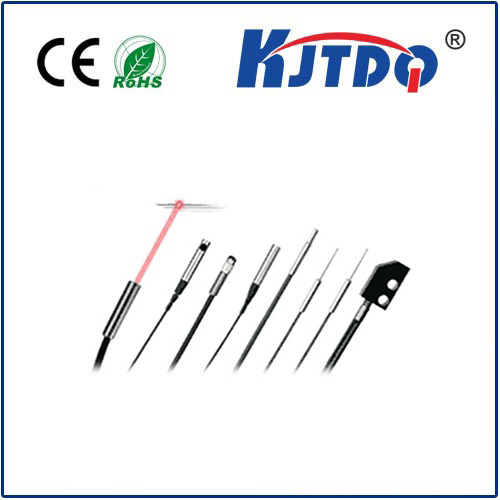
In the rapidly evolving landscape of industrial automation, precision measurement is a cornerstone of efficiency and quality control. Among the advanced tools enabling this precision, the Laser Shift Sensor stands out as a critical component for modern manufacturing and inspection systems. This technology utilizes laser-based triangulation to detect minute displacements or shifts in objects with exceptional accuracy, often down to the micrometer level. Unlike traditional contact sensors, laser shift sensors operate without physical touch, making them ideal for delicate materials or high-speed production lines where contact could cause damage or inefficiency.
The working principle of a Laser Shift Sensor involves emitting a focused laser beam onto a target surface. The reflected light is captured by a receiver, and through triangulation algorithms, the sensor calculates the exact position or shift of the target. This non-contact method ensures minimal interference and allows for real-time monitoring, which is essential in applications such as assembly line alignment, thickness measurement, and vibration analysis. Industries ranging from automotive to electronics rely on these sensors to maintain tight tolerances and reduce waste, thereby enhancing overall productivity.
One of the key advantages of Laser Shift Sensors is their adaptability to diverse environments. They can be integrated into robotic systems for automated guidance, used in quality assurance to detect defects, or employed in research labs for precise experimental setups. With features like high resolution, fast response times, and robustness against ambient light interference, these sensors offer reliable performance even in challenging conditions. For instance, in semiconductor manufacturing, where even nanoscale shifts can impact product functionality, laser shift sensors provide the necessary precision to ensure flawless production.
Moreover, the integration of Laser Shift Sensors with IoT and data analytics platforms is transforming industrial operations. By feeding real-time displacement data into centralized systems, companies can predict maintenance needs, optimize processes, and achieve higher levels of automation. This connectivity supports smarter decision-making and reduces downtime, contributing to leaner and more competitive manufacturing ecosystems. As industries continue to embrace Industry 4.0, the demand for such advanced sensing solutions is expected to grow, driving innovation in sensor design and application.
In summary, the Laser Shift Sensor represents a vital technology for achieving precision in modern industrial settings. Its non-contact nature, combined with high accuracy and versatility, makes it an indispensable tool for enhancing automation, quality control, and operational efficiency. As technology advances, these sensors are likely to become even more integral to the future of manufacturing and beyond.