check

check

check

check

check

check
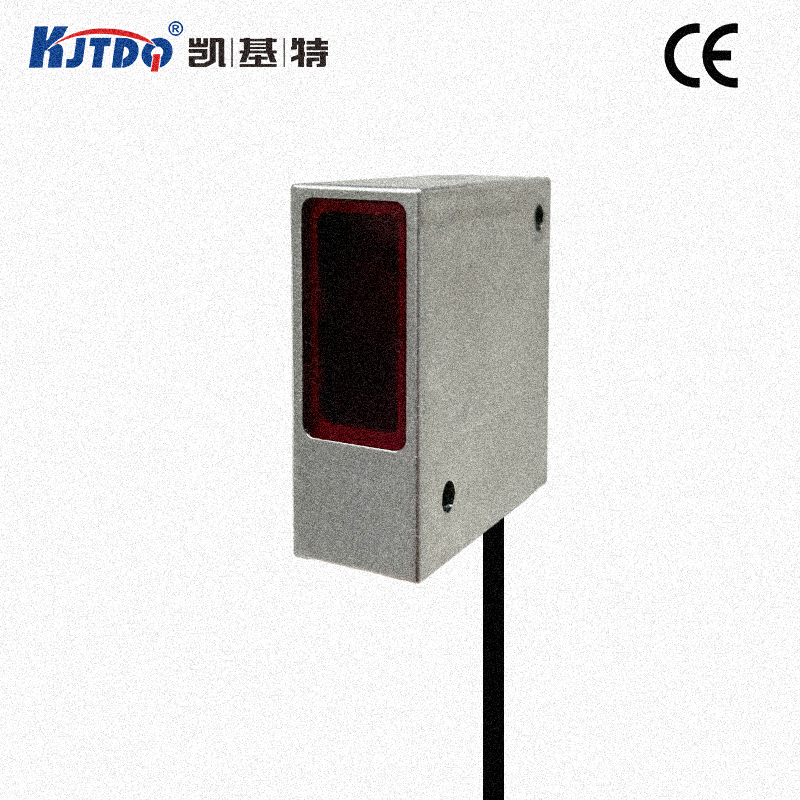
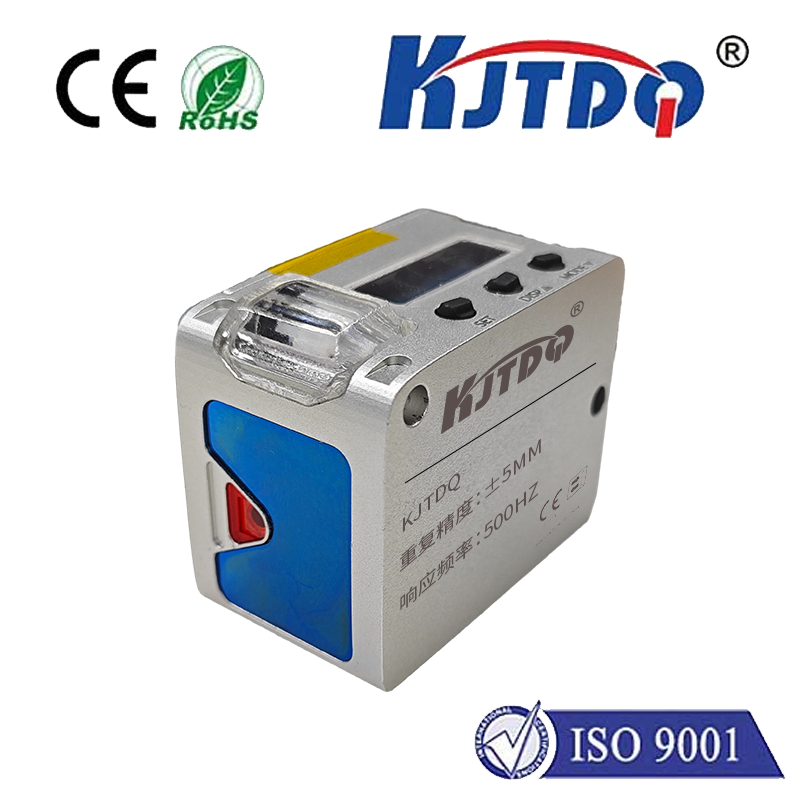
In the rapidly evolving landscape of automation and robotics, the ability to navigate complex environments safely and efficiently is paramount. At the heart of this capability lies a critical component: the laser obstacle avoidance sensor. This technology has become a cornerstone for applications ranging from autonomous mobile robots (AMRs) and drones to advanced driver-assistance systems (ADAS) and smart home appliances. Unlike simpler infrared or ultrasonic sensors, laser-based systems offer a unique combination of precision, range, and reliability, enabling machines to perceive their surroundings with unprecedented clarity.
The core principle of a laser obstacle avoidance sensor is Light Detection and Ranging (LiDAR). It operates by emitting rapid pulses of laser light and measuring the time it takes for each pulse to reflect off an object and return to the sensor. This time-of-flight (ToF) data is then processed to create a detailed, real-time map of distances to surrounding objects. Modern versions, often using invisible infrared lasers, can generate thousands of data points per second, forming a precise point cloud that defines the contours of the environment. This high-resolution spatial awareness is what allows a robot to distinguish between a thin chair leg and a solid wall, or a drone to navigate through a dense forest of tree branches.
The advantages of implementing a laser obstacle avoidance system are substantial. First and foremost is enhanced safety. By providing a 360-degree or wide-field view, these sensors can detect static and dynamic obstacles long before a collision occurs, triggering immediate evasive maneuvers or emergency stops. This is crucial for industrial robots working alongside humans or for delivery robots navigating public sidewalks. Secondly, they enable true autonomy. With accurate environmental data, path planning algorithms can function optimally, allowing vehicles and robots to choose the most efficient routes while avoiding dead ends or hazardous areas. This leads to improved operational efficiency and reduced downtime caused by accidents or getting stuck.
Furthermore, laser sensors are largely unaffected by ambient light conditions or sound interference, a significant limitation for vision-based or ultrasonic systems. They perform consistently in bright sunlight, total darkness, and noisy industrial settings. Their ability to provide exact distance measurements, rather than just proximity alerts, allows for more sophisticated behaviors, such as maintaining a specific following distance or mapping an entire warehouse for inventory management.
When selecting a laser obstacle avoidance sensor for a project, several key specifications must be considered. The detection range defines how far ahead the sensor can see, which is vital for high-speed applications. The field of view determines the angular coverage—a wider view reduces blind spots. Scanning frequency impacts how quickly the sensor updates its environmental model, essential for detecting fast-moving objects. Resolution dictates the smallest object the sensor can discern. Finally, robustness against environmental factors like dust, water, and vibration (often indicated by an IP rating) is critical for deployment in harsh real-world conditions.
Today, these sensors are driving innovation across diverse sectors. In logistics, AMRs equipped with laser sensors move goods seamlessly through dynamic warehouse spaces. In agriculture, autonomous tractors use them to navigate fields while avoiding obstacles. Consumer robotics, such as advanced vacuum cleaners, leverage this technology to create accurate home maps for systematic cleaning. The integration of laser obstacle avoidance with other sensors like cameras and inertial measurement units (IMUs) is pushing the boundaries further, creating multi-modal perception systems that are even more robust and intelligent.
The future of laser obstacle avoidance is pointed toward higher integration, lower cost, and increased intelligence. Solid-state LiDAR, which has no moving parts, promises greater durability and smaller form factors. Advances in signal processing and artificial intelligence will enable sensors not only to detect objects but also to classify them—distinguishing a person from a cardboard box, for instance—leading to more context-aware and predictable navigation. As the technology matures and becomes more accessible, we can expect to see laser-based obstacle avoidance become a standard feature in an ever-wider array of intelligent machines, making our automated world safer, smarter, and more efficient.