check

check

check

check

check

check
In the realm of precision measurement and data acquisition, the ability to accurately determine distance over vast expanses is a critical capability across numerous industries. The long-range laser rangefinder sensor stands as a pivotal technology, enabling professionals to gather reliable data with exceptional accuracy from significant distances. This advanced instrument utilizes laser pulse time-of-flight or phase-shift principles to calculate distance, offering a non-contact solution that is both efficient and highly precise.
The core technology behind a long-range laser rangefinder sensor involves emitting a focused laser beam towards a target. The sensor then precisely measures the time it takes for the reflected light to return. Given the constant speed of light, this time interval is directly proportional to the distance to the target. Modern sensors incorporate sophisticated algorithms and high-speed processors to filter noise, compensate for atmospheric conditions, and deliver stable, repeatable readings. Typical operational ranges for these sensors can extend from several hundred meters to multiple kilometers, depending on the target's reflectivity and environmental factors.
The applications for this technology are vast and varied. In the construction and civil engineering sectors, long-range laser rangefinders are indispensable for topographic surveying, monitoring structural deformations in large-scale projects like bridges and dams, and calculating volumes in mining and quarrying operations. Their ability to provide accurate measurements from a safe, remote location enhances both efficiency and worksite safety.
Environmental and agricultural sciences also benefit tremendously. Researchers employ these sensors for forestry management, glacier monitoring, and coastal erosion studies, where measuring changes over large, often inaccessible areas is essential. In precision agriculture, they can assist in mapping field topography and monitoring crop growth over extensive tracts of land.
Furthermore, the defense and security industries rely on advanced long-range laser rangefinders for target designation, reconnaissance, and border surveillance. Their integration with other systems, such as GPS and inertial navigation units, creates powerful tools for positioning and mapping. In the energy sector, they are used for surveying power lines and monitoring wind turbine blade deflection.
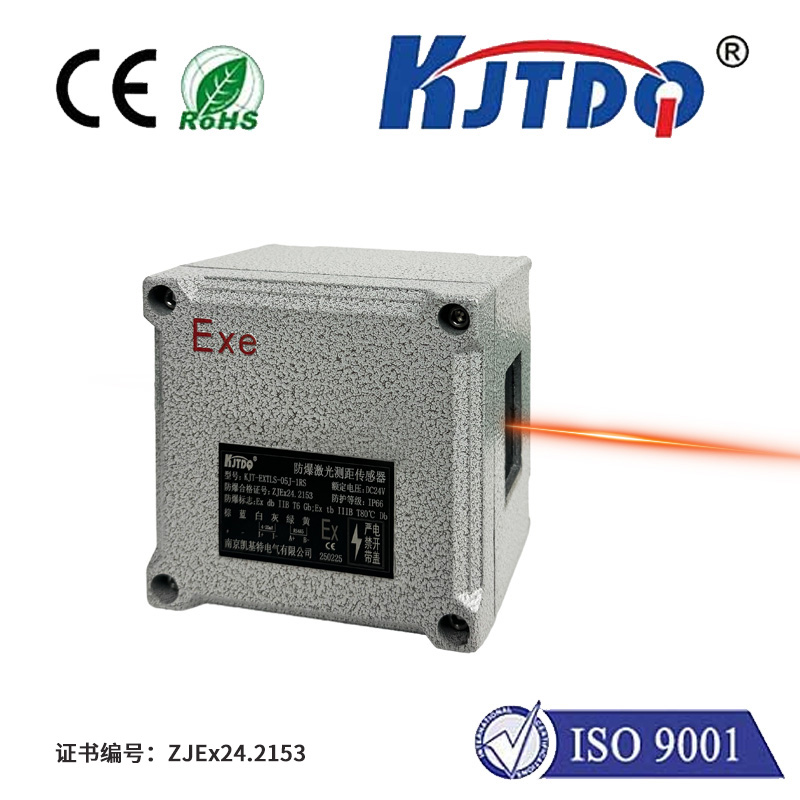
When selecting a long-range laser rangefinder sensor, several technical specifications demand careful consideration. The maximum range and minimum range define its operational window, while accuracy and resolution indicate the reliability and fineness of the measurement. The laser classification (eye safety), beam divergence, data output interfaces, and robustness against environmental factors like dust, water, and extreme temperatures are all critical for deployment in field conditions. Models like the KJTDQ series are engineered to meet these rigorous demands, offering enhanced performance for specialized applications.
The advantages of using a high-quality long-range laser sensor are clear. They provide a direct improvement in operational efficiency by reducing the time and manpower required for manual measurements. The non-contact nature of the measurement prevents damage to both the sensor and the target object. Perhaps most importantly, the high degree of accuracy and objectivity in the data supports better decision-making, planning, and analysis.
As technology progresses, we can anticipate further miniaturization, increased measurement speed, and enhanced integration with IoT platforms and real-time data systems. These advancements will continue to expand the utility of long-range laser rangefinder sensors, solidifying their role as a fundamental tool for any task requiring precise, remote distance measurement. For professionals seeking to push the boundaries of what is measurable, understanding and utilizing this technology is not just an option—it is a necessity for achieving excellence in data-driven projects.