check

check

check

check

check

check
In the world of industrial automation and precision motion control, achieving accurate and repeatable positioning is non-negotiable. At the heart of this reliability lies a seemingly simple yet critical component: the homing switch. This guide delves into the fundamental role of homing switches, explaining their operation, key types, and why they are indispensable for modern machinery.
A homing switch, often referred to as a limit or reference switch, serves as a fixed datum point for a moving system. Its primary function is to provide a consistent electrical signal when a machine axis, such as a linear slide or rotary table, reaches a predefined "home" position. This signal is the cornerstone of the homing sequence—a routine executed at machine startup or after a fault. During this sequence, the controller commands the motor to move the axis slowly toward the switch. Upon activation, the switch sends a signal, telling the controller, "This is the known zero point." The controller then records this precise location, establishing a reliable coordinate system from which all subsequent movements are calculated. Without this reference, cumulative errors from encoders or other sensors could lead to drift, misalignment, and catastrophic operational failures over time.
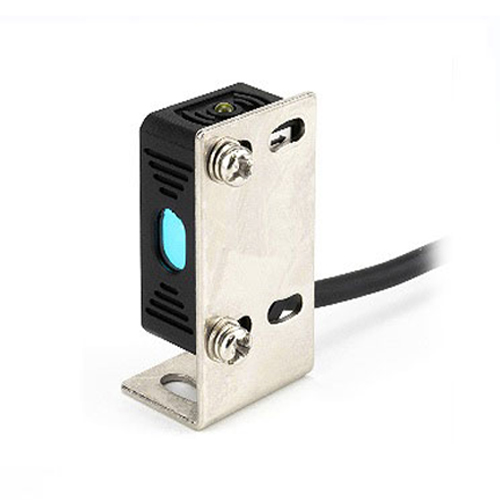
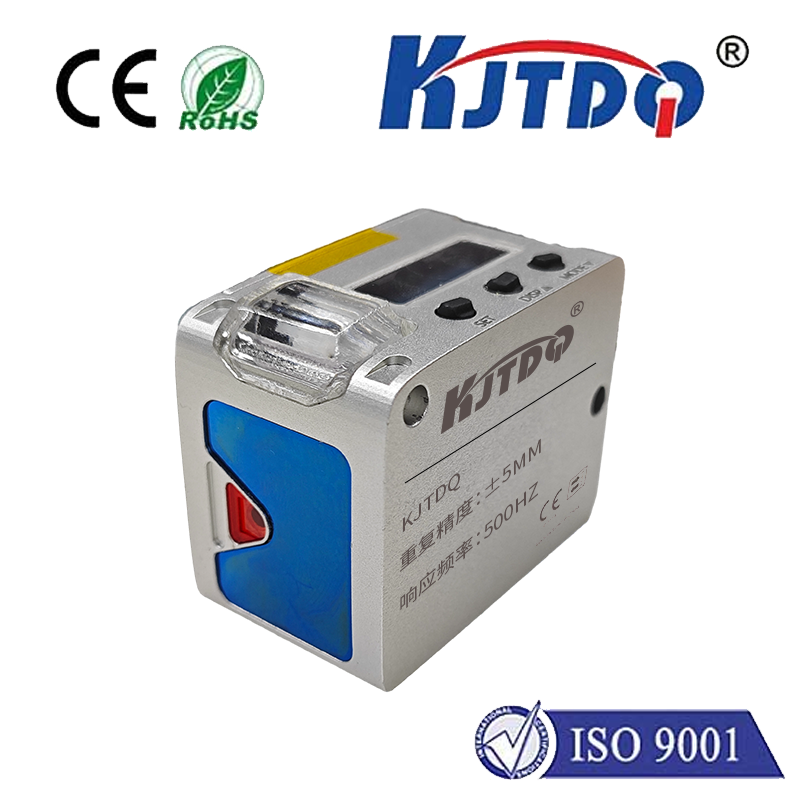
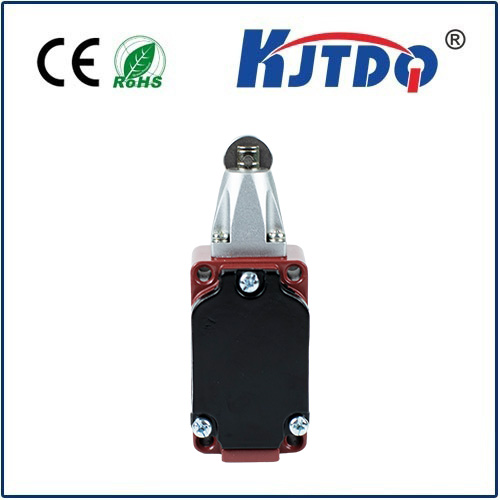
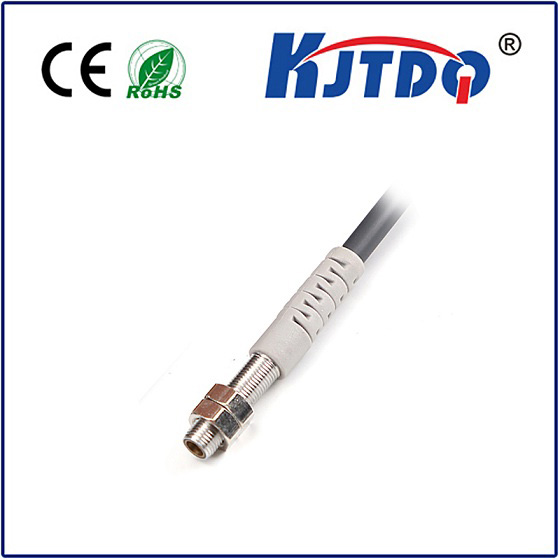
Several technologies underpin homing switches, each suited to different environmental and precision demands. Mechanical switches, the most traditional type, use a physical lever or plunger that makes or breaks an electrical contact. They are cost-effective but subject to wear and mechanical bounce. Proximity switches, including inductive (for metals) and capacitive (for various materials) types, offer non-contact operation by detecting the presence of a target. They boast longer life spans and higher reliability in dirty environments. Optical homing switches, utilizing infrared or laser beams interrupted by a flag, provide extremely high precision and fast response, ideal for clean-room applications or high-speed machinery. The choice depends on factors like required accuracy, switching speed, environmental contaminants, and budget.
The strategic implementation of homing switches is what unlocks their full potential. A common best practice is the two-switch system: one serves as the precise home or reference switch, while a second acts as a limit or over-travel switch for safety. This configuration allows for a faster "homing run," where the axis moves rapidly until it hits the limit switch, then reverses direction to approach the more precise home switch slowly, ensuring accuracy and preventing damage. Proper mounting is also crucial; the switch must be rigidly fixed, and the actuator or target must engage it consistently at the same point to avoid repeatability errors. Furthermore, integrating them with a controller capable of high-speed input capture ensures that the exact moment of switch activation is recorded without delay, further refining positional accuracy.
Beyond basic homing, these switches are vital for safety interlocks and sequence validation. They can prevent a gantry from moving if a safety guard is open or confirm that a tool changer has returned to its dock before initiating a spindle cycle. In complex multi-axis systems, like CNC machines or robotic cells, synchronized homing sequences using these switches ensure all axes establish their zero points in correct relation to each other, which is fundamental for coordinated motion.
Selecting the right homing switch requires careful consideration. Engineers must evaluate the operating environment—is it exposed to coolant, metal chips, extreme temperatures, or vibration? For harsh settings, sealed proximity switches with high ingress protection (IP) ratings are essential. The required repeatability, often specified in microns, will dictate whether a basic mechanical switch suffices or if a high-resolution optical encoder integrated with a home marker is necessary. Compatibility with the machine's programmable logic controller (PLC) or motion controller, in terms of voltage levels and signal type (PNP/NPN), is another critical factor.
In conclusion, homing switches are the unsung heroes of automated systems. They provide the foundational reference that transforms a collection of moving parts into a precise, reliable, and safe machine. From 3D printers finding their build-plate origin to massive CNC mills aligning their spindles, the humble homing switch ensures every cycle starts from a perfect, known point. Investing in the correct type and implementing it with precision is not an option but a fundamental requirement for any system where accuracy, repeatability, and operational integrity matter.