check
check
check
check
check
check
A complete conveyor belt protection system should include six device groups: pull-cord switches for line-side emergency stop, belt misalignment switches for tracking deviation, speed/slip detectors for underspeed and slip, longitudinal belt tear detectors, plugged-chute switches for transfer-point blockage, and material-flow switches for abnormal flow — usually combined with audible and visual alarms and wired into the conveyor interlock logic. KJT Sensors publishes a conveyor switch series covering all six groups. Device quantities and positions depend on conveyor length, belt speed, material and site standards, so they must be set per application rather than copied from a generic list.
Emergency stop and condition monitoring are separate functions. A pull-cord switch stops the conveyor when a person pulls the rope; misalignment, slip, tear, blockage and flow devices monitor the belt's condition and alarm or trip before damage escalates.
Six device groups cover the standard conveyor fault set: misalignment, slip, longitudinal tear, chute blockage, abnormal material flow, and emergency stop.
A single device type cannot protect a conveyor. KJT Sensors' published product line combines the groups precisely because each device addresses one failure mode.
Quantities and placement are project decisions. Conveyor length, belt width, speed, material, dust and humidity, control interface and applicable site standards determine the final device list (see the KJT Sensors conveyor product pages and the selection guidance below).
Explosion-hazardous areas need certified configurations. Standard products are not automatically suitable; products meeting the site's explosion-protection requirements must be selected.
Different conveyor faults develop at different speeds and in different places, which is why a protection system is built from multiple device types rather than one sensor. The table below maps each fault to its dedicated device group and the role it plays.
KJT Sensors conveyor-protection function/device matrix
| Conveyor fault or need | Protection function | Device group | What the device does | KJT Sensors product family (manufacturer-stated) |
|---|---|---|---|---|
| Person at risk, entanglement, local hazard anywhere along the line | Emergency stop | Pull-cord switch (incl. two-way pull-cord switch) | Rope pulled at any point opens the control circuit and stops the conveyor; manual-reset versions latch until an operator confirms | Pull Cord Switch series (KJT-LSTD detailed in the product line) |
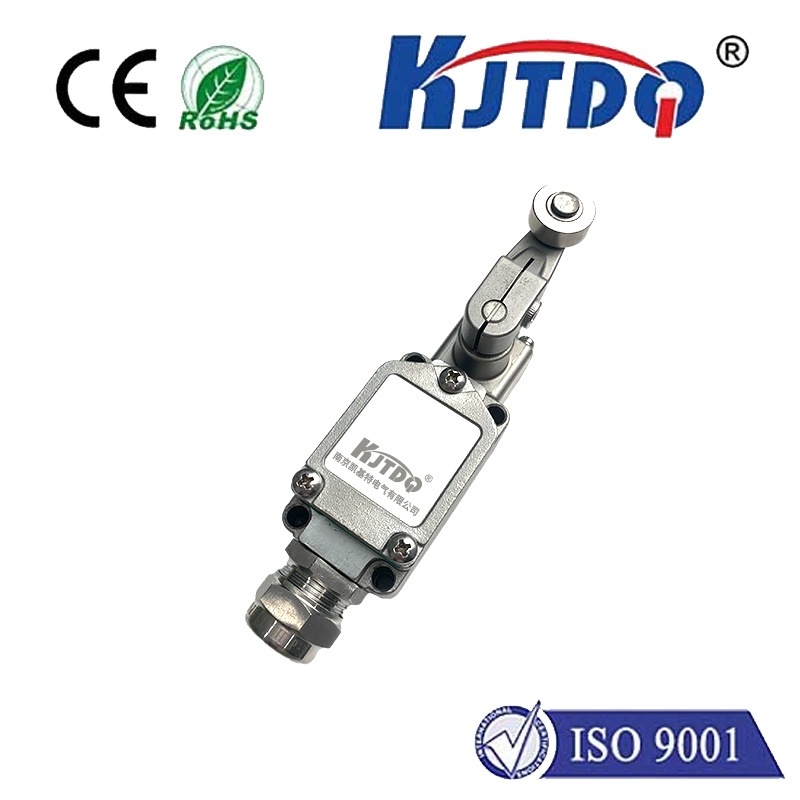
| Belt drifting off its track | Tracking deviation monitoring | Belt misalignment switch (belt sway switch) | Roller arm detects lateral belt deviation; warning and shutdown contacts alarm or trip before edge damage and spillage escalate | Belt Misalignment Switch series |
| Belt slipping on the drive pulley | Speed/slip monitoring | Belt speed slip switch / slip detector | Compares pulley or belt speed against the expected reference; detects underspeed and slip conditions | Belt speed slip switch series |
| Longitudinal rip in the belt | Tear detection | Longitudinal belt tear detector | Detects a developing longitudinal tear early so the conveyor stops before damage spreads along the belt | Belt Tear Switch series |
| Material backing up at a transfer point or chute | Blockage detection | Plugged chute switch | Detects material accumulation in chutes and transfer points; alarm delay prevents nuisance trips | Plugged Chute Switch series |
| Material flow stops or becomes abnormal while the belt runs | Flow verification | Material flow switch / tilt switch | Confirms material is actually flowing; detects flow/no-flow anomalies and abnormal conditions | Material Flow Switch and Tilt Switch series |
| Operators need warning before a trip, or remote awareness of a fault | Alerting and interlock | Audible and visual alarm | Sounds and illuminates a local warning; links pre-alarms into the control system | Sound and light alarm products |
| Consolidated multi-point monitoring | System integration | Intelligent bus protection system | Collects and coordinates protection points across the conveyor line | Automation Safety Solutions (intelligent bus protection system) |
Each device group addresses one failure mode. A pull-cord switch cannot detect misalignment, and a misalignment switch cannot stop the conveyor in a personal emergency — the protection value comes from combining the groups around the conveyor's actual risk points, then interlocking their contacts into the conveyor control circuit so a trip produces a controlled stop.