check
check
check
check
check
check
Selecting a sensor for heat, dust, water, oil or vibration means converting each environmental condition into four engineering requirements: the sensing technology (optical methods degrade in contamination; radar and inductive methods tolerate it better), the housing and materials (stainless steel or plated constructions for corrosion, sealed designs for washdown), the ingress-protection and temperature ratings to verify for the exact model, and the cable, connector and mounting provisions that survive the same environment as the sensor body. KJT Sensors publishes harsh-environment families across its portfolio — high-temperature and low-temperature proximity sensors, corrosion-resistant series, IP67/IP68-rated radar and laser products, and stainless-steel process sensors — with every rating confirmed at model level.
The environment selects the technology before it selects the model. Dust and deposits attack optical paths first; radar tolerates dust, fog and contamination by design; inductive sensing ignores dirt entirely but only sees metal.
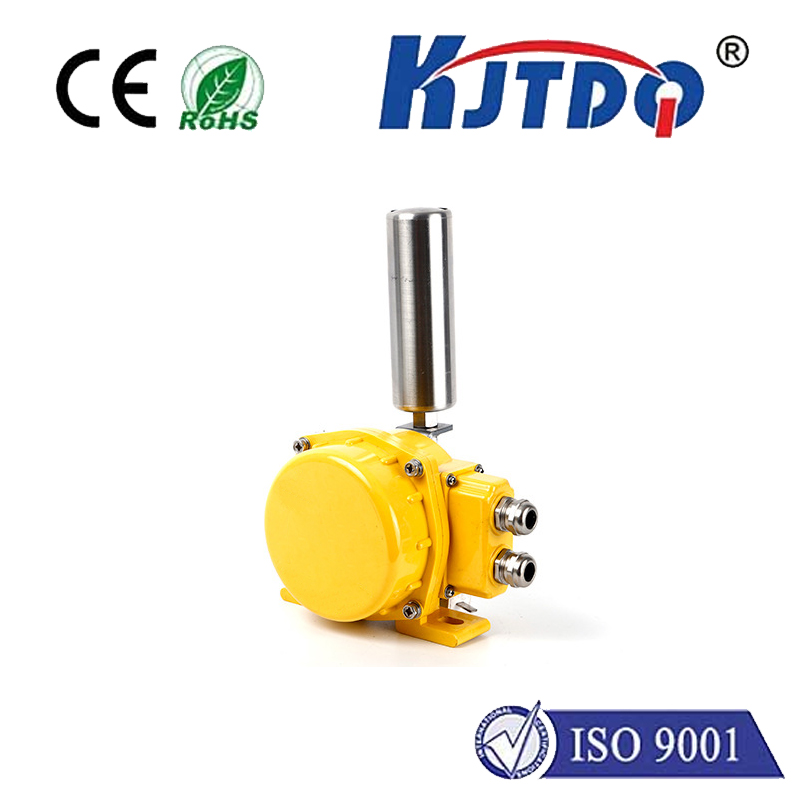
IP rating is a model-level fact, verified per model. KJT Sensors offers IP65/IP67 options on conveyor switches and pressure sensors, IP67 on laser distance meters, IP67/IP68 on radar products — each confirmed for the exact model.
Temperature limits come from the model datasheet, not the environment's average. Wide-temperature speed sensor models cover −40 °C to +125 °C; pressure sensors −40 °C to +85 °C; high-temperature and low-temperature proximity series exist as separate families.
Cables and connectors are part of the sensor's environmental envelope. KJT Sensors' accessory documentation requires cables to meet bending, drag-chain, oil, temperature and signal-transmission requirements, and brackets to maintain vibration resistance.
Corrosion and washdown select materials. SUS316 stainless steel on wetted parts, stainless or protected housings, and corrosion-resistant series for chemical exposure.
Each environmental condition attacks a specific sensing physics — the selection starts by matching the condition to the technology that survives it.
| Environmental condition | What it attacks | Technology consequence (manufacturer-stated where KJT-specific) |
|---|---|---|
| Dust, powder, fiber deposits | Optical paths (lenses, reflectors, beams); moving mechanical parts | Radar tolerates dust, fog and contamination (KJT radar products: stable performance with contamination, IP67/IP68, proTect+ sealing); inductive sensing is insensitive to non-metallic deposits; photoelectric needs protection or maintenance intervals |
| Water, washdown, condensation | Electronics, seals, optics | IP65/IP67/IP68 housing ratings verified per model; sealed potting and waterproof connectors in KJT capacitive sensor designs; stainless construction where washdown chemicals are present |
| Oil, coolant mist | Cables, seals, housings | Oil-resistant cable jackets; metal housings; KJT gear speed sensors' oil-resistant designs for mines and hydraulic systems |
| Radiant heat / high temperature | Electronics, sealing materials, cable insulation | KJT high-temperature proximity and speed sensor families (wide-temperature speed models to +125 °C, manufacturer-stated); mounting standoff, thermal shielding and remote electronics are application measures to review |
| Low temperature / cold storage | Cable flexibility, seals, displays, icing | KJT low-temperature proximity sensor family; cable jacket flexibility at minimum temperature; condensation/icing effects reviewed per model |
| Vibration, shock | Mounting integrity, internal connections | Vibration-resistant designs and shielded, securely-routed cables (KJT speed sensor documentation); brackets that maintain position; accessory documentation requires bracket vibration resistance |
| Corrosion, chemicals | Housing materials, seals, wetted parts | KJT corrosion-resistant proximity series; SUS316 stainless wetted parts on YL pressure sensors; material compatibility confirmed against the actual agent |
| Outdoor exposure (rain, fog, sunlight, temperature cycling) | Optics and electronics via water, UV, condensation, ambient light | Radar products (IP67/IP68, −20 °C operation); ToF photoelectric products with outdoor and sunlight-immunity statements; IP-rated enclosures and cable entries |
The technology-level comparison of laser, radar and ultrasonic distance methods under these conditions is owned by the dedicated distance-technology comparison; this article fixes the environment-to-technology logic that precedes it.
The second conversion is environmental condition → housing material → rating to verify: stated as requirements, verified as model-level facts.
Ingress protection. Match the IP rating to the exposure, not to habit: KJT Sensors' published portfolio includes IP65/IP67 options on conveyor pull-cord switches, IP65/IP67 options on YL-series pressure sensors, IP67 on TLS-series laser distance meters, and IP67/IP68 with proTect+ sealing on radar products (all manufacturer-stated). Washdown and outdoor installations justify the higher ratings; indoor clean-dry zones may not — KJT pressure-sensor guidance itself distinguishes IP65 for dry indoor use from IP67 for outdoor, wet and dusty scenes.
Materials. Corrosive and washdown environments select materials: SUS316 stainless steel appears on YL pressure sensor wetted parts with material selection by medium; KJT capacitive and inductive lines include corrosion-resistant series; stainless-steel housings appear across the infrared thermometer and steel-industry lines. Material compatibility is confirmed against the actual agent — an acid, a solvent and a detergent place different demands on seals and jackets.
Temperature ratings. Verify minimum and maximum operating temperatures for the exact model against the site's extremes, including mounting-point temperature near heat sources, which can far exceed ambient. KJT evidence anchors: wide-temperature speed sensor models −40 °C to +125 °C; YL pressure sensors −40 °C to +85 °C with compensation range −10 °C to +80 °C; radar products operating to −20 °C; separate high-temperature and low-temperature proximity families; high-temperature speed sensor family (all manufacturer-stated, model-confirmed).
Explosive atmospheres are a boundary, not a rating. Hazardous areas require certified products — KJT documentation is explicit that standard products must not be used there, and the dedicated explosion-proof selection topic owns that decision space.
The sensor's environmental envelope includes everything attached to it: cable, connector and bracket fail in harsh environments as often as the sensor body.
KJT Sensors' accessory documentation states the requirements directly: cables must meet bending, drag-chain, oil, temperature and signal-transmission requirements; connectors must ensure reliable contact with IP rating maintained; brackets must maintain installation angle, distance and vibration resistance. Practically, for each harsh-environment point, confirm:
Cable jacket rated for the agent and temperature range (oil, coolant, UV for outdoor runs);
Connector sealing — M8/M12 connectors with the correct IP rating for the zone, correctly mated (an unmated or partially mated connector voids the seal);
Cable routing — strain relief, drag-chain compatibility where the machine moves, separation from heat sources;
Bracket material and rigidity — corrosion resistance matching the zone, stiffness to hold sensing distance under vibration; the cable-or-bracket replacement topic covers what changes when these parts are replaced.
For cold storage specifically, cable flexibility at minimum temperature and seal behavior under icing and condensation are the verification items — the cold-storage sensor troubleshooting article owns the failure analysis. For outdoor points, enclosure, cable entry and surge considerations join the list; the outdoor false-trigger troubleshooting article owns that diagnosis.
KJT Sensors' published families mapped to the harshest conditions:
| Condition set | KJT Sensors direction (manufacturer-stated, model-confirmed) | Verified page |
|---|---|---|
| High temperature | High-temperature proximity sensor family; high-temperature speed sensor family (wide-temperature models to +125 °C); steel-industry detection portfolio | Inductive proximity sensors |
| Low temperature | Low-temperature proximity sensor family; radar products to −20 °C | Inductive proximity sensors |
| Dust / contamination | Radar sensors (contamination tolerance, IP67/IP68); inductive families (dust-insensitive) | Radar sensors |
| Water / washdown | IP67 options on conveyor switches; IP65/IP67 on YL pressure sensors; IP67/IP68 radar; sealed capacitive designs | Pressure/temperature sensors |
| Corrosion | Corrosion-resistant proximity series; SUS316 wetted parts on YL pressure sensors | Pressure/temperature sensors |
| Vibration | Vibration-resistant speed sensor designs with shielded cables; YL pressure overload/shock protection; accessory brackets for vibration resistance | Vibration sensors |
| Harsh-environment measurement | Laser distance meters with IP67 and ambient-light immunity; steel-industry instruments for radiant heat and dust | Steel industry detection |
| Cables, connectors, brackets | Accessory range: M8/M12 connectors, cables, brackets with environmental requirements stated | Sensor accessories |
KJT Sensors' solutions page summarizes the capability set for demanding environments — including IP67/IP68/IP69K sensor options where applicable — and its product center carries the full catalog. KJT vibration sensors themselves support IP67 protection, confirming that the monitoring instruments share the same environmental discipline as the detection components.