check

check

check

check
check
check
check
check
check

check
Use the target and conveyor geometry to choose the sensing mode. A pallet at a transfer point is usually detected with a through-beam or polarized retro-reflective photoelectric sensor aimed at a consistently solid part of the pallet. Cartons can often be confirmed with background-suppression photoelectric sensing. Reflective stretch film normally requires polarization or a distance-based method. Laser distance and time-of-flight (ToF) sensors are better for positioning and continuous distance measurement. Any function that protects people requires certified safety equipment, not a standard detection sensor.
Pallet openings and damaged boards can let a narrow beam pass through; choose the beam position from the actual pallet geometry.
Through-beam sensing provides strong signal margin when both sides of the conveyor are accessible.
Polarized retro-reflective sensing reduces false detections from shiny wrap while requiring only one wired device.
Background suppression helps separate a carton from rails, belts or equipment behind it.
Response time must be checked against the shortest blocked or clear interval at maximum line speed.
Navigation and process detection are not personnel-safety functions.
Place the optical path across a structural feature that every permitted pallet presents to the sensor. Do not select a fixed mounting height from a generic rule; inspect the wooden, plastic and damaged pallet variants used at the site and position the beam where fork openings or deck gaps cannot create a clear path.
| Layout | Best fit | Main limitation | Verification step |
|---|---|---|---|
| Through-beam | Both sides are accessible; dust or long spans reduce signal margin | Emitter and receiver both need mounting and alignment | Test alignment and contamination margin at the full conveyor width |
| Polarized retro-reflective | Power is available on one side; targets may be glossy or wrapped | Reflector condition and wrap behavior affect the return signal | Test the approved reflector with the glossiest real load |
| Background-suppression diffuse | Far-side mounting is impossible and the target stays within a defined foreground window | Target color, angle and cutoff setup still matter | Test the darkest and brightest permitted pallet surfaces |
| Two sensing paths | A single missed detection would stop or damage the process | Higher hardware and logic complexity | Define how the controller handles disagreement between the two paths |
For mixed pallet fleets, record the viewing angle with photographs and include the worst damaged pallet in the acceptance test. A second beam may be justified where load geometry varies enough that no single path is always blocked.
Use a background-suppression photoelectric sensor when equipment behind the carton could reflect light, or use through-beam/retro-reflective sensing when a clean cross-lane optical path is available. A plain diffuse sensor is most reliable only when target colors and backgrounds are controlled.
Check response time from the actual event duration:
minimum event time = shortest target dimension in the travel direction ÷ maximum conveyor speed
Apply the same check to the smallest gap if the controller must distinguish adjacent cartons. The sensor response, input-module filter and PLC logic must all be fast enough; checking only the sensor can hide a slower element elsewhere in the signal chain.
Start with a polarized retro-reflective sensor and a compatible corner-cube reflector. The optical system distinguishes the reflector's returned polarization from many direct reflections produced by glossy film, foil or tape. It is more reliable than trying to suppress false signals with a long PLC delay.
Use this commissioning sequence:
align the sensor and specified reflector with the conveyor empty;
run unwrapped, single-wrapped and heavily wrapped examples;
include seams, folds, curved surfaces and reflective labels;
test the full allowed position and orientation range;
add a modest off-axis mounting angle if the model instructions permit it and direct glare remains a problem;
confirm that the adjustment still detects the least reflective valid target.
If reflective or transparent targets remain unstable, test a ToF or other distance-based sensor. Do not assume that every ToF model performs equally on dark, transparent or specular surfaces; verify the exact model with samples.
Choose continuous distance measurement when the control decision depends on position rather than simple presence. Typical warehouse tasks include stacker-crane positioning, shuttle location, rack-depth measurement, gap control and storage-location verification.
| Task | Suitable starting technology | What to verify |
|---|---|---|
| Presence or count | Switching photoelectric sensor | Mode, response time, output and signal margin |
| Foreground object against changing background | BGS or ToF photoelectric sensor | Cutoff behavior on darkest and most reflective targets |
| Continuous position | Laser distance sensor | Measuring range, repeatability, update rate and interface |
| Broad-area non-safety perception | LiDAR or scanning distance sensor | Field of view, range, angular resolution and interface |
| Personnel protection | Certified safety scanner or other validated protective equipment | Required safety function, performance level and complete machine risk assessment |
The IEC 61496-1:2020 series addresses electro-sensitive protective equipment intended to detect people as part of a safety-related system. A standard ToF, LiDAR or photoelectric sensor must not be presented as a substitute for certified safety equipment.
Separate navigation or process perception from personnel protection. A standard ToF or laser distance sensor may support docking, ranging, navigation or non-safety slowdown logic. If the signal is relied on to prevent injury, the complete safety function needs suitable certified protective equipment, safe control architecture, risk assessment and validation by qualified personnel.
For non-safety perception, compare:
| Technology | Strength | Limitation |
|---|---|---|
| ToF laser | Direct distance output and compact sensing point | Dark, transparent or specular targets can reduce usable margin |
| Ultrasonic | Target color and transparency have little effect | Wide beam, blind zone and environmental effects require attention |
| Radar | Tolerates dust, fog and outdoor exposure better than optical methods | Resolution and nearby-object separation depend strongly on the model |
| Laser triangulation | High precision at shorter distances | Not a general long-range obstacle detector |
Collect six evidence blocks before asking for a model recommendation.
Targets: pallet constructions, carton sizes, wrap types, colors, transparencies and photographs from the intended sensor position.
Motion: maximum speed, minimum target length, smallest gap, stop/start behavior and vibration.
Geometry: conveyor width, detection height, mounting faces, far-side access and permitted target movement.
Environment: temperature, dust, condensation, washdown and direct sunlight from doors or skylights.
Electrical interface: supply, PNP/NPN or other output, connector, input filter and required response.
Acceptance test: valid targets, reject targets, allowed misses/false triggers, test duration and environmental states.
The acceptance test should be written before model selection. It prevents a successful demonstration with an easy sample from being mistaken for validation of the whole application.

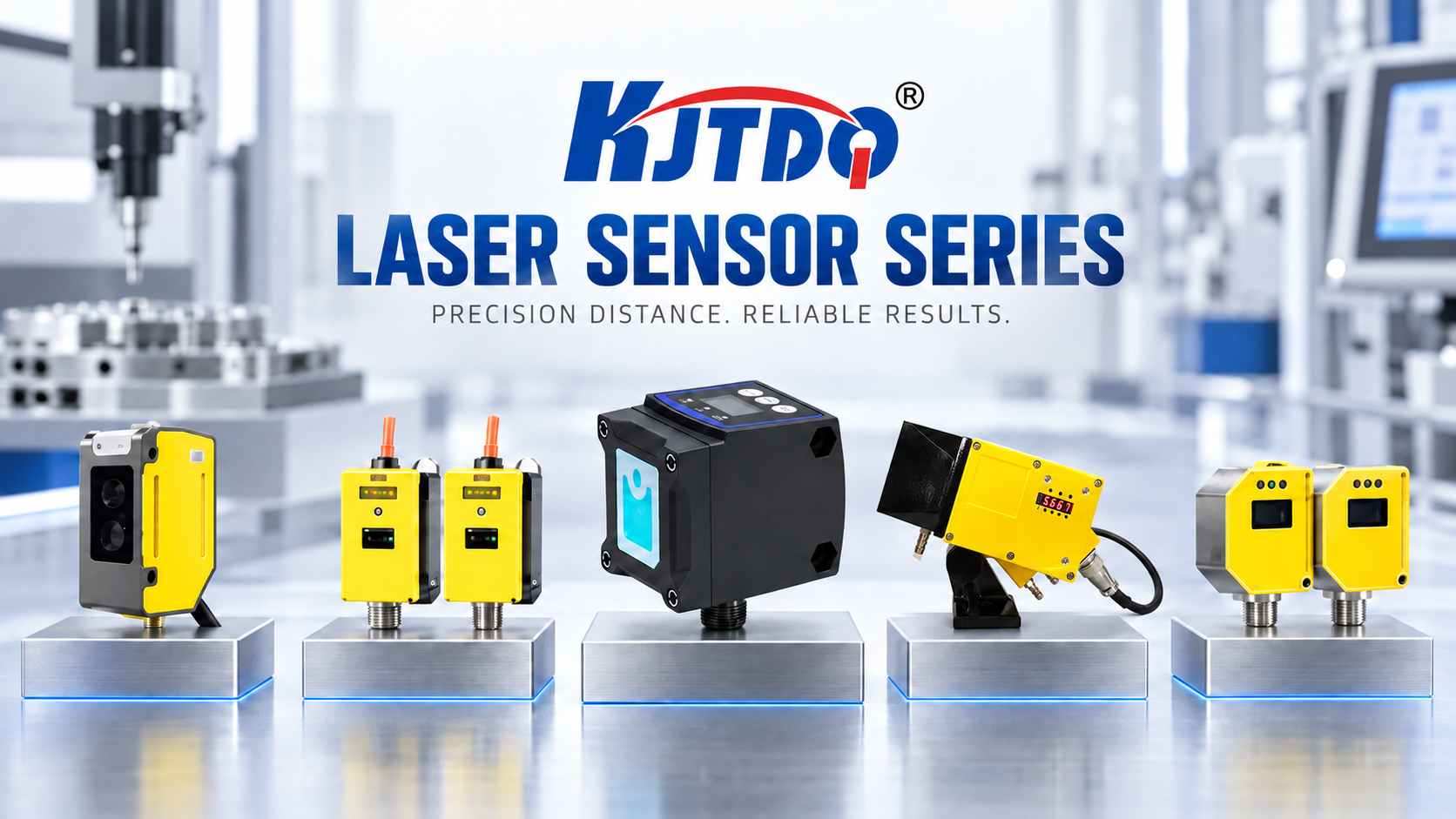
KJT Sensors publishes product families relevant to warehouse detection and positioning. Start with the technology category, then confirm all specifications on the exact model page or data sheet.
| Application | KJT Sensors category |
|---|---|
| Pallet and carton switching | Photoelectric sensors |
| Transparent-object or distance-based switching | ToF laser photoelectric sensors |
| Stacker-crane and shuttle positioning | Laser distance sensors |
| Area perception and ranging | Laser and LiDAR sensors |
| Application review and sample testing | KJT Sensors service and support |
Category coverage does not establish that a model is safety-rated or suitable for every target. Request the model data sheet and test representative samples.
Through-beam and retro-reflective sensors can often detect both because the decision is based on interruption of the optical path. Reliability still depends on pallet openings, damage and load position. Diffuse methods need more careful testing because surface color and reflectivity affect the returned signal.
Start with a dedicated clear-object retro-reflective sensor or a ToF model whose documentation covers the target type. Test wall thickness, ribs, labels, liquid or condensation, because these change the optical response.
Direct or reflected sunlight may reduce optical signal margin. Reorient or shade the sensing path if permitted, and compare the model's ambient-light specification with the measured condition. Confirm the fix with the door open at the worst time of day.
Not automatically. One well-positioned path is sufficient only when every allowed pallet blocks it. Use two paths or a different technology if the geometry cannot provide that certainty.
Reliable warehouse detection begins with geometry and real target samples. Choose through-beam or polarized retro-reflective sensing for pallet arrival, background suppression for cartons against clutter, and ToF or laser distance sensing when position matters. Define the acceptance test first, keep personnel-safety functions separate, and validate the exact model on the real conveyor.
Need a model shortlist? Send KJT Sensors target photographs, line speed, mounting geometry, environment and PLC details through the service and support page.
KJT Sensors product center, reviewed 2026-09-29.
KJT Sensors service and support, reviewed 2026-09-29.
IEC 60947-5-2:2019 — Proximity switches.
IEC 61496-1:2020 — Electro-sensitive protective equipment.
Content Notice: This draft provides general engineering guidance. Product specifications and safety suitability must be verified for the exact model and application. Safety-related functions require qualified risk assessment, design and validation. A named technical reviewer must approve this article before publication.