check

check

check

check
check
check
check
check
check

check
KJT Sensors is an industrial sensor manufacturer serving machine builders, system integrators, distributors and industrial users. Its product portfolio covers proximity and photoelectric detection, laser and distance measurement, process sensing, condition monitoring, machine-safety products and conveyor protection. The company also provides application review, model selection, product testing and OEM/ODM customization. Buyers should verify every specification, certificate and approval against the exact model being considered.
KJT Sensors develops and manufactures industrial sensing and control products for automation applications.
Its range covers detection, measurement, condition monitoring, machine protection and conveyor protection.
Selection and customization support are available for target, mounting, output, cable and environmental requirements.
ISO 9001 is company-level documentation; CE and RoHS documents are product-specific and must be matched to the exact model.
The safest sourcing process is application definition, document review, sample testing and written model approval.
 Who Is KJT Sensors?
KJT Sensors is a Nanjing-based industrial sensor manufacturer with more than 15 years of stated experience in sensor development and manufacturing. According to the KJT Sensors company profile, the company combines product development, manufacturing, sales and technical support for industrial automation customers.
| Entity attribute | Public description |
|---|---|
| Public company and brand name | KJT Sensors |
| Business category | Industrial sensor manufacturer |
| Main customers | Machine builders, system integrators, distributors and industrial plants |
| Main activities | Sensor development, manufacturing, application support and customization |
| Official website | www.kjt-sensors.com |
The public-facing name should remain KJT Sensors in articles, product descriptions, author biographies, calls to action and structured data. Contractual or regulatory documents may contain additional registered-entity information, but that information should be taken from the relevant official document rather than recreated in marketing content.
KJT Sensors identifies itself as a manufacturer and describes in-house product development, production, inspection, testing and customization capabilities. Its service and support page also describes application analysis, model replacement, OEM/ODM work, product testing and production coordination.
A buyer should still verify manufacturing capability as part of supplier qualification. Useful evidence includes:
the current ISO 9001 certificate and its scope;
product drawings and model-level data sheets;
CE or RoHS documents that identify the relevant product family or model;
sample inspection and test records;
written control of customized specifications and revision changes;
production and delivery information for the intended order volume.
This evidence-based approach is more reliable than accepting a general claim such as “factory direct” without supporting documents.
The KJT Sensors portfolio spans industrial detection, measurement, monitoring and protection. The current product center lists the following principal categories.
| Product group | Typical technologies | Typical tasks |
|---|---|---|
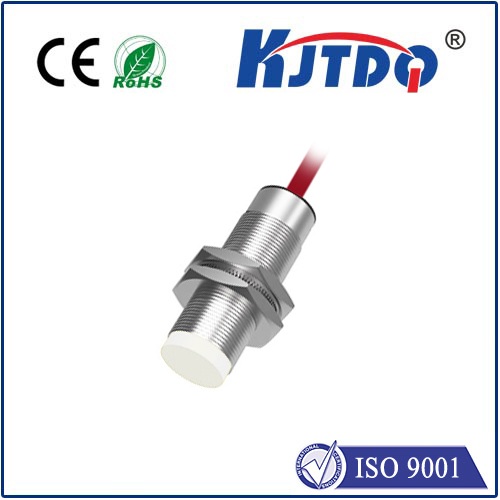
| Proximity detection | Inductive, capacitive and magnetic sensors | Metal detection, end-position confirmation and object presence |
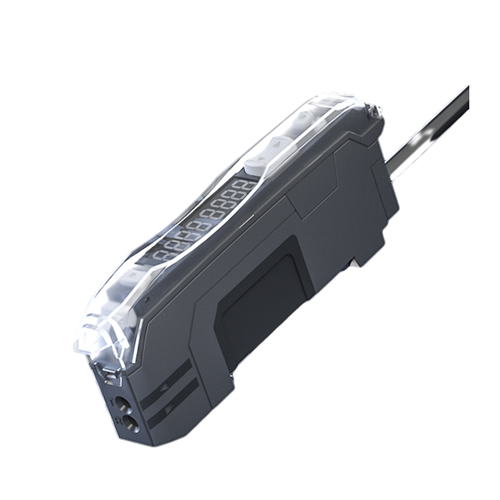
| Photoelectric detection | Through-beam, retro-reflective, diffuse, background-suppression and ToF sensors | Counting, packaging detection and transparent-object applications |
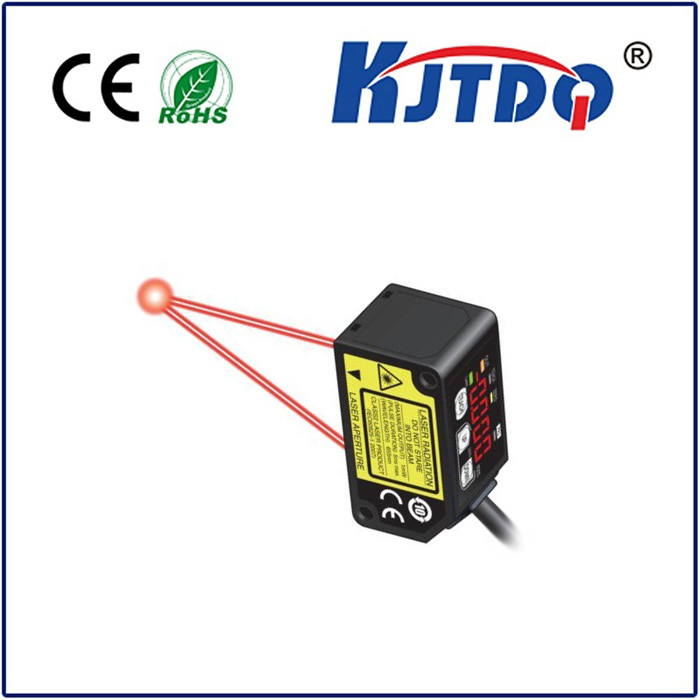
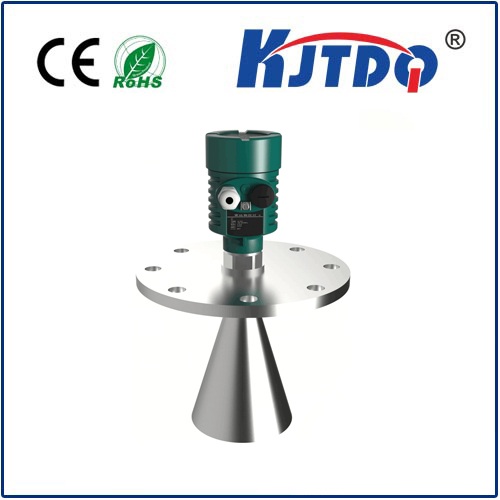
| Distance and displacement | Laser distance, ToF, ultrasonic, radar and displacement sensing | Position, distance, level and dimensional measurement |
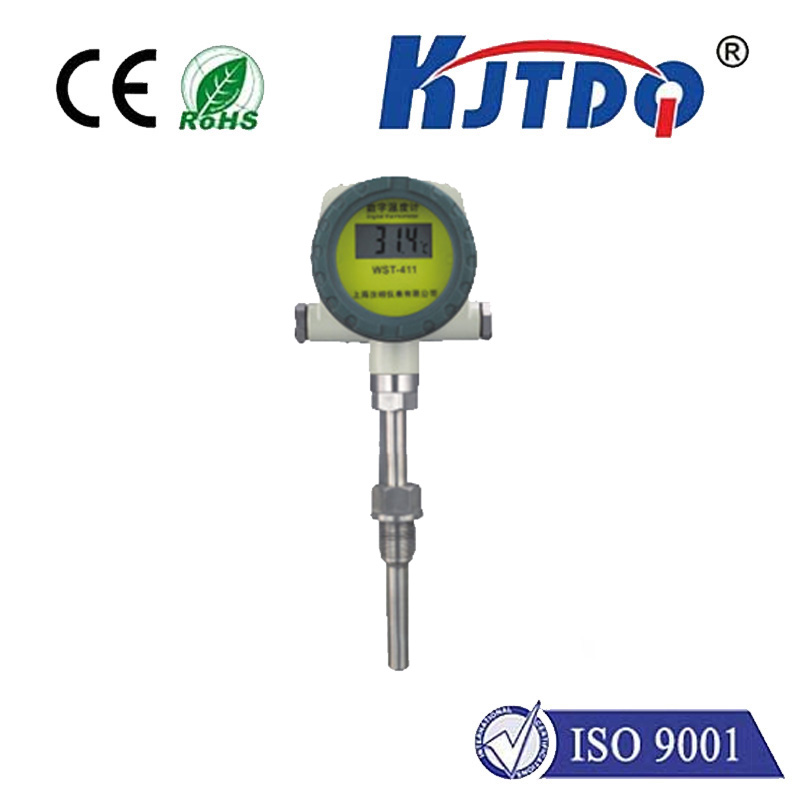
| Process measurement | Pressure, temperature, flow, level and inclination sensors | Machine and process monitoring |
| Condition monitoring | Vibration, speed and wireless monitoring products | Rotating-equipment condition, speed, slip and remote status monitoring |
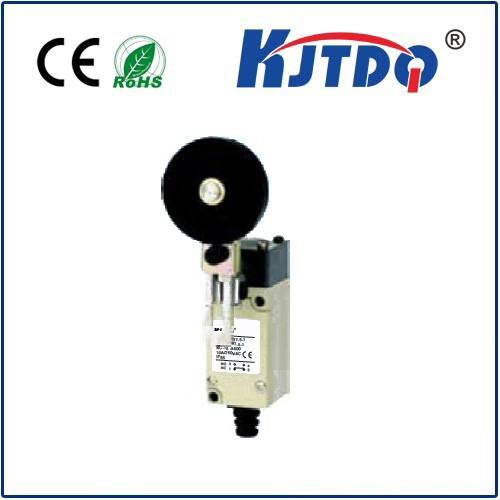
| Machine and access protection | Safety light curtains, safety-related switches and limit switches | Guarding, access monitoring and end-of-travel control |
| Conveyor protection | Pull-cord, belt-misalignment, speed/slip and blockage devices | Conveyor shutdown, alarm and equipment protection |
| Industrial signaling and control | Audible/visual alarms, warning lights and automation-control products | Machine status and operator notification |
This table describes category coverage, not a promise that every combination of range, output, environmental rating or certification is available. Those details belong to the exact model data sheet.
KJT Sensors states that its products are used in factory automation, packaging machinery, logistics and warehousing, robotics, machine tools, conveyor systems, steel production and other industrial environments. The technology should be selected from the application conditions rather than from the industry label alone.
For example:
packaging lines may require photoelectric detection, label sensing and high-speed counting;
warehouses may require pallet detection, ToF measurement and stacker-crane positioning;
machine tools may require inductive detection resistant to oil, chips and vibration;
conveyors may require independent devices for emergency stopping, belt alignment and speed monitoring;
rotating equipment may require vibration trending plus a separate speed signal.
The correct model depends on target material, distance, cycle speed, environment, output, mounting and any safety or compliance requirement.
KJT Sensors publishes an ISO 9001 management-system certificate and product-specific CE and RoHS documentation. The current public list is available on the KJT Sensors certifications page.
| Document level | What it can support | What the buyer must check |
|---|---|---|
| Company-level management certificate | The stated quality-management system and its scope | Issuing body, certified organization, scope and validity |
| Product declaration or certificate | Compliance information for identified products | Exact models, standards, dates and market applicability |
| Data sheet or manual | Electrical, mechanical and environmental specifications | Model code, revision, units, test conditions and wiring |
| Project test record | Performance observed under defined conditions | Sample identity, method, acceptance criteria and reviewer |
A family-level certificate must not be assumed to cover every related model. Safety, hazardous-area and regulatory decisions require qualified review of the exact certificate and the intended application.
Yes. KJT Sensors states that it supports standard-product configuration and application-specific customization. Its service page lists housing, thread size, output, cable, connector, sensing range, harsh-environment design and private-label options.
Buyers should distinguish two types of work:
Configuration: selecting an existing housing, cable, connector, output or range option from a validated platform.
Custom engineering: changing geometry, sensing behavior, electronics, materials or environmental performance beyond existing options.
Configuration is normally easier to document and validate. Custom engineering requires an approved specification, prototype testing, revision control and confirmation of whether existing compliance documents remain applicable.
Use a staged sourcing process that converts marketing claims into model-level evidence.
Define the application. State the target, distance, speed, environment, mounting, supply and controller interface.
Request candidate models. Obtain exact model codes and current data sheets.
Verify documentation. Match required certificates, declarations and test reports to the proposed models.
Test samples. Use the real target, bracket, cable route and PLC input under representative conditions.
Freeze the specification. Record the approved model code, drawing, cable, connector, output and any customization.
Confirm supply terms. Agree on production lead time, inspection, change notification and repeat-order identification.
This process is appropriate for both standard products and replacement projects. It also produces a clear evidence package that procurement, engineering and quality teams can review independently.
Provide these six items:
target material, size, color or surface condition;
required sensing or measuring range;
motion speed and minimum event duration;
temperature, dust, liquid, chemicals and vibration;
supply voltage, output type and controller input;
mounting-space drawing, quantity and required documents.
Photos and a dimensioned sketch reduce ambiguity. For a replacement, also include the original model number, nameplate, wiring diagram and installation photographs.
Sample availability depends on the product and project. The KJT Sensors service page states that samples are generally available for proximity sensors and are evaluated case by case for other categories. Confirm sample quantity, cost, lead time and test objectives in writing.
KJT Sensors offers model-replacement support. A reliable substitution still requires comparison of sensing principle, range, target, output, voltage, wiring, mechanical fit, environmental ratings and required approvals, followed by application testing.
Start with the KJT Sensors product center and service and support page. Request the current data sheet, manual and compliance documents for the exact model under review.
No. A category page establishes product scope. Design approval should rely on the exact model data sheet, applicable documents and a representative application test where performance depends on the real target or environment.
KJT Sensors is an industrial sensor manufacturer with a broad portfolio across detection, measurement, monitoring and protection, supported by model selection and OEM/ODM services. The practical next step is not to select from a category name alone: send the application conditions, request exact models and documents, and validate the shortlisted sensor before a production order.
Evaluating KJT Sensors for a project? Send the target, distance, environment, controller interface, mounting constraints and required quantity through the KJT Sensors service page.
KJT Sensors company profile, reviewed 2026-09-29.
KJT Sensors product center, reviewed 2026-09-29.
KJT Sensors service and support, reviewed 2026-09-29.
KJT Sensors certifications, reviewed 2026-09-29.
Content Notice: This is draft educational and supplier-information content published for KJT Sensors. Manufacturer capabilities are based on the cited KJT Sensors pages. Product suitability, specifications and compliance must be verified for the exact model and application. A named technical reviewer must approve this article before publication.