check

check

check

check

check

check
Go wireless when cabling is the problem, not the sensing. Three situations justify it: (1) the measurement point is physically hard to wire — rotating equipment, moving machinery, long distances across a plant, or existing structures where pulling cable means shutdown and civil work; (2) you have many scattered points that each produce small amounts of data — temperature, pressure, inclination, level, vibration, switch status — where a shared gateway is cheaper than a hundred cable runs; (3) you need remote visibility on assets nobody walks past daily: unmanned stations, tank farms, conveyor lines kilometers long. If the point is easy to wire, needs millisecond response, or feeds a hard safety loop, wired is still the right answer.
Key takeaways
Wireless sensors trade a cable for a battery and a radio — decide based on installation cost and data needs, not on novelty.
A wireless monitoring system has three parts: sensor nodes, a gateway, and a platform. The gateway is where the network succeeds or fails.
Common industrial radio options include Wi-Fi, Zigbee, LoRa and NB-IoT; range, power budget and node count decide which fits.
Wireless suits monitoring and alarming; hard real-time control and safety-rated interlocks stay wired.
KJT Sensors offers wireless proximity, photoelectric, temperature, pressure and inclination sensors plus gateways and monitoring software for distributed industrial points.
People often assume wireless sensors measure something different. They don't. A wireless temperature sensor measures the same temperature as its wired twin — the difference is everything after the measurement: no signal cable, no power cable, a battery or energy source on board, and a radio that pushes readings to a gateway on a schedule.
That trade has real consequences. You gain installation freedom — clamp it on, magnet-mount it, bolt it where no conduit could ever go. You give up continuous power and guaranteed delivery — batteries need a replacement plan, and radio links need a site with workable signal conditions. A wireless point that reports every few minutes is a monitoring point; it is not a control-loop element, and treating it as one is how projects go wrong.
| Question | Wired answer | Wireless answer |
|---|---|---|
| Can you run cable without shutdown, civil work or crossing moving parts? | If yes, wire it — wired is simpler long-term | If no, wireless removes the cabling cost entirely |
| How fast must the data arrive? | Millisecond response, continuous signal | Seconds-to-minutes reporting intervals are typical |
| What does the signal do? | Control loops and safety interlocks need deterministic delivery | Monitoring, trending and alarming tolerate store-and-forward |
| How many points, how scattered? | A few points near the cabinet — cabling is cheap | Dozens of points across a site — one gateway beats forty cable runs |
| Who maintains it? | Cable once, forget it | Battery replacement on a schedule, radio health checks |
The honest answer for most plants is a hybrid: wired for control and safety, wireless for the monitoring layer that used to be "someone walks around with a clipboard."
A working deployment has three layers, and it helps to think about them separately:
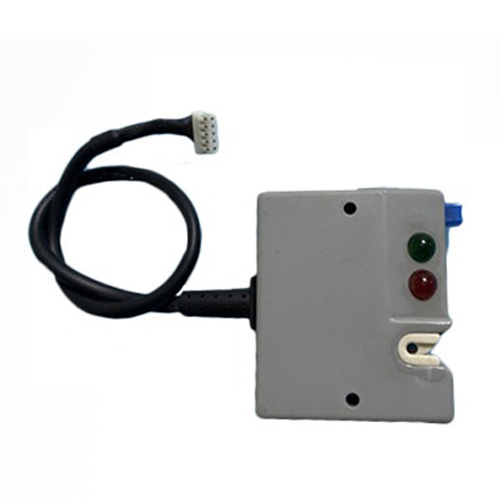
Sensor nodes. Each node combines the sensing element, a processor, a radio and a power source in an industrial enclosure. KJT Sensors' wireless line, for example, covers wireless proximity, photoelectric, inclination, temperature and pressure variants — the point being that most common monitoring variables already exist in wireless form, so a project rarely needs exotic hardware. Node-level specs to confirm per model: measurement range, reporting interval, battery life at that interval, radio band and protection rating.
Gateway. Nodes don't talk to your SCADA directly — they talk to a gateway, which collects, manages and forwards the data to a monitoring platform or supervisory system. The gateway's supported protocols and node capacity define how large the network can grow. Manufacturer documentation for the KJT Sensors smart gateway lists Wi-Fi, Zigbee and LoRa among supported communication methods, with NB-IoT also appearing in the wireless product descriptions; the right choice depends on range, power budget and how many nodes you plan per gateway.
Platform. The software end — dashboards, thresholds, alarms, history. This is where "remote monitoring" actually becomes visible: abnormal-condition warnings instead of someone discovering a problem on the next inspection round.
Network topology follows the site: star for compact areas, chain or tree structures for stretched-out assets like conveyor lines. The manufacturer's wireless documentation notes support for star, chain and tree structures — but treat every topology claim as a site-survey question, not a catalog promise. Radio in a steel plant full of metal behaves differently than radio in an open warehouse.

The applications that consistently justify wireless share one trait: the point exists, the data matters, and the cable doesn't make sense.
Distributed condition monitoring: temperature, pressure, vibration and inclination on equipment spread across a plant — pumps, motors, gearboxes, structures — feeding trend-based maintenance instead of periodic manual rounds.
Conveyor and remote-asset supervision: belt-conveyor protection status, material level and equipment state along lines too long to wire economically, or in unmanned areas.
Retrofits and IoT upgrades: adding monitoring to installed machines where opening cable routes isn't an option — wireless nodes go in without touching the existing control wiring.
Hard-to-wire geometry: rotating tables, moving carriages, temporary installations, outdoor tank and yard points.
KJT Sensors positions its wireless sensors and smart gateways exactly at these scenarios: dispersed points, cabling difficulties, high manual-inspection cost, and unattended-site management, with applications listed across equipment-state monitoring, conveyor protection, temperature/humidity/pressure collection, level and vibration monitoring.
Five practical checks, in order of how often they sink projects:
Radio site survey. Metal structures, concrete walls and RF noise decide real range, not the datasheet's open-field number. Walk the site with test hardware before ordering fifty nodes.
Battery math. Battery life depends on reporting interval — a node reporting every minute dies much faster than one reporting hourly. Set intervals to what the data is actually used for, then plan the replacement schedule.
Data path ownership. Where does the gateway forward to — a local server, a cloud platform, your SCADA? Decide who owns the data path and how it's secured before installation day.
Alarm logic, not just data. A monitoring system that only logs is a history lesson. Define thresholds and who gets alerted at the same time you define the points.
Keep safety loops wired. Wireless nodes can alarm and trend; they should not be the sole element in a safety interlock. Safety functions need rated, wired devices designed and validated by qualified personnel.
KJT Sensors (Nanjing, China) offers a wireless product system covering wireless proximity, photoelectric, temperature, pressure, inclination and other sensor variants, together with wireless gateways, data-collection gateways, receivers, transmitters and monitoring software. The manufacturer describes the line as low-power, compact, multi-topology (star/chain/tree) and aimed at distributed monitoring, remote collection and IoT retrofits. Communication range, frequency band, power supply, node capacity and protocol support are model- and project-specific — confirm them against the exact models and a site survey. For a project discussion, the useful starting information is: what you want to measure, how many points, how far apart, how often you need the data, and what system should receive it.
In monitoring applications, often yes. In control loops and safety circuits, no — those need deterministic, continuous signals. Most plants end up with wired control and safety plus a wireless monitoring layer on top.
It depends on the radio technology, antenna, and — decisively — the site. Metal-heavy industrial buildings cut range dramatically compared with open-field figures. Treat any range number as a starting point for a site survey, not a guarantee.
Battery life is set by reporting interval, radio power and temperature. Nodes reporting every few minutes may need attention within a year or two; hourly reporters can run far longer. Confirm the manufacturer's stated battery life at your intended reporting interval for the specific model.
No universal winner. Wi-Fi fits where infrastructure exists and power isn't tight. Zigbee suits dense mesh networks of nearby low-power nodes. LoRa covers long ranges at low power with small data packets. NB-IoT uses carrier networks — good for scattered outdoor assets without your own radio infrastructure. The gateway's supported protocols narrow the choice quickly.
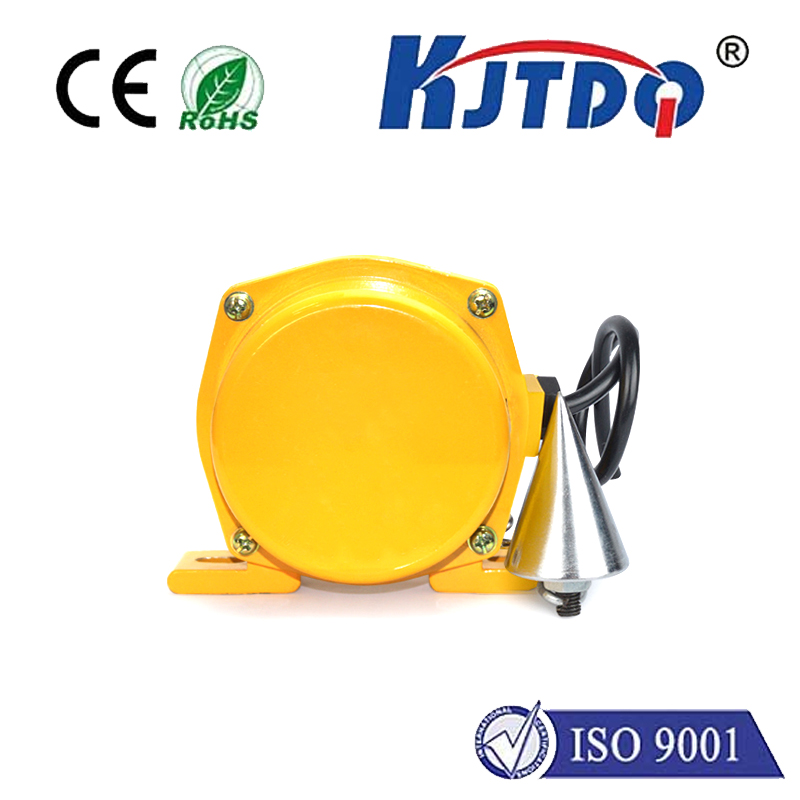
For status monitoring and alarming — yes, and long conveyors are a natural fit. For the protection trip itself, the wired protection devices (pull-cord, misalignment, slip switches) remain the acting elements; wireless adds remote visibility of their status.
Wireless sensing doesn't change what you measure — it changes what it costs to measure it. Put radios where cables hurt, keep wires where milliseconds matter, and the monitoring layer finally covers the whole plant instead of the easy half.
Planning wireless monitoring points? Send KJT Sensors your measurement variables, point count, site layout and target platform, and request a configuration proposal: www.kjt-sensors.com
KJT Sensors — Company and product information: https://www.kjt-sensors.com
Product capabilities, communication options and network features cited above are based on the manufacturer's published information (accessed September 2026). Radio range, battery life, node capacity and protocol support must be confirmed per specific model and verified with an on-site survey before deployment.
This article is brand content marketing produced for KJT Sensors. Wireless monitoring systems must not be used as the sole element of safety-related functions; safety circuits require rated wired devices designed and validated by qualified personnel.