check

check

check

check
check
check
check
check

check

check

Smart warehousing and logistics centers run at high speed every day.
Boxes move quickly on conveyors, forklifts shuttle between shelves, black material bins, high-speed bottled production lines, high-level shelves… every ordinary-looking process is actually testing the sensor’s “eyesight.”
Too far to see clearly?
Black targets are hard to capture?
Too fast to respond?
High shelves are hard to identify?
Don’t worry — Season 3 of KJT Industrial Rescue Story is here.
This time, the new hero officially appears.
Its mission is clear:
See farther
Measure more accurately
Respond faster
Maintain stable recognition even in complex environments
At first, the smart warehousing and logistics center seems to be running smoothly. Conveyors, forklifts, and shelves are all busy working.
Then the problems suddenly appear:
Boxes are missed
Counting becomes abnormal
Positioning deviation occurs
Long-distance detection becomes unstable
The old sensor complains: “The distance is too far, the reflection is too weak, and I can’t see clearly!”
At this moment, the KJT rescue team goes online.
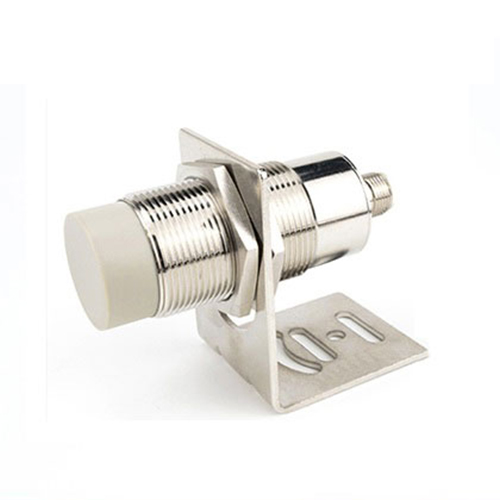
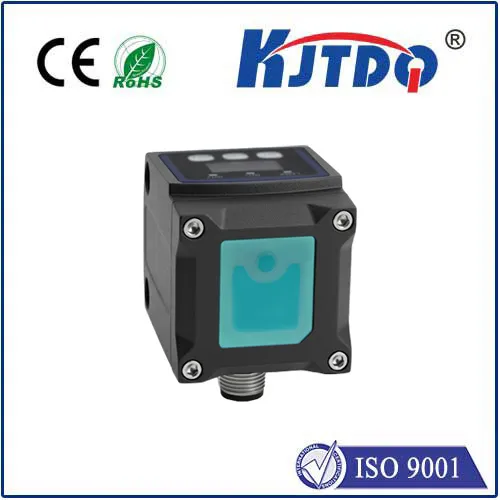
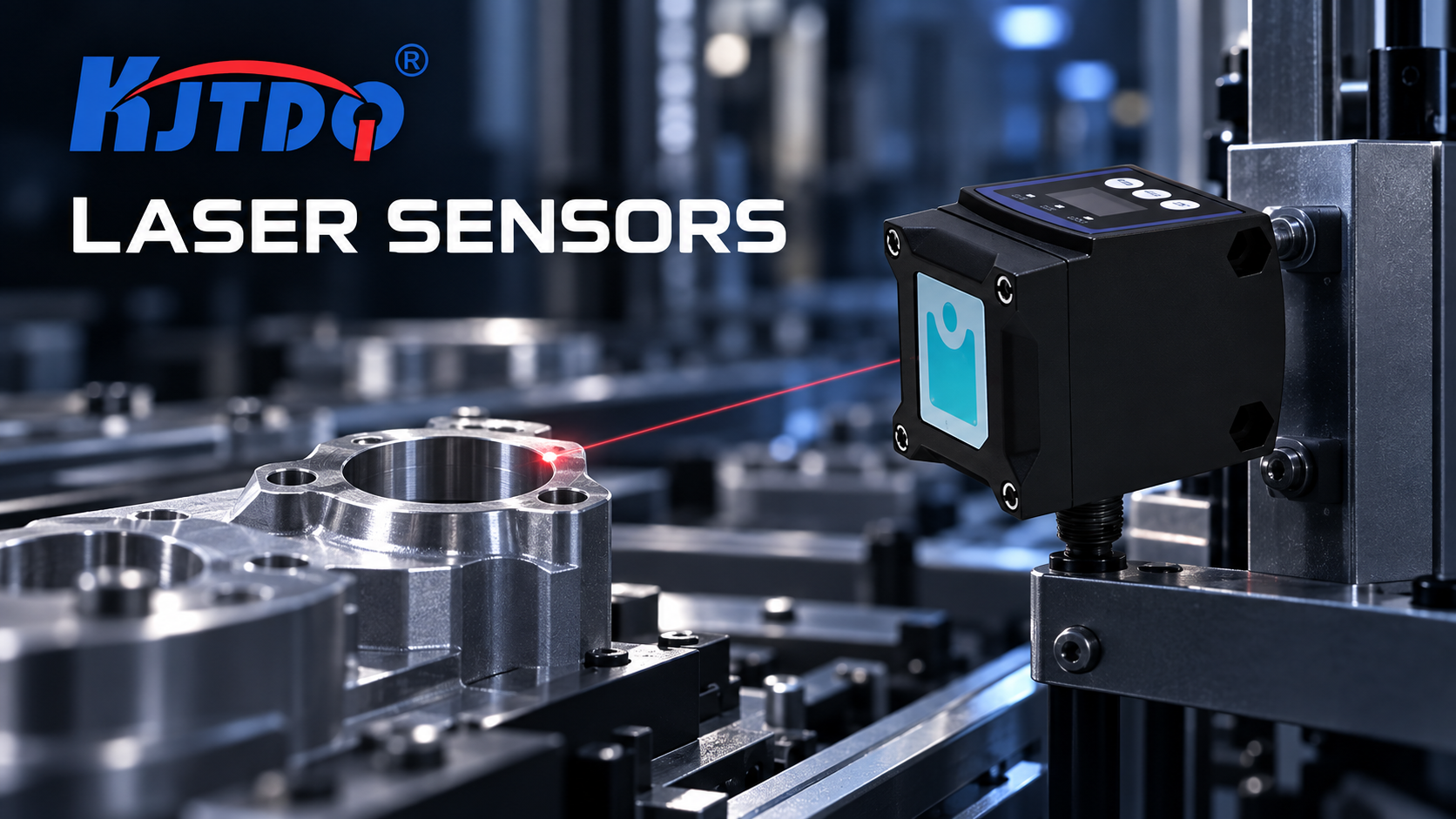
The new hero, KJT-HWCJ-50M, officially appears.
Not every detection point in an industrial site can be very close.
When the detection distance becomes longer, the sensor must have farther sensing capability and more stable signal output.
KJT-HWCJ-50M supports long-distance detection, making long-distance inspection no longer dependent on guesswork.
Just after solving long-distance inspection, a new problem appears.
This time, it is a black material bin.
Black targets have one characteristic: they do not “like” to reflect light.
In sensor detection, black, dark-colored, and low-reflectivity targets often weaken the signal. Then the site begins to alarm again:
Missed detection alarm
Counting abnormality
Production rhythm affected
The old sensor collapses: “The absorption rate of dark colors is too high — the signal has been swallowed…”
At this point, the KJT rescue team takes action again:
“Don’t worry. This time, let TOF handle it.”
The focus of Episode 2 is not how difficult a black box is, but the fact that in real logistics sites, target colors are never always ideal.
There are cardboard boxes, black boxes, plastic boxes, reflective objects, dark-colored targets, and complex surfaces.
For a sensor to work stably, it must have stronger target adaptability.
KJT-HWCJ-50M can maintain stable detection even when facing low-reflectivity targets.
In the third episode, the challenge escalates.
This time, it is not distance or black color, but speed.
On a high-speed conveyor line, bottles and boxes pass by rapidly.
As the site rhythm speeds up, problems appear:
Targets pass too quickly
The old solution responds too slowly
Two counts are missed
The system cannot keep up with the rhythm
The inspection system alarms: “Actual count 98, expected count 100, difference -2.”
At this point, the problem becomes obvious: on high-speed production lines, if the sensor is half a beat slow, the entire line may fall into disorder.
High-speed production-line detection is not simply about “seeing the target.”
What really matters is:
When the target arrives, can the sensor respond in time?
When targets pass continuously, can they be distinguished stably?
When speed increases, can the data keep up?
Can the system judge without missing, misjudging, or delaying the production rhythm?
KJT-HWCJ-50M makes high-speed detection less stressful.
No matter how fast the speed is, it must keep up steadily.
In the fourth episode, the scenario moves to high-level shelves.
In smart warehousing, high-level shelves are very common.
But they also bring new problems:
Shelves are too high
Distance is too far
Light scatters
Storage positions are difficult to confirm
Manual observation is unclear
The system prompts: “Inventory/storage position abnormal. Please check immediately.”
The old sensor starts sweating again: “It’s too high, the signal is weak, and I can’t see it…”
So, KJT-HWCJ-50M appears again.
The difficulty of high-level shelf detection is not only “height.”
It also involves multiple challenges such as distance, angle, installation position, target reflection, and on-site obstruction.
With long-distance detection capability, high-precision recognition, and stable output, KJT-HWCJ-50M makes high-level storage-position management easier.
It is designed for industrial sites where detection is long-distance, targets are complex, speeds are high, and stability is critical. Whether it is smart warehousing, logistics sorting, long-distance inspection, black material-bin detection, high-speed counting, or high-level shelf positioning, KJT-HWCJ-50M provides more reliable sensing support for automated systems.