check

check

check

check
check
check
check
check
check

check
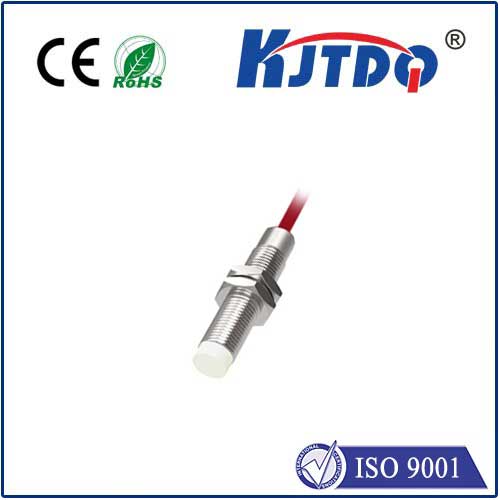
In today's rapidly evolving industrial landscape, the demand for reliable and efficient sensing solutions has never been greater. Among the various technologies available, the photoelectric proximity sensor stands out as a cornerstone of modern automation systems. These devices utilize light beams to detect the presence, absence, or distance of objects without physical contact, offering unparalleled accuracy and durability in diverse applications.
The fundamental principle behind a photoelectric proximity sensor involves emitting a light beam—typically infrared, visible red, or laser—from a transmitter. When this beam encounters an object, it is either reflected back to the receiver or interrupted, depending on the sensor's design. Common types include through-beam, retro-reflective, and diffuse reflective sensors, each suited for specific operational environments. Through-beam sensors, for instance, consist of separate transmitter and receiver units, providing long-range detection and high reliability. Retro-reflective models use a reflector to bounce light back, making them ideal for medium distances. Diffuse reflective sensors detect objects by measuring light scattered directly from the target, offering compact installation for shorter ranges.
One of the key advantages of photoelectric proximity sensors is their versatility. They can detect a wide range of materials, including metals, plastics, glass, and liquids, regardless of color or surface texture in many cases. This makes them indispensable in manufacturing lines for tasks such as object counting, position verification, and level monitoring. For example, in packaging industries, these sensors ensure products are correctly aligned on conveyor belts, reducing waste and improving efficiency. In automotive assembly, they verify component placement with micron-level precision, enhancing safety and quality control.
Durability is another significant benefit. Unlike mechanical switches that wear out over time due to physical contact, photoelectric sensors have no moving parts, leading to longer lifespans and reduced maintenance costs. They are often housed in rugged enclosures resistant to dust, moisture, and extreme temperatures, allowing deployment in harsh environments like mining or food processing plants. Advanced models feature built-in diagnostics and adjustable sensitivity, enabling easy integration with programmable logic controllers (PLCs) and IoT networks for smart factory setups.
Recent innovations have further expanded their capabilities. The integration of background suppression technology allows sensors to ignore distant objects, focusing only on targets within a specified range. This is particularly useful in logistics for pallet detection or robotic guidance. Additionally, miniaturization has led to compact sensors that fit into tight spaces, such as in medical devices or consumer electronics assembly. Energy-efficient designs with low-power consumption also support sustainable operations, aligning with global green initiatives.
When selecting a photoelectric proximity sensor, factors like sensing range, response time, and environmental conditions must be considered. For instance, in high-speed bottling lines, fast response times prevent bottlenecks, while in outdoor settings, models with robust housing withstand weather variations. Proper installation and alignment are crucial to avoid false triggers from ambient light or reflective surfaces. Regular calibration ensures consistent performance, with many sensors offering self-tuning features for ease of use.
In conclusion, photoelectric proximity sensors play a pivotal role in driving automation forward. By providing non-contact, precise detection, they enhance productivity, safety, and reliability across industries. As technology advances, these sensors continue to evolve, offering smarter, more adaptive solutions for the factories of tomorrow. From simple presence detection to complex spatial mapping, their impact on efficiency and innovation remains profound, solidifying their status as essential tools in the digital age.