check

check

check

check
check
check
check
check
check

check
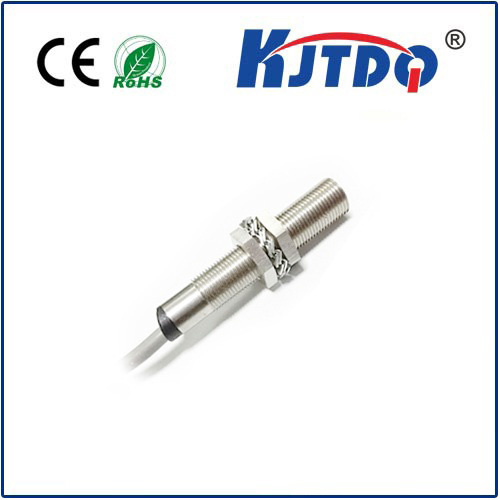
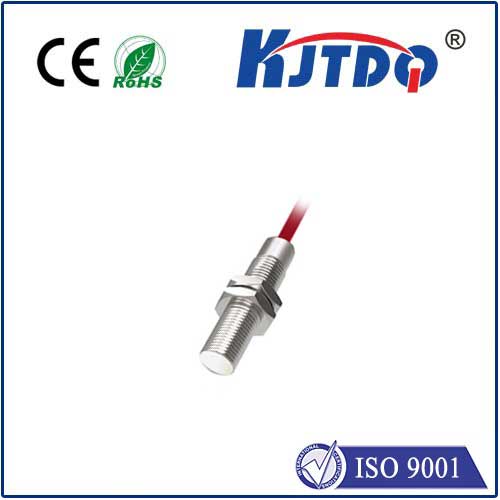
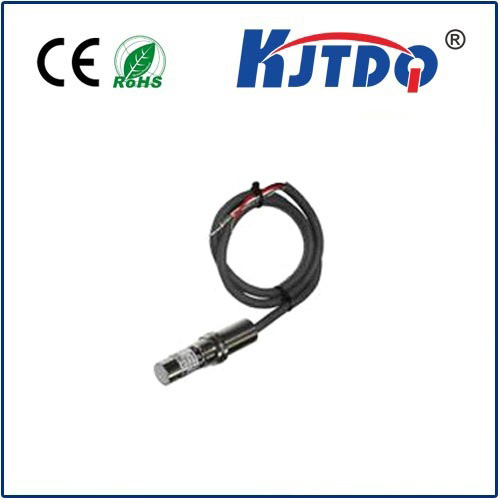
In modern industrial environments, the demand for robust and reliable sensing solutions is paramount. Among the various technologies available, the sealed housing proximity sensor stands out as a critical component for ensuring continuous and accurate operation in challenging conditions. This type of sensor is specifically engineered to detect the presence or absence of metallic objects without physical contact, offering a non-intrusive method for monitoring and control.
The defining feature of a sealed housing proximity sensor is its protective enclosure. This housing is meticulously designed to shield the internal electronic components from external contaminants such as dust, dirt, oil, coolant, and moisture. In facilities like automotive manufacturing plants, food processing units, or outdoor machinery, these environmental factors are constant threats. A standard sensor might fail quickly when exposed to such elements, leading to costly downtime and maintenance. The sealed construction, often rated with ingress protection codes like IP67 or IP69K, ensures the sensor's integrity, allowing it to perform consistently in wet, dirty, or washdown environments. This durability translates directly into increased machine uptime and reduced total cost of ownership.
Beyond its protective shell, the operational principle of these sensors is based on electromagnetic fields. When a metallic target enters the sensor's detection range, it causes a change in the oscillation amplitude within the sensor's coil. This change is detected and converted into a clear electrical output signal. The "proximity" aspect means there is no wear and tear from physical contact, which is a significant advantage over mechanical limit switches. This non-contact sensing leads to a dramatically longer operational lifespan and eliminates issues related to part degradation.
The applications for sealed housing proximity sensors are vast and integral to automation. They are commonly used for precise position detection—confirming if a robotic arm has reached its endpoint, if a cylinder is fully extended or retracted, or if a part is correctly seated in a fixture. On conveyor systems, they count products, control sorting gates, and ensure proper spacing. In metalworking, they detect the presence of tools or workpieces. Their reliability makes them indispensable for safety interlocks on machine guards, ensuring equipment only operates when access doors are securely closed.
Selecting the right sensor involves several technical considerations. The sensing range, which varies from a few millimeters to several tens of millimeters, must be appropriate for the application to avoid false triggers or missed detections. The housing material, typically stainless steel or ruggedized plastic, must be compatible with the environmental chemicals it will encounter. Output type is another key decision; options include NPN, PNP, or analog outputs, which must match the input requirements of the connected programmable logic controller (PLC) or other control systems. Furthermore, factors like switching frequency (how quickly it can detect objects in succession) and temperature tolerance are crucial for high-speed or extreme-temperature applications.
Installation and wiring, while straightforward, require attention to detail. Proper mounting, ensuring the correct orientation and adequate clearance around the sensing face, is essential for optimal performance. Following the manufacturer's guidelines for wiring, including correct polarity and the use of shielded cables in electrically noisy environments, prevents interference and ensures signal stability. Regular maintenance, though minimal, should involve periodic cleaning of the sensor face to remove any buildup that could attenuate the sensing field, and a functional check to verify its response.
The evolution of Industry 4.0 and the Industrial Internet of Things (IIoT) is further elevating the role of these sensors. Modern sealed proximity sensors can be equipped with IO-Link communication, a point-to-point serial connection that goes beyond simple switching. IO-Link enables the transmission of detailed parameter data and diagnostic information—such as operating temperature, signal strength, and even predictive maintenance alerts—directly to the control system. This intelligence allows for more sophisticated process monitoring, quicker troubleshooting, and optimized production flows.
In conclusion, the sealed housing proximity sensor is far more than a simple switch. It is a fundamental enabler of industrial automation, providing the reliable, contactless detection necessary for efficient, safe, and continuous production. Its sealed design directly confronts the harsh realities of industrial settings, offering resilience where it is needed most. For engineers and system integrators aiming to build robust automation systems, understanding and leveraging the capabilities of these sensors is a key step toward achieving higher levels of operational excellence and productivity. Their silent, unwavering performance forms the backbone of countless automated processes, making them a cornerstone of modern manufacturing and beyond.