check

check

check

check

check

check
In the world of industrial automation and machine control, reliable object detection is not just a convenience—it's a necessity for safety, efficiency, and precision. At the heart of countless applications, from packaging lines to robotic arms, lies a critical component: the proximity sensor. Specifically, the choice between AC and DC powered proximity sensors, often represented by models like the KJTDQ series, is a fundamental decision that impacts system performance and design. This guide delves into the core principles, differences, and optimal applications of AC and DC proximity sensors, providing a clear roadmap for selection and implementation.
First, let's understand the basic function. A proximity sensor is a non-contact device that detects the presence or absence of an object within its sensing range. It does this by emitting an electromagnetic field or a beam of electromagnetic radiation and looking for changes in the field or return signal. The "proximity" in its name is key; it detects objects without physical contact, eliminating mechanical wear and tear.
The primary distinction, as the names suggest, lies in their power supply requirements. AC (Alternating Current) proximity sensors are designed to operate directly from standard mains power supplies, commonly 120VAC or 240VAC. DC (Direct Current) sensors, on the other hand, typically operate on lower voltage DC supplies, such as 12VDC or 24VDC, which are standard in modern programmable logic controller (PLC) and electronic control systems.
This power difference leads to several practical implications. DC sensors, including many in the KJTDQ product family, are generally known for faster switching speeds. They can detect objects at a higher frequency, making them ideal for high-speed counting or sorting applications where milliseconds count. Their output is also cleaner and more compatible with the digital inputs of microprocessors and PLCs. Furthermore, DC sensors often come in both NPN (sinking) and PNP (sourcing) output configurations, offering flexibility in interfacing with different control system architectures.
AC proximity sensors are renowned for their robustness and ability to handle higher inrush currents, which can be advantageous when directly controlling small AC loads like solenoids or pilot lights without an intermediate relay. They are deeply entrenched in legacy systems and environments where mains power is the only readily available source. However, their switching speed is typically slower than DC models, and their output is not directly compatible with most modern solid-state control inputs without signal conditioning.
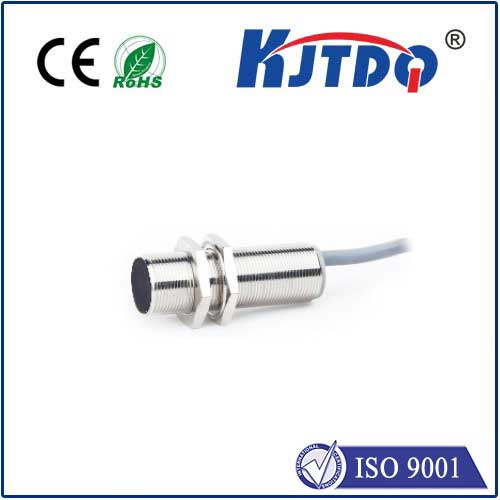
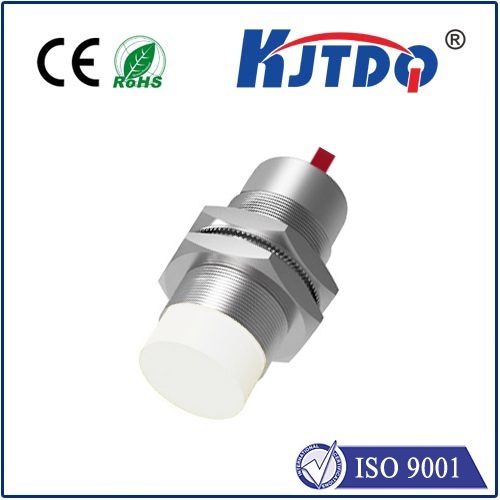
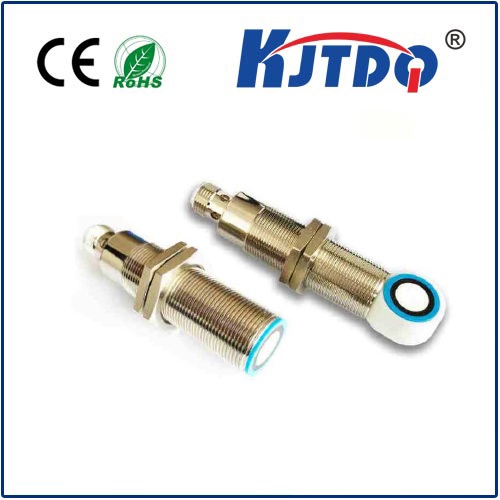
When selecting a sensor, such as a reliable KJTDQ series model, the environment is a crucial factor. Both AC and DC sensors are available in various housing materials like nickel-plated brass, stainless steel, or PBT plastic, offering resistance to chemicals, oils, and physical impacts. Key specifications to examine include sensing distance, which should be chosen with a safety margin (often 70-80% of the nominal range), and the type of target material. Inductive sensors, the most common type for metal detection, work best with ferrous metals like steel. For detecting non-metallic objects, capacitive or ultrasonic sensors would be the appropriate choice, also available in AC or DC variants.
Installation and wiring are straightforward but require attention. Ensuring proper shielding and separation from high-power cables minimizes electrical noise interference, which is especially critical for DC sensors. The sensor must be mounted securely to prevent vibration from affecting its performance, and the sensing face should be kept free of debris buildup.
The evolution of sensor technology has also led to the development of models that blur the lines. Some advanced sensors offer wide-range voltage input (e.g., 20-250VAC/DC), combining the flexibility to work with both power types in a single unit. These universal sensors simplify inventory and provide design flexibility.
In conclusion, the choice between an AC and a DC proximity sensor hinges on your specific application's power infrastructure, required switching speed, load control needs, and compatibility with the control system. For new installations and high-speed automation, DC sensors like those in the KJTDQ line are frequently the preferred choice due to their speed, compatibility, and efficiency. For retrofitting older equipment or in environments dominated by AC power, AC sensors remain a robust and viable solution. By carefully evaluating the electrical requirements, environmental conditions, and performance specifications, engineers and technicians can select the optimal proximity sensor to ensure a system that is both reliable and future-proof.