check

check

check

check

check

check
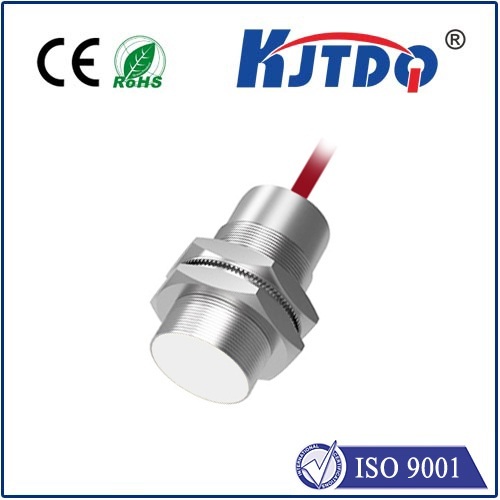
In the intricate world of industrial automation, countless components work in silent concert to ensure precision, safety, and efficiency. Among these unsung heroes, the inductive proximity detector stands out as a fundamental and remarkably reliable sensor. Operating without physical contact, it has become the unseen guardian of manufacturing lines, robotic arms, and machinery worldwide. Unlike optical or capacitive sensors, an inductive proximity detector specifically targets metallic objects. Its core principle is elegantly simple: it generates an oscillating electromagnetic field from its sensing face. When a ferrous or non-ferrous metal object enters this field, it induces small eddy currents on the object's surface. This action dampens the oscillation within the sensor's circuit. The detector's internal electronics meticulously monitor this oscillation amplitude. A significant drop triggers a swift output signal, indicating the presence of the target. This entire process occurs in milliseconds, enabling high-speed detection crucial for modern production cycles.
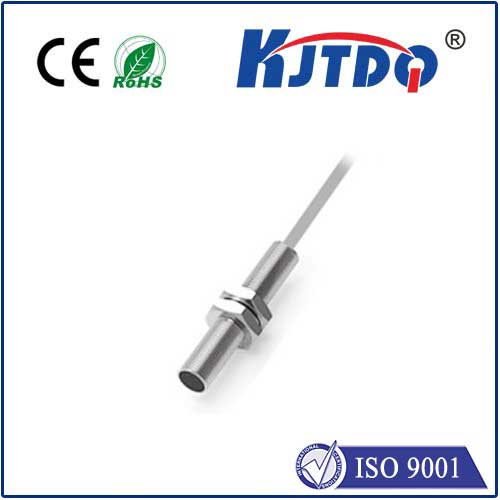
The robustness of inductive proximity detectors is a key driver of their widespread adoption. Encased typically in rugged stainless steel or nickel-plated brass housings, they are built to withstand harsh industrial environments. They are inherently immune to common interferences like dust, oil, coolant mist, and dirt that would obscure optical sensors. Since they detect based on electromagnetic principles, they perform consistently regardless of ambient light conditions or the accumulation of grime on their face, requiring minimal maintenance. This makes them ideal for demanding applications in metalworking, automotive assembly, material handling, and packaging machinery. Common uses include precise position sensing of metal parts, counting metallic products on a conveyor, monitoring rotational speed by detecting gear teeth, and ensuring safety by verifying the closed position of metal guards or doors.
Selecting the right inductive proximity detector involves several critical parameters beyond just the detection distance. The nominal sensing range, often a few millimeters to several tens of millimeters, is specified for a standard mild steel target. It's crucial to note that this range is reduced for non-ferrous metals like aluminum or copper, a factor accounted for by a correction factor. The housing style is another vital consideration; cylindrical threaded barrels (e.g., M8, M12, M18, M30) are common for easy installation, while rectangular or block styles suit specific mounting needs. Engineers must also specify the output type: traditional two-wire AC/DC, three-wire NPN (sinking) or PNP (sourcing) DC, or even analog or IO-Link versions for proportional distance measurement and advanced diagnostics. The output configuration dictates how the sensor integrates with Programmable Logic Controllers (PLCs) and other control systems.
Modern advancements have further expanded the capabilities of these detectors. Factor 1 sensors, for instance, boast a sensing range equal to their housing diameter, offering design flexibility. Miniaturized versions, with housings as small as M3 or M4, enable integration into compact spaces and small machinery. High-temperature variants can operate reliably in foundries or near welding stations. Furthermore, the integration of IO-Link communication transforms a simple binary switch into a smart device. It allows for remote parameter setting, continuous monitoring of operating status, signal strength, and temperature, and provides predictive maintenance data, aligning with Industry 4.0 initiatives for smarter factories.
In conclusion, the inductive proximity detector is far more than a simple metal detector. It is a precision instrument of remarkable durability and adaptability. Its non-contact operation ensures long service life and reliability, forming the foundational layer of feedback for automated systems. From ensuring a robotic gripper has correctly picked up a component to verifying a metal stamp has reached the bottom of its press, these detectors provide the critical "yes" or "no" that keeps processes flowing smoothly and safely. As automation evolves towards greater intelligence and interconnectivity, the humble inductive proximity detector, with its proven technology and new smart features, will undoubtedly continue to be an indispensable guardian in the industrial landscape.