check

check

check

check

check

check
In the world of industrial automation and machine safety, precision and reliability are non-negotiable. The M12 Proximity Sensor stands as a cornerstone technology, enabling seamless, non-contact detection of metallic objects in some of the harshest environments. Unlike mechanical limit switches, these robust sensors operate without physical contact, eliminating wear and tear and ensuring long-term operational consistency. Their standardized M12 connector, a defining feature, offers unparalleled convenience for installation and maintenance, making them a preferred choice across countless applications.
The core technology behind an M12 Proximity Sensor is based on electromagnetic fields. Primarily utilizing inductive sensing principles, the sensor generates an oscillating electromagnetic field from its face. When a metallic target, such as steel, aluminum, or brass, enters this detection field, it causes a change in the oscillation amplitude. The sensor's internal circuitry detects this shift and triggers a solid-state switching signal. This entire process happens instantaneously and without any physical contact, which is critical for applications involving fast-moving parts or delicate materials.
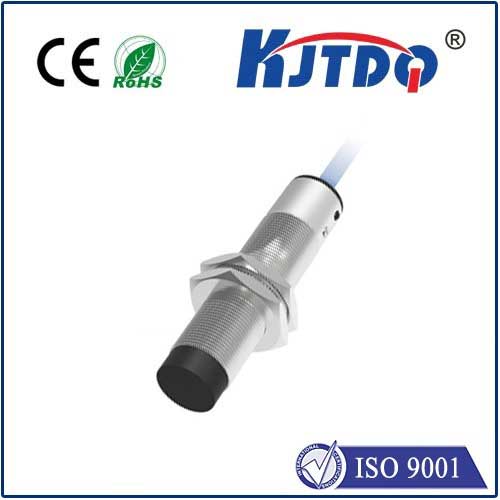
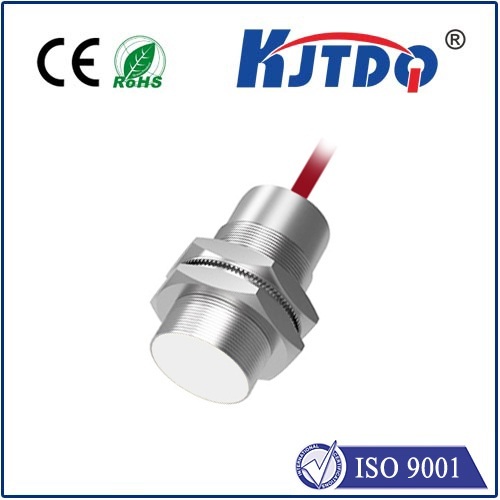
One of the most significant advantages of the M12 form factor is its ruggedness and standardization. The M12 threaded cylindrical housing, typically made of nickel-plated brass or stainless steel, provides an IP67 or higher ingress protection rating. This means the sensor is completely protected against dust and can withstand temporary immersion in water, making it ideal for washdown areas in food processing, outdoor machinery, or dusty manufacturing floors. The quick-disconnect M12 electrical connector drastically reduces wiring time and simplifies replacement, minimizing machine downtime.
When selecting an M12 Proximity Sensor, several key specifications demand attention. The sensing range, usually between 2mm to 15mm for standard models, must be carefully matched to the application. The choice of sensing face—flush-mounted, non-flush, or factor-1—affects the detection characteristics and installation requirements. Flush-mounted sensors can be installed embedded in metal without interference from the surrounding material. Output type is another critical decision; sensors are available with NPN (sinking) or PNP (sourcing) transistor outputs, as well as analog or IO-Link versions for smart factory integration. The operating voltage, typically 10-30V DC, must align with the control system's power supply.
The applications for M12 Proximity Sensors are virtually limitless. They are ubiquitous in automotive assembly lines for part presence verification, robotic end-effector positioning, and pallet detection in logistics. In packaging machinery, they count products and control fill levels. They serve as vital safety components by confirming guard door closure or monitoring machine position to prevent hazardous motion. Their reliability in detecting position, end-of-travel, and object presence makes them indispensable for ensuring smooth, efficient, and safe automated processes.
To guarantee optimal performance and longevity, proper installation and maintenance are essential. Ensure the sensor is mounted securely to avoid vibration-induced false signals. Maintain the recommended clearance between the sensing face and the target, and be mindful of the sensing range's reduction for non-ferrous metals. Regularly clean the sensing face of debris, oil, or metal chips that could attenuate the electromagnetic field. While these sensors are designed for durability, periodic functional checks as part of a preventative maintenance schedule will help avoid unexpected failures.
Looking ahead, the evolution of the M12 Proximity Sensor is intertwined with Industry 4.0. The integration of IO-Link communication transforms a simple binary switch into an intelligent device capable of reporting diagnostic data, such as operating temperature, signal strength, and switch cycle counts. This enables predictive maintenance, where potential issues are identified before they cause downtime, and allows for remote parameter adjustment, maximizing flexibility in adaptive production systems. The humble M12 Proximity Sensor is thus evolving from a basic detection component into a smart node in the connected industrial ecosystem.
In conclusion, the M12 Proximity Sensor represents a perfect blend of robust design, standardized connectivity, and proven inductive sensing technology. Its ability to provide accurate, wear-free detection in challenging conditions makes it a fundamental building block for modern automation. By understanding its operating principles, key selection criteria, and best practices for use, engineers and technicians can leverage this versatile component to enhance machine reliability, safety, and overall productivity. As industries move towards greater connectivity, the sensor's role is set to become even more strategic and data-rich.