check

check

check

check

check

check
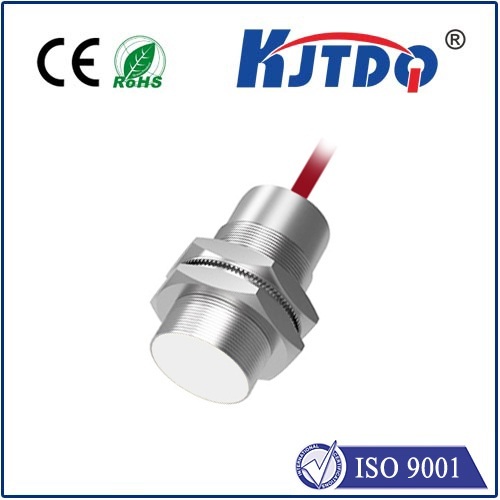
In the world of industrial automation and machinery, space is often at a premium. Design engineers constantly face the challenge of integrating reliable sensing technology into compact assemblies without compromising performance. This is where the flush inductive sensor, a specialized variant of the standard inductive proximity sensor, becomes an indispensable component. Unlike its non-flush counterparts, a flush inductive sensor is designed to be mounted completely flush with its surrounding metal mounting surface. This unique design eliminates the traditional sensing face projection, allowing for seamless integration and offering distinct advantages in demanding applications.
The core operating principle remains based on electromagnetic induction. The sensor generates a high-frequency oscillating electromagnetic field from its active face. When a metallic target object enters this field, eddy currents are induced on the target's surface. These currents absorb energy from the oscillator, causing a change in its amplitude. The sensor's internal circuitry detects this damping effect and triggers a switching signal. The critical distinction of the flush-mounted design lies in its shielding. The sensor's coil is surrounded by a ferrite core and a metal shield that focuses the electromagnetic field directly ahead. This shielding prevents the field from spreading laterally, making the sensor immune to interference from the surrounding mounting material. Consequently, it can be installed embedded in metal without the risk of false triggering, a limitation of non-flush or unshielded sensors.
The benefits of this design are profound for machine builders and plant operators. First and foremost is the exceptional durability and resistance to physical damage. With its sensing face sitting flush, there is no protruding part vulnerable to shearing, impact, or abrasion from passing materials or misaligned parts. This significantly extends the sensor's operational life in harsh environments like material handling, machining centers, or robotic pick-and-place units. Secondly, it enables installation in spaces where traditional sensors simply cannot fit. This is crucial for modern, high-density machinery where every millimeter counts. Applications include precise end-position detection of hydraulic or pneumatic cylinders, where the sensor can be mounted directly into the cylinder body or a tight machine frame to detect the piston position reliably.
Furthermore, the flush inductive sensor offers simplified installation and maintenance. The requirement for a precise mounting bracket is often reduced, as the sensor can be fitted directly into a drilled and tapped hole. This streamlines the assembly process and reduces hardware costs. Its inherent resistance to contaminants is another key advantage. Flush mounting minimizes gaps and ledges where chips, coolants, or dust could accumulate, helping to maintain consistent performance in dirty industrial settings. For detecting small or thin metallic targets, certain high-performance flush sensors offer superior sensitivity and repeatability, ensuring process reliability in precision tasks like counting, sorting, or verifying part presence.
Typical industrial applications are vast. In automotive manufacturing, they are used for tool breakage detection in CNC machines and position verification in welding robots. In packaging lines, they monitor the position of metal components on continuous motion wrappers. Within assembly automation, they ensure fixtures are in the correct position before a cycle begins. When selecting a flush inductive sensor, key specifications to consider include the sensing distance, which is typically shorter than a non-flush sensor of the same diameter due to the shielded field, the target material (ferrous or non-ferrous metals), the housing material (often stainless steel for robustness), and the electrical output (PNP/NPN, NO/NC). Environmental ratings like IP67 or IP69K are essential for washdown or outdoor applications.
In conclusion, the flush inductive sensor is not merely a variation but a critical engineering solution tailored for robustness and space-constrained precision. By offering durable, interference-free operation in embedded metal installations, it solves practical problems that directly impact machine reliability, safety, and uptime. For any design involving metallic target detection in tight quarters or harsh conditions, specifying a high-quality flush inductive sensor is a strategic decision that pays dividends in long-term, maintenance-free operation. Its role in enabling smarter, more compact, and more resilient industrial equipment continues to grow, solidifying its status as a fundamental component in advanced automation.