check

check

check

check
check
check
check
check

check

check
In the world of industrial automation, precision, reliability, and durability are non-negotiable. Among the myriad of sensors enabling this efficiency, the inductive proximity switch stands out as a fundamental component. This device, often simply called a proximity sensor, operates on a simple yet brilliant principle to detect metallic objects without any physical contact. Its role is critical in applications ranging from assembly line counting and machine safety to position verification and robotic guidance.
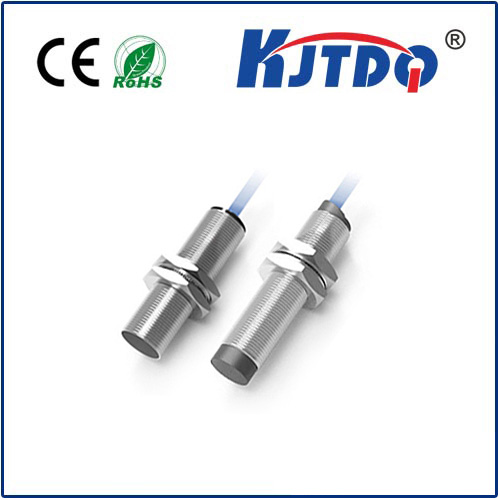
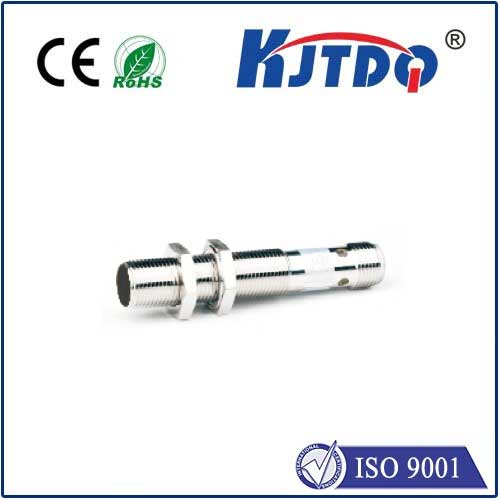
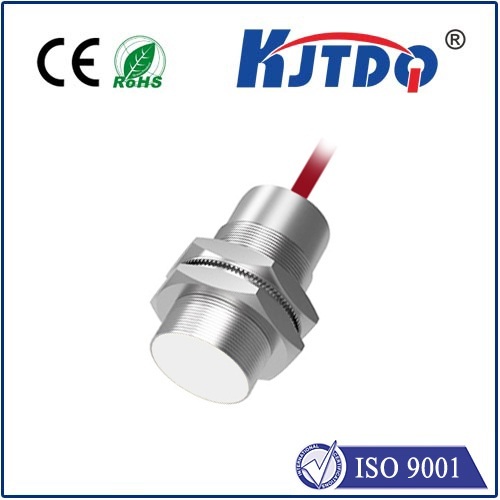
So, how does an inductive proximity switch work? At its core, it contains an oscillator circuit that generates a high-frequency electromagnetic field at its active face. When a metallic object enters this field, eddy currents are induced on the surface of the metal. These currents absorb energy from the oscillator, causing a change in its amplitude. This change is detected by the sensor's circuitry, which then triggers a solid-state output switch, sending a signal to the control system. The key advantage is that this detection is entirely non-contact, meaning no wear and tear on the sensor or the target, leading to exceptionally long service life and minimal maintenance.
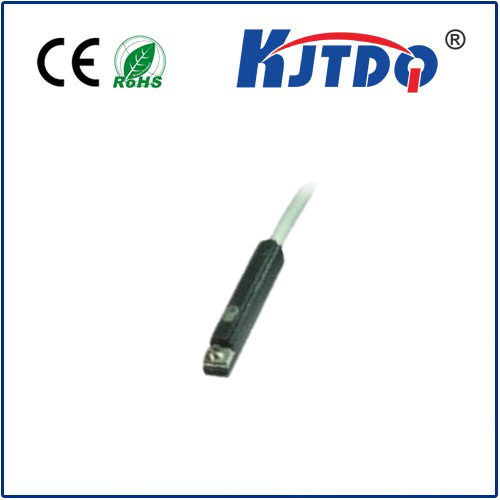
The term KJTDQ often appears in model designations or industry catalogs, typically representing specific product series or technical characteristics from certain manufacturers. It underscores a focus on robust performance and adaptability. Modern inductive proximity switches, like those in the KJTDQ series, are engineered to excel in harsh industrial environments. They are commonly housed in robust metal or high-grade plastic casings, offering high degrees of protection (IP67, IP69K) against dust, water, oils, and coolants. This makes them ideal for use in automotive manufacturing, food and beverage processing, packaging machinery, and metalworking.
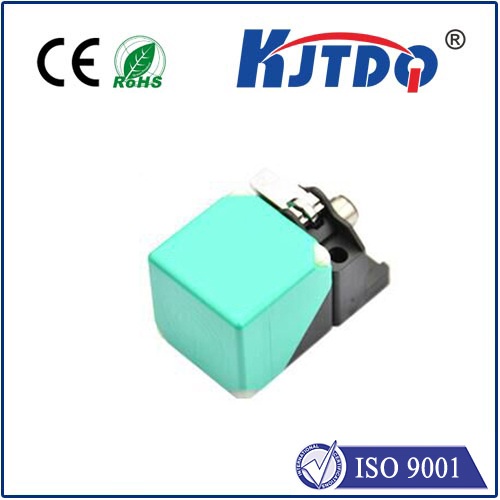
When selecting an inductive proximity switch, several technical parameters are crucial. The sensing distance, or nominal range, is specified for a standard target (usually mild steel). It's important to note that different metals have different correction factors; for instance, stainless steel may reduce the effective sensing range. The switching frequency defines how many detection cycles per second the sensor can handle, vital for high-speed applications. Other considerations include the output type (PNP/NPN, normally open/closed), housing shape (cylindrical, rectangular, ring-shaped), and connection method (pre-wired cable or quick-disconnect).
The integration of these sensors into control systems, such as PLCs, is straightforward, significantly enhancing operational intelligence. They provide the essential "eyes" for automated processes, ensuring parts are present, positioned correctly, or counted accurately. This prevents jams, reduces waste, and safeguards machinery. Furthermore, advancements have led to specialized variants like analog output sensors for distance measurement, factor-1 sensors that offer the same sensing range for all metals, and weld-field immune models designed to function reliably near robotic welding equipment.
In conclusion, the inductive proximity switch is far more than a simple component; it is a cornerstone of modern industrial efficiency and safety. Its non-contact operation, embodied in reliable series such as those denoted by KJTDQ, ensures consistent performance under demanding conditions. By providing a dependable binary signal for the presence of metal, it forms an indispensable link in the chain of automated control, driving productivity and precision across countless industries. Choosing the right sensor for the specific application, environment, and target material is the final step in unlocking its full potential for seamless and trouble-free operation.