check

check

check

check

check

check
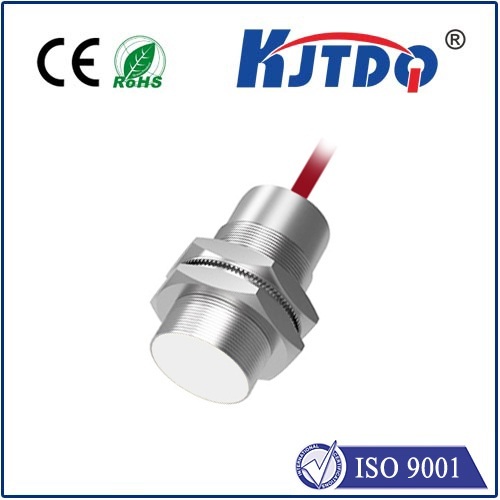
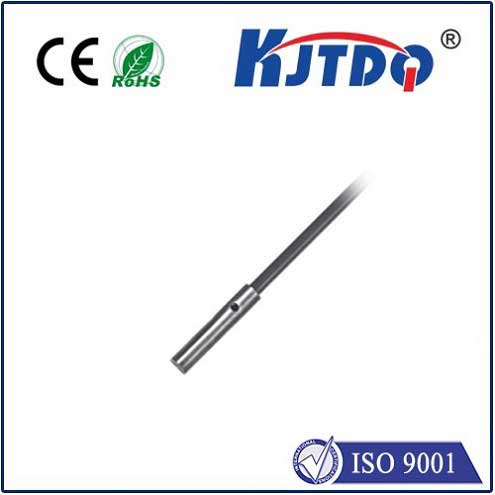
In the world of industrial automation and machinery, space is often at a premium. Every millimeter counts when designing efficient, high-performance systems. This is where the Short Body Inductive Sensor emerges as an unsung hero. Far from being just a smaller version of a standard sensor, this compact device represents a significant engineering achievement, enabling precise non-contact detection in the tightest of spaces without compromising on reliability or performance.
The core advantage of a Short Body Inductive Sensor lies in its namesake: its drastically reduced physical dimensions. Traditional inductive proximity sensors, while reliable, can be prohibitively long for modern, densely packed control panels, robotic arms, or compact machinery. The short-body design solves this spatial challenge. By utilizing advanced coil winding techniques and optimized internal circuitry, manufacturers have successfully packed the essential sensing capabilities into a housing that is often less than half the length of a standard sensor. This miniaturization does not come at the cost of sensing distance, however. Modern short-body models offer surprisingly generous sensing ranges for their size, reliably detecting the presence of metallic objects like steel, aluminum, or copper.
The applications for these sensors are vast and critical. Imagine a high-speed packaging line where multiple actuators and guides are positioned within inches of each other. A standard sensor would simply not fit. A Short Body Inductive Sensor can be seamlessly integrated to monitor the position of a metal flag on a pneumatic cylinder, confirm the passage of a metal cap on a bottling line, or act as an end-position verification in a miniature robotic gripper. They are indispensable in the semiconductor industry, within the confined spaces of CNC machining centers, and on automated assembly platforms where real estate is extremely limited. Their robust, typically solid-state design with no moving parts ensures longevity even in environments with significant vibration, a common challenge in compact machinery.
Beyond mere size, these sensors offer enhanced installation flexibility. Their compact form factor allows for mounting in orientations and locations previously deemed impossible. This enables machine designers to optimize layouts for better cable management, improved accessibility for maintenance, and overall cleaner machine architecture. Many models feature built-in LEDs for diagnostic status, a valuable feature that simplifies troubleshooting in crowded control cabinets. Furthermore, they maintain the classic benefits of inductive sensing: immunity to dust, oil, and moisture (often rated IP67 or higher), making them suitable for harsh industrial environments.
Selecting the right Short Body Inductive Sensor requires attention to key specifications. The sensing distance, while shorter than larger models, must be appropriate for the application. The housing material, typically nickel-plated brass or stainless steel, should be chosen based on the environmental conditions. Output type (PNP/NPN, NO/NC) must be compatible with the controller's input card. Perhaps most importantly, the electrical characteristics, such as voltage range and current draw, must align with the system's power supply. Leading manufacturers continue to innovate, offering variants with increased temperature tolerance, enhanced electromagnetic compatibility (EMC), and even analog or IO-Link outputs for smart factory integration.
In conclusion, the Short Body Inductive Sensor is a testament to the principle that great things come in small packages. It is a critical enabler of modern, miniaturized, and efficient industrial automation. By providing reliable, non-contact detection in confined spaces, it allows engineers to push the boundaries of machine design, leading to more compact, faster, and more intelligent systems. For any project where space is constrained but performance cannot be, this compact powerhouse is an essential component to consider.