check

check

check

check

check

check
In the world of industrial automation, precision, reliability, and durability are non-negotiable. At the heart of countless assembly lines, packaging machines, and robotic systems lies a critical component often overlooked: the proximity sensor. Among these, the M12 inductive proximity sensor has emerged as a global standard for non-contact object detection in demanding environments. This guide delves into the technology, applications, and key benefits of these robust sensors, explaining why they are a cornerstone of modern manufacturing.
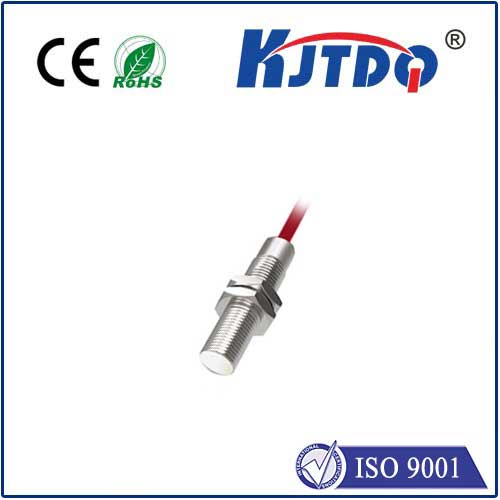
An inductive proximity sensor operates on a simple yet effective principle. It generates an electromagnetic field from its sensing face. When a metallic object enters this field, it induces eddy currents within the target, causing a change in the oscillation amplitude within the sensor's internal circuit. This change is detected and triggers a solid-state output switch, sending a signal to the controller without any physical contact. The "M12" designation refers to the standardized threaded cylindrical housing that is 12 millimeters in diameter. This compact, rugged form factor, combined with a standardized connection, makes it incredibly versatile and easy to install across a vast array of machinery from different manufacturers.
The primary advantage of the M12 inductive sensor is its exceptional resilience. Encased typically in nickel-plated brass or stainless steel, these sensors are built to withstand harsh conditions. They are inherently resistant to dust, dirt, oil, coolants, and even brief washdowns, making them ideal for metalworking, food and beverage processing, and automotive manufacturing. Unlike optical sensors, they are completely unaffected by ambient light, colored objects, or transparent materials, providing unwavering reliability when detecting metals. Their non-contact nature also means there is no mechanical wear on the sensor itself, leading to a dramatically longer service life compared to mechanical limit switches.
When selecting an M12 inductive proximity sensor, several technical specifications are crucial. The sensing range, typically from 1 to 4 millimeters for standard models, must be chosen based on the application. Shielding (also called flush-mountable) models allow for side-by-side installation without interfering with each other, while unshielded (non-flush) models offer a slightly longer range. The output type is another key decision; PNP (sourcing) and NPN (sinking) configurations must match the input requirements of the connected programmable logic controller (PLC). Additionally, factors like switching frequency, temperature rating, and output status indicators (like an LED) play a role in selecting the right sensor for high-speed or extreme-temperature applications.
The applications for these sensors are virtually limitless within industrial settings. They are used for precise position detection of machine parts, such as confirming the presence of a cylinder in its end position. They act as counters on conveyor belts, detecting metal parts or tags. In robotic cells, they ensure end-effectors or grippers are in the correct starting position before a cycle begins. They provide jam detection in automated machinery by verifying a part has passed a specific point within an expected time window. Their robustness also makes them perfect for use in CNC machines for tool positioning and pallet detection.
Installation and maintenance are straightforward, contributing to their popularity. The M12 connector allows for quick wiring via pre-made cables, reducing downtime during setup or replacement. Regular maintenance usually involves simply keeping the sensing face clean from heavy metallic debris buildup, which could theoretically reduce the effective sensing distance. A periodic functional check is recommended to ensure the sensor is triggering correctly within its specified range.
In conclusion, the M12 inductive proximity sensor is a testament to elegant, robust engineering. It solves a fundamental challenge in automation—reliable, wear-free detection—with a compact, standardized, and tough design. For engineers and maintenance professionals, understanding its operation and selection criteria is essential for designing and maintaining efficient, fault-resistant systems. By choosing the correct M12 inductive sensor for the specific environment and task, facilities can achieve higher uptime, improved product quality, and reduced maintenance costs, solidifying its role as an indispensable component in the automated industrial landscape.