check

check

check

check

check

check
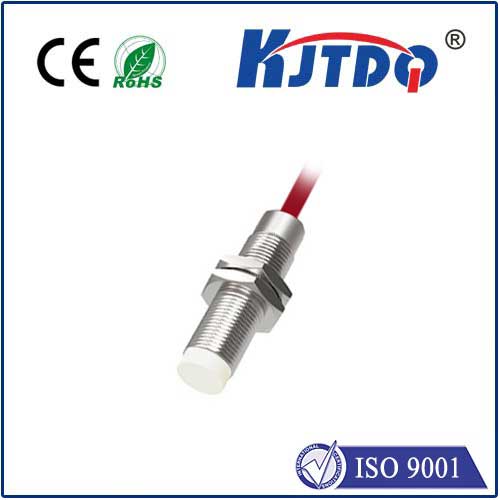
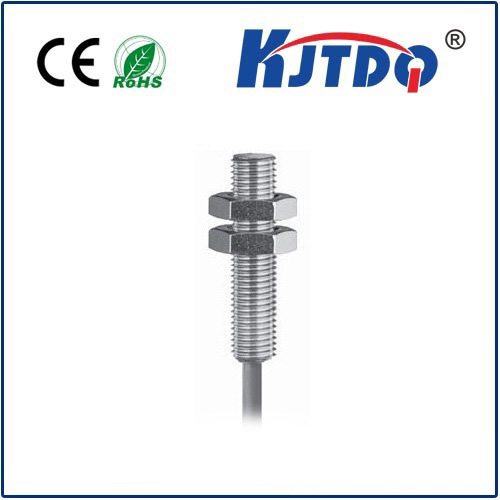
In the bustling world of industrial automation, where precision and reliability are non-negotiable, the inductive sensor operating on 24V DC stands as a fundamental and indispensable component. This type of sensor, often referred to as a proximity sensor, is the silent sentinel on countless factory floors, performing detection tasks with unwavering consistency. Its principle of operation is elegantly simple yet highly effective: it generates an electromagnetic field. When a metallic object enters this field, it induces eddy currents within the target, causing a change in the sensor's own oscillation amplitude. This change is detected by the internal circuitry, which then triggers a solid-state switching signal—all without any physical contact.
The choice of a 24V DC power supply is far from arbitrary; it represents a global standard in industrial control systems. This voltage level offers an optimal balance between safety and performance. It is low enough to be considered safe for personnel in most control cabinet and machine environments, reducing the risk of severe electrical shock. Simultaneously, it provides sufficient power to ensure stable operation over long distances with minimal voltage drop, especially when compared to lower voltage sensors. The DC nature of the power supply eliminates issues like inductive interference from AC lines, leading to cleaner signal transmission and enhanced compatibility with programmable logic controllers (PLCs) and other digital control systems, which predominantly use DC logic.
The applications for a 24V DC inductive sensor are virtually limitless within industrial settings. They are the go-to solution for precise position detection. For instance, on a high-speed conveyor line, these sensors reliably confirm the presence or absence of a metal component, signaling a robotic arm to pick or place an item. They are crucial for end-of-travel detection on linear actuators and cylinders, preventing mechanical overtravel and potential damage. In rotary applications, they can count metallic teeth on a gear to monitor speed or index position. Their robust construction, typically featuring a housing made of nickel-plated brass, stainless steel, or PBT plastic, makes them resistant to common industrial hazards like coolants, oils, dust, and vibrations. Many models boast an IP67 or higher ingress protection rating, allowing them to perform flawlessly in wash-down environments commonly found in food and beverage or pharmaceutical manufacturing.
When selecting an inductive sensor for a 24V DC system, several key specifications demand attention. The sensing range, usually a few millimeters for standard cylindrical models, must be appropriate for the application to avoid false triggers. The output configuration is critical: PNP (sourcing) and NPN (sinking) outputs must be matched correctly with the PLC input module. The choice between a normally open (NO) or normally closed (NC) contact logic depends on the safety and control requirements of the circuit. Furthermore, modern sensors offer advanced features like short-circuit protection, reverse polarity protection, and LED status indicators, which significantly ease installation, troubleshooting, and maintenance, thereby reducing machine downtime.
The advantages of deploying these sensors are clear. Their non-contact operation means there is no mechanical wear, leading to a dramatically longer service life compared to mechanical limit switches. The absence of physical contact also allows for extremely high switching frequencies, enabling detection of rapidly moving objects. Their solid-state design ensures a fast response time, often in the microsecond range, which is essential for synchronizing high-speed automation sequences. This combination of durability, speed, and reliability translates directly into increased productivity, reduced maintenance costs, and improved overall equipment effectiveness (OEE) for manufacturing operations.
In conclusion, the 24V DC inductive sensor is far more than just a simple switch. It is a sophisticated, rugged, and highly reliable cornerstone of modern industrial automation. Its standardized voltage, robust design, and versatile functionality make it an essential element for engineers and technicians designing, maintaining, and optimizing automated systems. From automotive assembly to packaging machinery, its role in enabling precise, contactless detection ensures smooth, efficient, and continuous operation, solidifying its status as a true workhorse of industry.