check

check

check

check
check
check
check
check

check
check
In the demanding world of industrial automation, reliability is not a luxury—it's a necessity. Equipment must perform consistently under harsh conditions, from temperature extremes to vibration and contamination. This is where the Inductive Sensor 10-30V DC stands out as a cornerstone of modern sensing technology. Designed for durability and precision, this type of sensor provides non-contact detection of metallic objects, making it indispensable for countless applications on the factory floor.
An inductive proximity sensor operates on a simple yet effective principle. It generates an electromagnetic field from its sensing face. When a metallic target enters this field, eddy currents are induced within the target. This causes a change in the oscillation amplitude within the sensor's internal circuit. The sensor's electronics detect this change and trigger a solid-state switching output. The "10-30V DC" specification is crucial; it denotes the sensor's operating voltage range. This wide DC range offers significant flexibility, allowing the sensor to be integrated seamlessly into various control systems, including those powered by common 24V DC industrial power supplies. This compatibility reduces complexity and inventory needs for maintenance teams.
The benefits of choosing a 10-30V DC inductive sensor are substantial. First and foremost is its exceptional ruggedness. With no moving parts and a typically sealed housing (often rated IP67 or higher), it is immune to wear and tear from mechanical contact and resistant to dust, oils, and coolants. This translates to a long operational life with minimal maintenance. Secondly, its high switching frequency enables it to detect very fast-moving objects, such as parts on a high-speed conveyor or teeth on a rotating gear, ensuring no event is missed. Furthermore, its all-solid-state design provides a bounce-free, clean signal to Programmable Logic Controllers (PLCs) or other control units, enhancing system reliability and response accuracy.
Typical applications are vast and varied. You will find these sensors performing critical tasks in automotive manufacturing, food and beverage processing, packaging machinery, and material handling systems. They are used for precise position detection of cylinders, confirming the presence of a metal part in an assembly fixture, counting metallic products on a line, or ensuring a robotic gripper has correctly picked up a component. Their ability to function reliably near welding stations or other electrically noisy environments, thanks to built-in protection against electromagnetic interference, makes them a trusted choice for challenging installations.
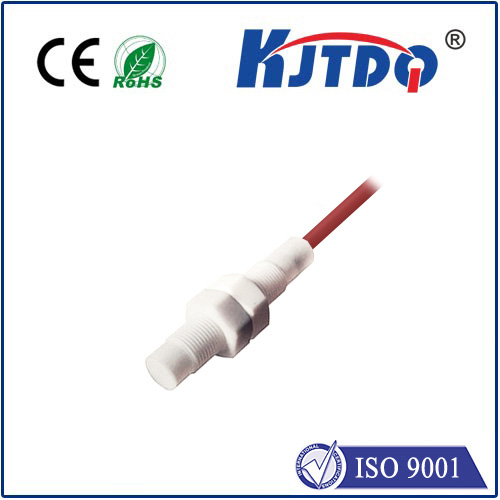
When selecting an Inductive Sensor 10-30V DC, several key factors should be considered. The sensing distance, which is standardized (e.g., 2mm, 5mm, 8mm), must be appropriate for the application to ensure reliable detection without physical collision. The housing material, such as nickel-plated brass or stainless steel, should be chosen based on the chemical exposure expected. The output configuration—whether NPN (sinking) or PNP (sourcing)—must match the input requirements of the connected controller. Finally, the physical form factor, like cylindrical (M8, M12, M18) or rectangular, must fit the mechanical design constraints of the machine.
Installation and wiring are straightforward, but attention to detail ensures optimal performance. Ensuring a stable, clean DC power supply within the 10-30V range is fundamental. Proper mounting, respecting the recommended lateral and axial clearance from other metal surfaces, prevents false triggering. For wiring, it is essential to follow the manufacturer's diagram, typically involving connections for brown (positive), blue (negative), and black (output) wires. Implementing proper shielding and routing signal cables away from power lines minimizes the risk of electrical noise affecting the sensor's operation.
In conclusion, the Inductive Sensor 10-30V DC represents a perfect blend of simplicity, robustness, and versatility. It is a fundamental component that silently ensures the smooth, efficient, and safe operation of automated systems. By providing a dependable electrical signal in response to the presence of metal, it forms the essential link between the physical movement of machinery and the digital logic of the control system. For engineers and technicians seeking a proven, reliable, and cost-effective solution for metallic object detection, specifying a high-quality 10-30V DC inductive sensor is a decision that pays dividends in uptime and operational consistency for years to come.