check

check

check

check

check

check
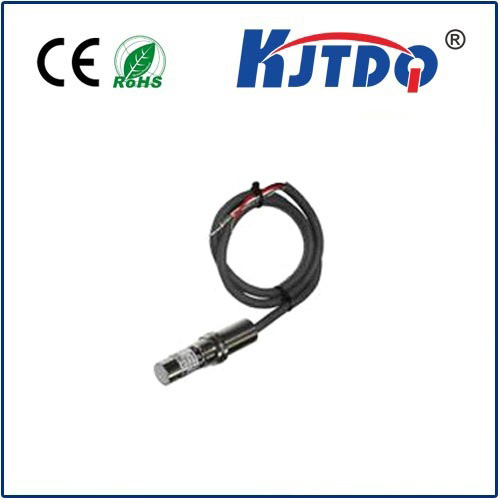
In the dynamic landscape of industrial automation, precision and reliability are non-negotiable. Enter the Long Distance Inductive Sensor, a technological cornerstone that is fundamentally reshaping how machines perceive and interact with metallic objects in challenging environments. Unlike standard inductive sensors limited to a few millimeters of range, these advanced devices offer detection capabilities extending from several millimeters up to even 100mm or more, bridging a critical gap in non-contact measurement and control.
The core principle remains based on electromagnetic induction. The sensor generates an oscillating electromagnetic field from its active face. When a metallic target enters this field, eddy currents are induced within the metal, causing a measurable change in the sensor's oscillation amplitude or frequency. Advanced Long Distance Inductive Sensors, however, utilize optimized coil designs, sophisticated electronics, and specialized housing materials to project and sense this field over significantly greater distances without a proportional increase in size. This extended range is achieved while maintaining the inherent robustness of inductive technology: immunity to dust, dirt, oil, and moisture, making them ideal for harsh factory floors, welding cells, and outdoor applications.
The practical applications are vast and transformative. In material handling and logistics, these sensors reliably detect the presence of pallets, containers, or metal parts on conveyors from a safe distance, allowing for early process decisions and preventing jams. In automated guided vehicle (AGV) systems, they provide precise docking and alignment feedback. Within heavy machinery and automotive assembly, they enable position verification of large components like engine blocks or chassis frames where close mounting is impractical. Furthermore, they play a crucial role in safety systems, acting as non-contact interlock guards on large doors or gates, ensuring personnel safety by confirming a clear path or a secured state.
Selecting the right Long Distance Inductive Sensor requires careful consideration of several parameters. The nominal sensing distance, or Sn, is the first specification, but engineers must also account for factors like the reduction factor—a multiplier that adjusts the effective range based on the target material's properties (e.g., steel, aluminum, copper). The sensor's housing material, typically nickel-plated brass or stainless steel, must withstand the environmental conditions. Output type (PNP/NPN analog or digital) and connection method (pre-wired cable or quick-disconnect) are chosen based on the control system architecture. Modern versions also feature IO-Link connectivity, enabling digital parameter setting, advanced diagnostics, and process data reporting for Industry 4.0 readiness.
The integration of Long Distance Inductive Sensors, such as the KJTDQ series, directly translates to enhanced operational efficiency and reduced downtime. By enabling detection from a greater distance, they allow for more flexible machine design, simplify installation and maintenance, and provide earlier warning signals for process anomalies. This proactive detection capability minimizes the risk of collisions, reduces wear on mechanical components, and ensures smoother, more continuous production flows. The reliability of these sensors means fewer false triggers and a dramatic decrease in unplanned stoppages, contributing directly to higher overall equipment effectiveness (OEE).
Looking ahead, the evolution of Long Distance Inductive Sensors is intertwined with smarter manufacturing trends. Future iterations will likely offer even greater ranges with higher precision, integrated condition monitoring to predict maintenance needs, and enhanced cybersecurity features for connected networks. As factories become more agile and data-driven, the humble inductive sensor evolves from a simple switch into an intelligent node in the industrial IoT ecosystem. For engineers and plant managers seeking to future-proof their operations, understanding and leveraging the capabilities of long-range inductive sensing is no longer an option but a strategic imperative for achieving resilience, safety, and peak productivity in an increasingly competitive industrial world.