check

check

check
check
check
check
check
check

check

check
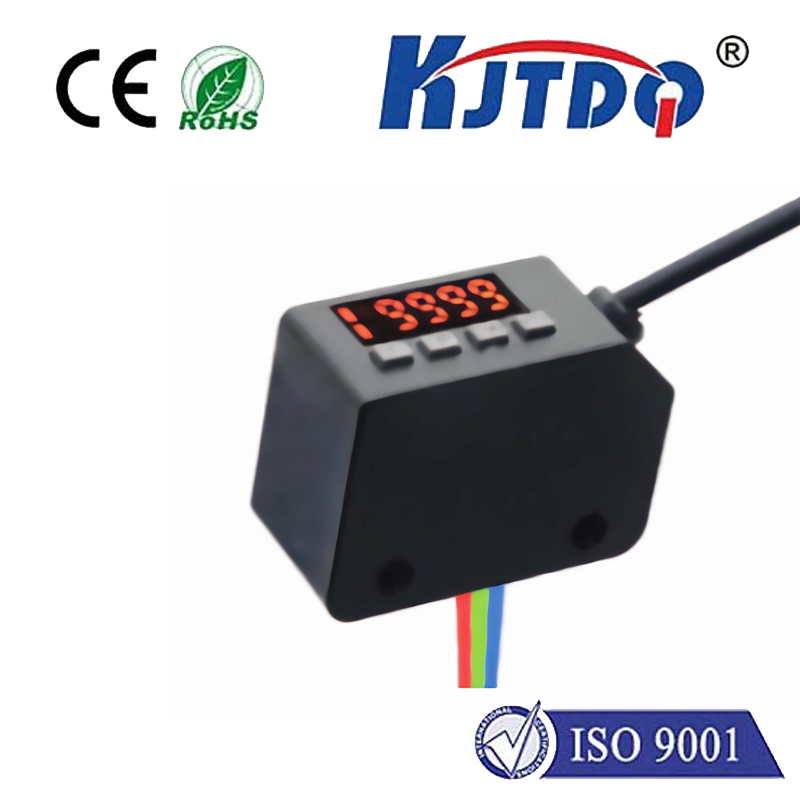
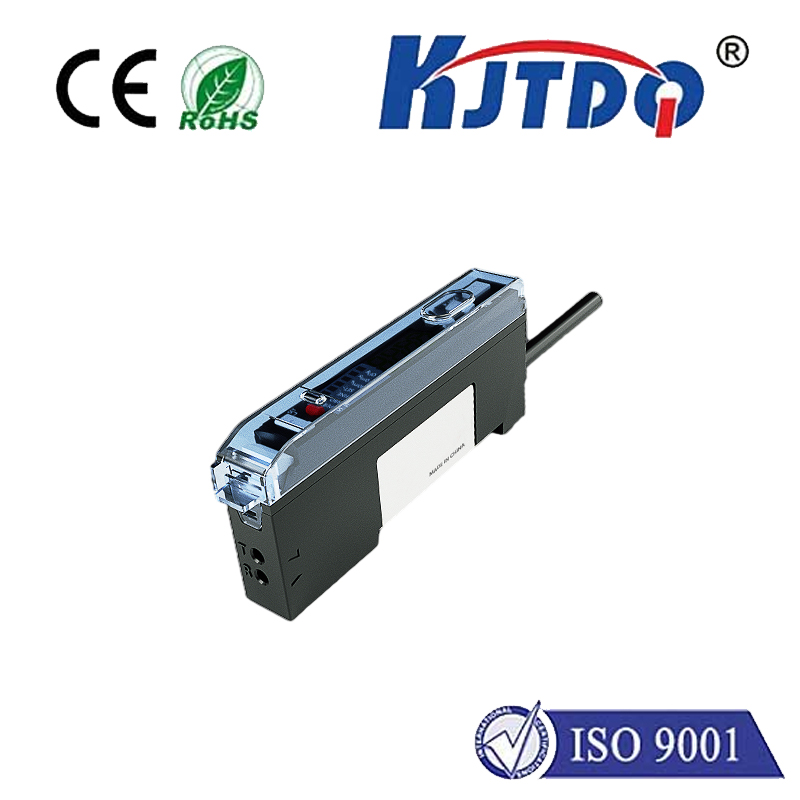
In the rapidly evolving landscape of industrial automation, achieving precise, reliable, and non-contact measurement is paramount. The emergence of Time-of-Flight (TOF) Photoelectric Sensors, particularly the advanced KJTDQ series, marks a significant leap forward. Unlike traditional photoelectric sensors that rely on light intensity or triangulation, TOF sensors measure the time it takes for a light pulse, typically from a laser or LED, to travel to a target and back. This fundamental principle grants them unique advantages that are transforming applications from logistics and robotics to automotive assembly and consumer electronics.
The core technology behind a TOF photoelectric sensor is deceptively simple yet incredibly powerful. The sensor emits a modulated light signal. When this light hits an object, it reflects back to the sensor's receiver. A high-speed clock within the sensor precisely measures the round-trip time of the light pulse. Since the speed of light is a constant, the sensor can calculate the distance to the object with remarkable accuracy using the formula: Distance = (Speed of Light × Time of Flight) / 2. This direct time measurement makes TOF sensors largely immune to common challenges such as varying target color, reflectivity, or ambient light interference that often plague other optical methods. The KJTDQ series refines this further with advanced signal processing algorithms that filter out noise, ensuring stable readings even in complex environments.
What sets the KJTDQ TOF sensor apart in practical applications is its combination of long range, high speed, and consistent performance. For instance, in warehouse automation, these sensors can accurately measure the height of packages on a conveyor belt from several meters away, enabling efficient robotic sorting and palletizing without physical contact. Their ability to provide exact distance data, rather than just a presence/absence signal, allows for more intelligent control systems. In automated guided vehicles (AGVs), KJTDQ sensors facilitate precise navigation and obstacle detection, calculating not just if an object is present, but exactly how far away it is, allowing for smoother deceleration and path planning.
Another critical sector benefiting from this technology is automotive manufacturing. Here, the KJTDQ TOF sensor is used for gap and flush measurement between car body panels, ensuring luxury-grade fit and finish. Its high resolution allows it to detect minute discrepancies that human inspectors might miss. Similarly, in electronics assembly, these sensors verify the precise placement of components on circuit boards, a task where sub-millimeter accuracy is non-negotiable. The sensor's robustness against different surface materials—from shiny metal to dark plastic—makes it an exceptionally versatile tool on the production line.
Beyond industrial settings, the principles of the TOF photoelectric sensor are finding new frontiers. While the KJTDQ series is engineered for industrial durability, the underlying technology is akin to that used in consumer devices for facial recognition and augmented reality. This cross-pollination of technology highlights its fundamental robustness and adaptability. For engineers and system integrators, selecting the KJTDQ series means investing in a future-proof solution. Its digital output (often via IO-Link or other industrial protocols) seamlessly integrates into Industry 4.0 and IoT frameworks, providing not just data but actionable intelligence for predictive maintenance and process optimization.
Implementing a TOF sensor like the KJTDQ does require consideration of its operational environment. For optimal performance, factors such as extreme dust, heavy fog, or highly reflective, mirror-like surfaces should be assessed, as they can scatter or directly reflect the light beam. However, modern designs incorporate features to mitigate these issues. The KJTDQ series, for example, often includes built-in environmental compensation and a high ingress protection (IP) rating for durability.
In conclusion, the TOF Photoelectric Sensor, exemplified by the high-performance KJTDQ series, is far more than just another sensor. It is a pivotal enabler of smarter, more precise, and more efficient automation. By delivering accurate, reliable distance measurement independent of object properties, it solves long-standing challenges in machine vision and positioning. As industries continue to push the boundaries of autonomy and precision, the role of advanced TOF sensors will only become more central, driving innovations that enhance productivity, quality, and safety across the global manufacturing landscape.