check

check

check

check
check
check
check
check

check

check
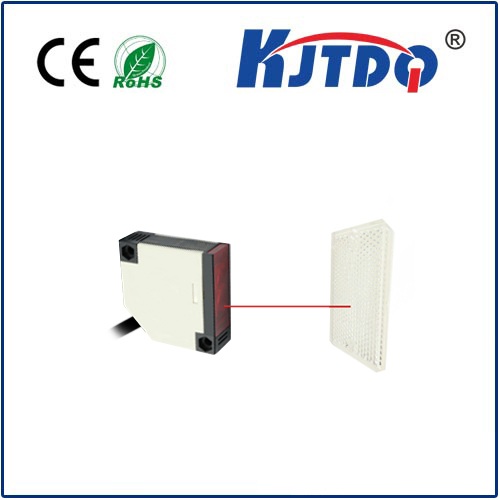
In industrial automation and precision control systems, the accurate measurement and management of distance is paramount. Diffuse reflection photoelectric switches have emerged as a critical component in this domain, offering a reliable and non-contact method for object detection and positioning. Unlike through-beam or retro-reflective sensors, diffuse reflection sensors operate by emitting a light beam—typically infrared, visible red, or laser—and detecting the light that is scattered back from the surface of the target object. The operational principle hinges on the intensity of this reflected light, which is inherently linked to the distance between the sensor and the object.
The core challenge and advantage lie in the "distance" parameter. The sensing distance of a diffuse reflection photoelectric switch is not a fixed value but a range influenced by several factors. Primarily, it depends on the reflectivity of the target object's surface. A bright, white surface will reflect more light, allowing for a longer detectable distance. Conversely, a dark, matte, or absorbent surface will scatter less light back to the receiver, significantly reducing the effective sensing range. This characteristic necessitates careful selection and configuration based on the application.
For instance, in packaging machinery, these switches are used to detect the presence of boxes on a conveyor belt. The optimal sensing distance must be calibrated so that the switch reliably triggers when a box is in the correct position, but does not give a false signal due to background objects or variations in box color. Modern diffuse reflection sensors often come with background suppression or foreground suppression functionalities. Background suppression models use triangulation principles to only detect objects within a specific, adjustable distance window, effectively ignoring objects beyond a set point. This technology greatly enhances reliability in complex environments.
Another crucial application is in automated guided vehicles (AGVs) for obstacle detection at close range. Here, the diffuse reflection sensor's ability to detect non-reflective surfaces at a precise short distance is vital for safety. The distance setting must be fine-tuned to ensure the AGV stops or maneuvers before a collision, accounting for its own braking distance.
Environmental factors also play a significant role in maintaining consistent distance performance. Ambient light, dust, fog, or oil mist can interfere with the light beam, potentially causing false readings or a reduction in the effective sensing distance. Therefore, selecting sensors with modulated LED light (which emits pulsed light to distinguish it from constant ambient light) and adequate ingress protection (IP) ratings is essential for robust performance in harsh industrial settings.
When integrating a diffuse reflection photoelectric switch, engineers must consult the manufacturer's datasheet for the specific sensing curve graphs. These graphs illustrate the relationship between the detection distance and the reflectivity of the target (often standardized with a white matte surface). Understanding this curve allows for precise installation and adjustment. Potentiometers or teach-in buttons on advanced models enable easy field calibration to the exact required distance for a specific task.
In summary, mastering the "distance" variable in diffuse reflection photoelectric switch applications is not merely about picking a sensor with a long range. It involves a comprehensive analysis of the target object's properties, the environmental conditions, and the precise functional requirement of the detection point. Proper selection, calibration, and installation ensure that these versatile sensors deliver high precision, reliability, and efficiency, forming the invisible backbone of seamless automated processes in manufacturing, logistics, and beyond. Their role in enabling precise, non-contact distance control continues to grow as industries demand higher levels of automation and intelligence.