check

check

check
check
check
check
check
check

check

check
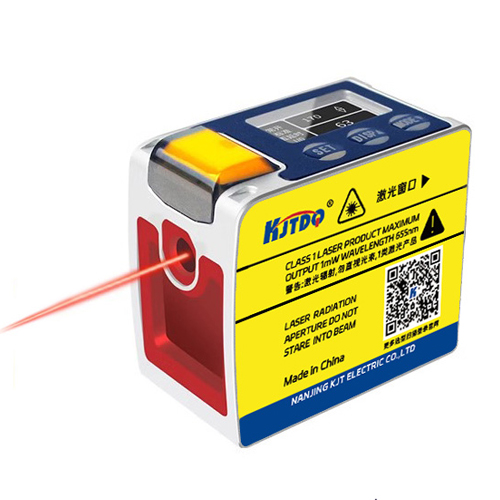
In industries where accuracy and durability are non-negotiable, the choice of measurement technology can define operational success. The industrial-grade rangefinder sensor stands as a cornerstone in this landscape, engineered to deliver consistent performance under the most challenging conditions. Unlike standard consumer-grade devices, these sensors are built with robust materials and advanced components to withstand extreme temperatures, high vibration, dust, moisture, and electromagnetic interference commonly found in factory floors, construction sites, and outdoor logistics hubs.
The core functionality of an industrial rangefinder sensor lies in its ability to provide precise distance measurements through various technologies, primarily time-of-flight (ToF), laser triangulation, or ultrasonic waves. Time-of-flight laser sensors, for instance, calculate distance by measuring the time it takes for a laser pulse to reflect off a target and return. This method offers high accuracy over long ranges, making it ideal for applications like bulk material level monitoring in silos or vehicle positioning in automated guided vehicle (AGV) systems. Laser triangulation sensors, on the other hand, excel in close-range, high-precision tasks such as inspecting component dimensions on an assembly line. The selection depends entirely on the specific requirements of range, resolution, target surface, and environmental factors.
What truly sets an industrial-grade unit apart is its reliability. These sensors undergo rigorous testing and certification processes, often meeting standards like IP67 for dust and water resistance or IEC ratings for shock and vibration. Their housings are typically made from hardened metals or industrial plastics, protecting sensitive internal electronics. Connectivity is another critical aspect, featuring industry-standard interfaces such as analog outputs (4-20 mA, 0-10 V), RS-232, RS-485, or industrial Ethernet protocols like PROFINET and EtherNet/IP. This allows for seamless integration into existing programmable logic controller (PLC) networks and supervisory control and data acquisition (SCADA) systems, enabling real-time data acquisition and process control.
The applications are vast and transformative. In manufacturing, these sensors enable precise robotic positioning, ensuring arms place components with sub-millimeter accuracy. They monitor conveyor belt object heights to prevent jams and optimize sorting. In the energy sector, they measure the sag of high-voltage power lines or the level of fuel in storage tanks. Agricultural machinery uses them for automated steering and implement control, while the construction industry relies on them for machine guidance and volume measurement of excavated materials. The logistics and warehousing sector leverages them for pallet dimensioning, forklift assistance, and inventory management, driving efficiency in automated storage and retrieval systems (AS/RS).
Implementing an industrial rangefinder sensor requires careful consideration. Key parameters include measuring range, which can span from a few centimeters to several hundred meters; accuracy and repeatability, often specified in millimeters or even micrometers; response time, crucial for high-speed processes; and the beam characteristics, such as spot size. The target's properties—its color, reflectivity, and surface texture—can also influence performance, with many modern sensors featuring automatic background suppression or advanced algorithms to compensate for difficult surfaces.
Maintenance, while minimal, is essential for sustained accuracy. Regular cleaning of the lens or transducer surface to remove dust or debris, verification of alignment, and periodic calibration against a known reference ensure the sensor continues to perform as specified. Most high-quality industrial sensors are designed for long service lives with minimal downtime, a critical factor in continuous production environments.
Ultimately, the value of an industrial-grade rangefinder sensor is measured by its contribution to operational excellence. It reduces waste by improving material usage, enhances safety by preventing collisions and overloads, increases throughput by enabling faster and more precise automation, and provides reliable data for quality control and predictive maintenance. As industries move towards greater automation and data-driven decision-making, the role of these precise, rugged, and intelligent sensing devices becomes increasingly central, forming the eyes of modern industrial systems.