check

check

check

check
check
check
check
check

check

check
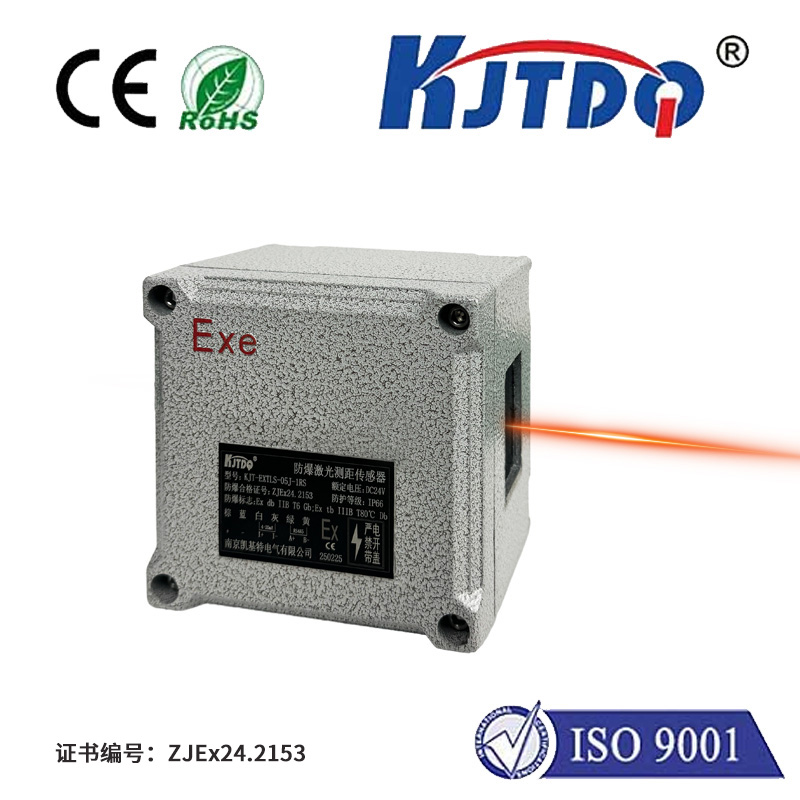
In today's rapidly evolving technological landscape, the demand for accurate and reliable distance measurement solutions spans across numerous industries. The medium-range laser rangefinder sensor has emerged as a critical tool, bridging the gap between short-range proximity detection and long-range surveying. This technology offers a versatile solution for applications requiring precise measurements typically between several meters to a few hundred meters.
At its core, a medium-range laser rangefinder operates on the time-of-flight principle. It emits a focused laser pulse towards a target and calculates the distance by precisely measuring the time it takes for the pulse to reflect back to the sensor. Advanced models incorporate sophisticated algorithms to filter out ambient noise and improve accuracy even in challenging environmental conditions. The "medium-range" classification is particularly significant, as it caters to a sweet spot of distance measurement that is too far for ultrasonic or simple infrared sensors yet does not require the complexity and cost of high-power, long-range terrestrial or military-grade systems.
The applications for this technology are vast and growing. In the realm of industrial automation and robotics, these sensors are indispensable. They enable autonomous guided vehicles (AGVs) to navigate factory floors safely, avoiding obstacles and optimizing paths. Robotic arms use them for precise positioning and object handling, enhancing efficiency on assembly lines. In construction and civil engineering, contractors utilize medium-range laser rangefinders for quick and accurate measurements of site dimensions, building heights, and volume calculations, streamlining the planning and verification processes.
The agricultural sector has also seen transformative adoption. Modern farming equipment integrates these sensors for tasks like crop height monitoring, yield estimation, and ensuring precise spacing during planting or spraying operations. This data-driven approach promotes resource efficiency and supports precision agriculture initiatives. Furthermore, in the burgeoning field of unmanned aerial vehicles (UAVs or drones), medium-range laser rangefinders, often referred to as lidar in this context, are key for terrain mapping, obstacle avoidance, and autonomous flight planning, especially in environments where GPS signals may be weak or unreliable.
Security and perimeter protection systems benefit greatly from the integration of medium-range laser rangefinder sensors. They can be configured to create invisible tripwires or detection zones, triggering alerts when an intrusion is detected at a specific distance. This provides a high level of accuracy for monitoring fences, borders, or sensitive outdoor areas, reducing false alarms common with other motion detection technologies.
When selecting a medium-range laser rangefinder sensor, several technical specifications demand careful consideration. Measurement range and accuracy are paramount, but factors like measurement speed (update rate), beam divergence, environmental sealing (IP rating for dust and water resistance), and performance under various lighting conditions are equally crucial. Interface options, such as USB, RS232, or Ethernet, determine how easily the sensor integrates into existing data acquisition or control systems. Power consumption is another key factor, especially for battery-operated mobile applications.
Modern advancements continue to push the boundaries of what these sensors can achieve. Innovations include enhanced eye safety features through the use of laser classes that are harmless under all conditions of normal use, improved resistance to interference from sunlight or other light sources, and the miniaturization of components leading to more compact and robust designs. Some sensors now offer additional data outputs, such as signal strength, which can provide insights into the reflectivity of the target surface.
The integration of medium-range laser rangefinder sensors with the Internet of Things (IoT) and cloud platforms represents the next frontier. Sensor data can be transmitted wirelessly for real-time monitoring, historical analysis, and predictive maintenance. This connectivity enables smarter systems that can adapt based on continuous environmental feedback, opening new possibilities in smart cities, infrastructure management, and advanced logistics.
In conclusion, the medium-range laser rangefinder sensor is far more than a simple measuring device. It is a foundational technology enabling automation, enhancing safety, and providing critical data across diverse fields. Its balance of performance, range, and cost-effectiveness makes it an essential component for engineers, developers, and professionals seeking reliable non-contact distance measurement. As technology progresses, these sensors will undoubtedly become even more intelligent, integrated, and indispensable to the automated and data-centric world we are building.