check

check

check

check
check
check
check
check

check

check
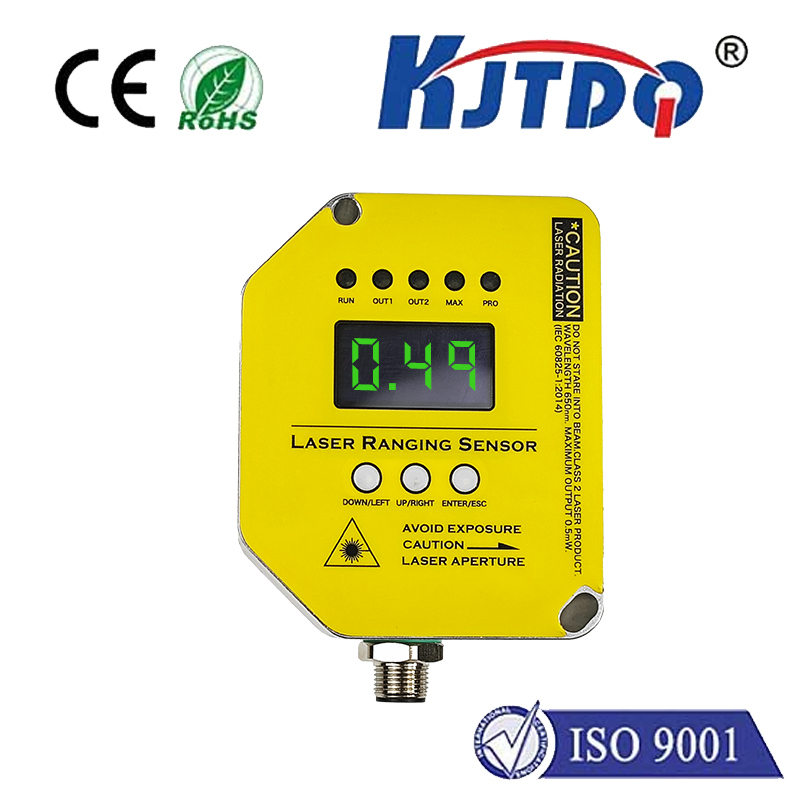
In the rapidly evolving landscape of distance measurement and environmental sensing, the LiDAR rangefinder sensor stands as a cornerstone technology. Unlike traditional methods that rely on simple ultrasonic or laser triangulation, LiDAR (Light Detection and Ranging) employs pulsed laser light to create precise, three-dimensional representations of its surroundings. This fundamental shift in approach unlocks unparalleled accuracy, speed, and detail, making it indispensable across a diverse spectrum of modern applications.
At its core, a LiDAR rangefinder sensor operates by emitting rapid laser pulses towards a target. A highly sensitive receiver then captures the light reflected back. By calculating the time difference between the emission and the return of each pulse—the time-of-flight principle—the sensor can determine the exact distance to the point of contact with extraordinary precision, often down to the centimeter level. When millions of these measurements are compiled per second from a rotating or scanning unit, they generate a dense "point cloud," a rich digital map of the environment's shape and contours.
The transformative impact of this technology is most visible in the automotive industry, particularly in the development of autonomous vehicles. Here, LiDAR rangefinder sensors act as the vehicle's eyes, providing a real-time, 360-degree high-definition model of the road. They can accurately identify and track other cars, pedestrians, cyclists, and road boundaries, even in challenging low-light or variable weather conditions where cameras may struggle. This robust environmental perception is critical for making safe navigation decisions, forming a key layer in the sensor fusion suite alongside radar and cameras.
Beyond the realm of self-driving cars, the utility of LiDAR sensors is vast and growing. In robotics and industrial automation, these sensors enable autonomous mobile robots to navigate complex factory floors and warehouses safely, avoiding dynamic obstacles and optimizing logistics. Surveying and mapping professionals leverage airborne and terrestrial LiDAR to produce highly accurate topographic maps, digital elevation models, and 3D reconstructions of infrastructure, archaeological sites, and forestry resources with a speed and detail unattainable by manual methods. Furthermore, the technology is penetrating consumer electronics, enhancing features like improved photography focus, augmented reality experiences, and even indoor spatial mapping for smart home devices.
The advantages of implementing a LiDAR rangefinder sensor are compelling. Its primary strength lies in its exceptional accuracy and resolution over both short and long ranges. It provides direct distance measurements rather than inferential data, leading to more reliable outputs. The active illumination from its laser means it operates independently of ambient light, functioning effectively in total darkness, a significant edge over camera-based systems. Moreover, by providing direct 3D data, it simplifies the complex computational tasks associated with deriving depth from 2D images.
When selecting a LiDAR rangefinder sensor for a specific project, several technical parameters demand careful consideration. The range dictates the maximum operating distance, varying from a few meters for indoor robots to hundreds of meters for topographic surveys. Accuracy and resolution determine the fidelity of the point cloud. The field of view—both horizontal and vertical—defines the area the sensor can cover in a single scan. Scanning rate or frequency influences how quickly the environment is sampled, crucial for detecting fast-moving objects. Finally, resistance to environmental interference, such as sunlight or other LiDAR signals, and overall ruggedness are vital for reliable operation outdoors or in industrial settings.
As the technology matures, ongoing research is focused on overcoming its current limitations, primarily cost and performance in adverse weather. Solid-state LiDAR designs, which have no moving parts, promise enhanced durability, smaller form factors, and the potential for significant cost reduction at mass production scales. Concurrently, advancements in signal processing algorithms are improving the sensor's ability to filter out noise from rain, fog, and snow, bolstering its all-weather reliability.
In conclusion, the LiDAR rangefinder sensor is far more than a simple distance-measuring tool. It is a sophisticated perception engine that is fundamentally reshaping how machines interact with and understand the physical world. From enabling the next generation of autonomous mobility to revolutionizing precision agriculture, construction, and security, its role as a critical enabling technology is firmly established. As innovation continues to drive down costs and enhance performance, the integration of LiDAR sensing is poised to expand into even more facets of our technological ecosystem, making precise, real-time 3D awareness a standard feature in the intelligent systems of tomorrow.