check

check

check

check
check
check
check
check

check

check
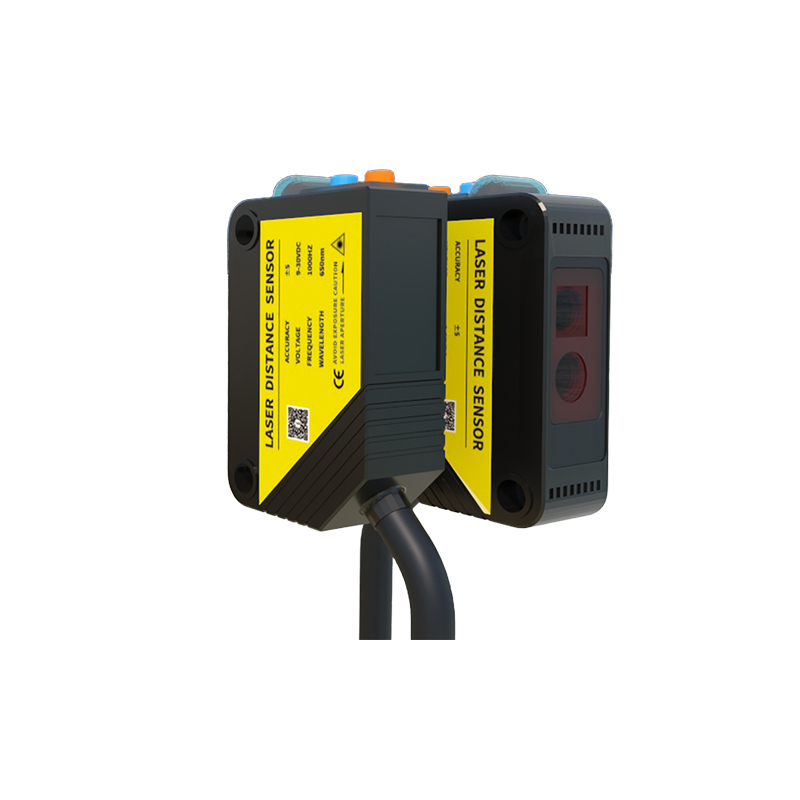
In an era where accuracy is paramount, the 2-meter laser rangefinder sensor stands as a critical tool across diverse industries. This compact yet powerful device utilizes laser technology to deliver non-contact distance measurements with exceptional precision. Unlike traditional measuring tapes or ultrasonic sensors, a laser rangefinder provides instant, highly accurate readings by calculating the time it takes for a laser pulse to reflect off a target and return to the sensor. The 2-meter range specification makes it particularly suitable for a wide array of close-range, detail-oriented tasks where every millimeter counts.
The core technology behind these sensors is based on the time-of-flight (ToF) principle. A laser diode emits a focused beam of light towards the target. A high-speed receiver then detects the reflected light. An internal processor calculates the distance based on the known speed of light and the measured time interval. Modern 2-meter laser rangefinder sensors incorporate advanced optics and signal processing algorithms to filter out ambient light noise, ensuring reliable performance even in challenging indoor lighting conditions. Their typical accuracy can reach within ±1.5 millimeters, making them indispensable for quality control.
The applications for a precise 2-meter laser rangefinder are vast and growing. In industrial automation and robotics, these sensors are integral for object detection, positioning, and dimension verification on assembly lines. They enable robots to navigate and manipulate components with sub-millimeter accuracy. In the realm of logistics and warehouse management, they are used for pallet sizing, inventory volume calculation, and guiding automated guided vehicles (AGVs), optimizing storage space and operational flow.
Furthermore, the construction and interior design sectors heavily rely on this technology. Professionals use handheld devices incorporating these sensors for quick room measurements, checking alignments, and planning installations. The data seamlessly integrates with CAD software, streamlining the design-to-execution workflow. In consumer electronics, miniaturized versions are finding their way into smartphones and smart home devices, enabling features like augmented reality furniture placement and automatic focus assistance.
When selecting a 2-meter laser rangefinder sensor, several key specifications demand attention. Accuracy and resolution are primary, dictating the smallest measurable difference. The response time, or how quickly the sensor provides a reading, is crucial for dynamic applications. The laser class (typically Class 2, which is eye-safe under normal operating conditions) is a vital safety consideration. Environmental robustness, including resistance to dust, moisture, and vibration, defined by IP ratings, determines suitability for harsh industrial environments. Finally, the output interface—whether analog voltage, digital (like USB, RS-232, or I2C)—must be compatible with the existing control system.
Integration is straightforward. Most sensors require a stable power supply and a connection to a data acquisition system, programmable logic controller (PLC), or single-board computer like a Raspberry Pi. Manufacturers provide comprehensive software development kits (SDKs) and protocols, allowing engineers to easily incorporate distance data into their applications for real-time monitoring and control.
The future of 2-meter laser rangefinder technology points towards even greater miniaturization, lower power consumption, and enhanced smart features. Integration with artificial intelligence for predictive maintenance and adaptive calibration is on the horizon. As the demand for automation and precision continues to surge in fields like micro-manufacturing, portable medical devices, and advanced robotics, the role of the reliable 2-meter laser rangefinder sensor will only become more central. It is a foundational technology that transforms physical space into actionable digital data, driving efficiency and innovation.