check

check

check

check

check

check
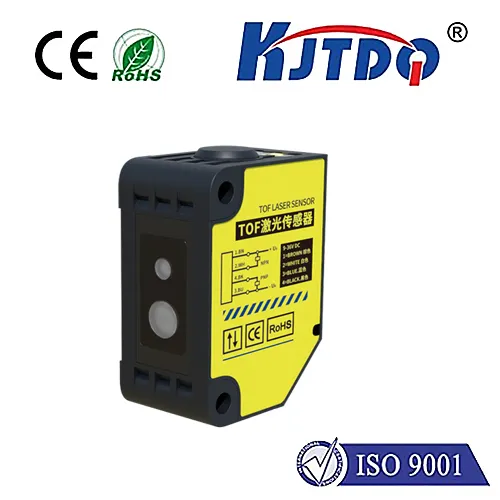
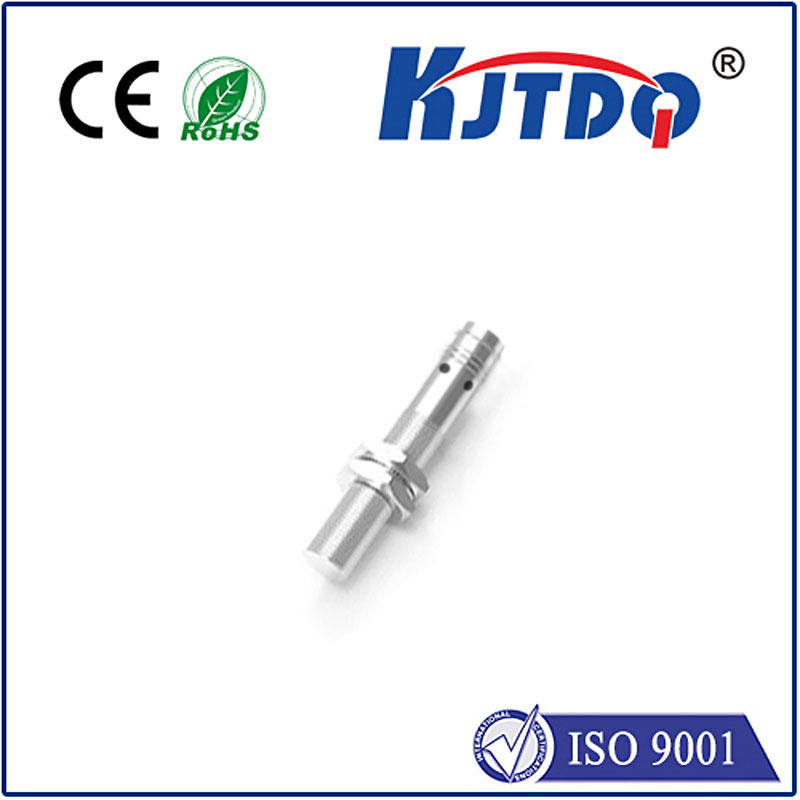
In the world of industrial automation and precision control, the short-range photoelectric switch stands as a critical component for countless applications. Unlike its long-range counterparts, this sensor is engineered for high-accuracy detection within a limited field, typically from a few millimeters up to a meter. Its core principle relies on the modulation of light, usually infrared or visible red, emitted from a transmitter. A receiver then detects the presence or absence of this light beam. The object's detection is determined by either the interruption of the beam (through-beam type) or the reflection of the beam back to the receiver (reflective type, including diffuse and retro-reflective models).
The advantages of using a short-range photoelectric sensor are manifold. Primarily, they offer exceptional repeatability and precision. In assembly lines where components are miniature or placement is critical, such as in electronics manufacturing or pharmaceutical packaging, even a millimeter's deviation can be costly. These switches provide reliable, non-contact detection that eliminates mechanical wear and tear associated with limit switches. Their fast response time, often in microseconds, ensures seamless integration into high-speed processes. Furthermore, modern designs are remarkably compact, allowing installation in space-constrained environments without sacrificing performance.
Selecting the right short-range photoelectric switch requires careful consideration of several factors. The sensing mode is paramount. Through-beam sensors, with separate emitter and receiver units, offer the longest sensing distance and highest reliability for a given range but require precise alignment. Diffuse reflective sensors, with built-in emitter and receiver, detect objects that directly reflect light back, simplifying installation but being sensitive to the object's color and surface texture. Retro-reflective models use a reflector and are ideal for detecting transparent or glossy objects. Other key specifications include the sensing distance, light source type, output configuration (PNP/NPN, NO/NC), housing material for environmental resilience (e.g., IP67 for dust and water protection), and supply voltage compatibility.
Real-world applications are diverse and vital. In the automotive industry, they verify the presence of small parts like pins or springs before assembly. Within consumer electronics, they ensure smartphone components are correctly positioned for robotic placement. Packaging machinery uses them to confirm flap closure or label presence on products moving at high speeds. They are also indispensable in security systems for door position monitoring and in vending machines to confirm product dispensing. Their reliability in detecting transparent objects, like glass or plastic bottles, makes them superior to many other sensor types in beverage and cosmetic filling lines.
Installation and maintenance, while straightforward, demand attention to detail. Ensuring a stable mounting, free from vibration, is crucial. For reflective types, the background must be considered to avoid false triggers from distant or shiny surfaces. Regular cleaning of the lens is necessary in dusty or oily environments to maintain optical clarity and sensing reliability. Modern switches often feature built-in LED indicators for alignment and operational status, significantly simplifying setup and troubleshooting. When integrated into a control system, proper wiring and shielding are essential to prevent electrical noise interference, which could lead to erratic behavior.
The evolution of short-range photoelectric technology continues to push boundaries. Innovations include background suppression models that ignore objects beyond a set distance, color-mark sensors that detect specific contrasts, and devices with IO-Link capability for digital communication, enabling parameter setting, diagnostics, and process data exchange directly from the controller. These advancements make them smarter and more integral to the Industrial Internet of Things (IIoT) and Industry 4.0 frameworks, providing not just a binary signal but valuable operational insights.
In conclusion, the short-range photoelectric switch is far more than a simple on/off device. It is a sophisticated tool for enabling precision, efficiency, and reliability in automated systems. By understanding its operating principles, types, and application requirements, engineers and technicians can leverage this technology to solve complex detection challenges, minimize downtime, and enhance overall production quality. Its role as a fundamental building block in modern automation is both secure and increasingly dynamic.