check

check

check
check
check
check
check
check

check

check
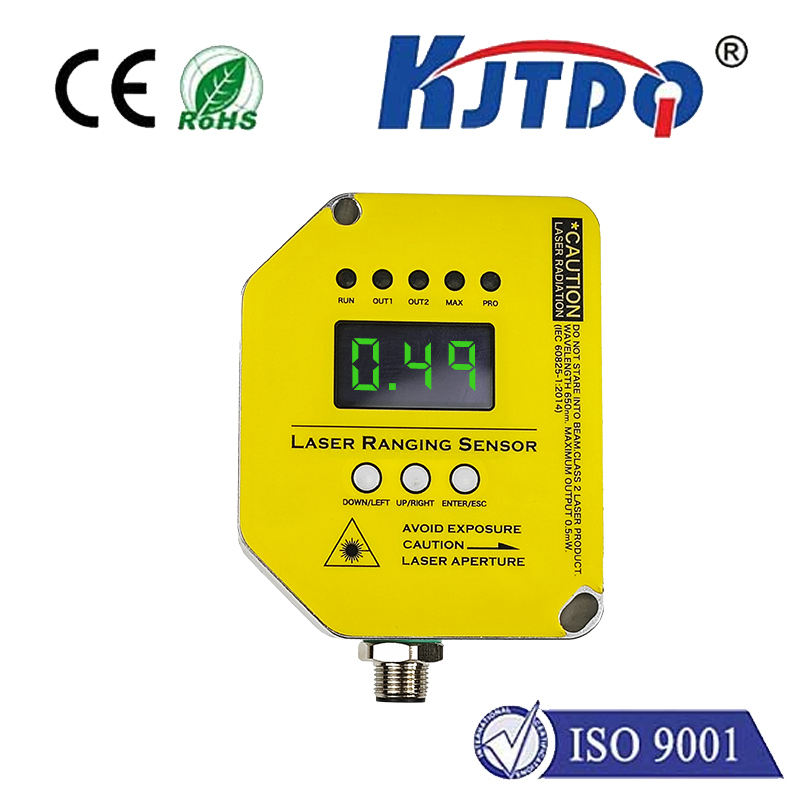
In the demanding and often hazardous environment of modern mining operations, precision, safety, and efficiency are non-negotiable. Traditional measurement methods, relying on manual tape measures or wired electronic devices, are increasingly seen as bottlenecks. They are time-consuming, prone to human error, and can introduce significant safety risks in confined, unstable, or explosive atmospheres. The advent of the Mining Wireless Laser Rangefinder Sensor represents a paradigm shift, addressing these critical challenges head-on and setting a new standard for operational intelligence below ground.
The core innovation of this specialized sensor lies in its integration of three key technologies: highly accurate laser distance measurement, robust wireless data transmission, and a design engineered specifically for mining durability. Unlike standard laser rangefinders, this device is built to withstand the extreme conditions of a mine—resistant to dust, moisture, vibrations, and potential impacts. Its wireless capability, often utilizing secure, mine-approved mesh networks or specialized radio frequencies, eliminates the tripping hazards and layout limitations of cables, allowing for rapid deployment and measurements in hard-to-reach areas.
The practical applications are transformative across multiple mining workflows. In exploration and development, survey teams can quickly and accurately map tunnel profiles, measure drift advances, and calculate ore volumes with unprecedented speed. The data is transmitted instantly to a central database or handheld device, creating real-time, as-built models of the mine. This eliminates the lag time between measurement and planning, accelerating decision-making cycles. During production, the sensor is indispensable for blast hole profiling, ensuring precise drill patterns for optimal fragmentation, and for monitoring stockpile volumes with regular, automated scans, providing accurate inventory management without putting personnel on unstable slopes.
Perhaps the most significant impact is on worker safety. The ability to perform critical measurements from a safe distance is a game-changer. Roof stability assessments, highwall monitoring, and measuring distances to hazardous areas can now be conducted without exposing personnel to potential rockfalls or unstable ground. In emergency scenarios or rescue planning, having an accurate, wirelessly updated map of the mine's geometry can be lifesaving. Furthermore, the reduction in manual, close-contact measurements directly decreases the time workers spend in the most vulnerable zones of the operation.
The integration of this sensor data into the broader digital ecosystem of the mine—the "Smart Mine"—unlocks further value. When distance measurements are seamlessly fed into Mine Planning Software, Geological Information Systems (GIS), and Fleet Management Systems, it creates a continuous feedback loop. Operations managers gain a live, holistic view of the mine's state. They can optimize equipment routes based on actual available space, reconcile production data instantly, and plan development with confidence, knowing the digital twin of the mine is accurate to within centimeters.
Implementing such technology does require consideration. Initial investment, staff training on the new equipment and data protocols, and ensuring seamless integration with existing IT infrastructure are important steps. However, the return on investment is clear and compelling: dramatic reductions in survey time, minimized operational downtime due to faster and safer measurements, optimized resource extraction, and, most importantly, a demonstrably safer working environment. The reduction in rework alone—avoiding mis-drilled blast holes or incorrect volume estimates—can justify the adoption.
In conclusion, the Mining Wireless Laser Rangefinder Sensor is far more than just a measuring tool; it is a foundational component of the digital, connected, and safety-focused mine of the future. By replacing guesswork and delay with precise, instant, and remote data acquisition, it empowers mining companies to enhance productivity while unequivocally prioritizing the well-being of their workforce. As the industry continues to embrace automation and data-driven management, this sensor stands out as a critical enabler, turning the challenging underground environment into a space of calculated control and informed operation.