check

check

check

check

check

check
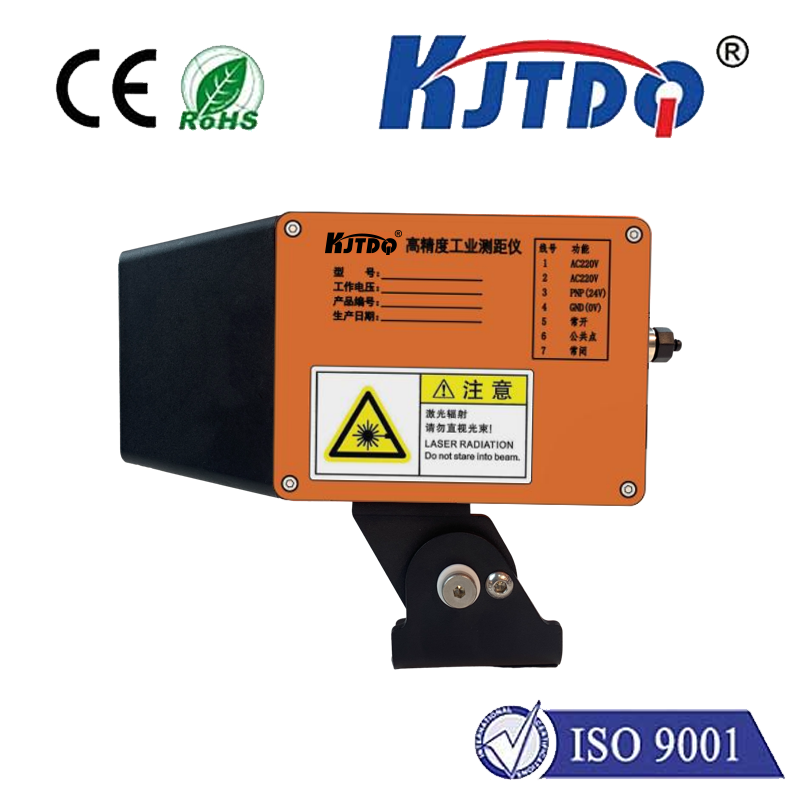
In the demanding world of industrial automation, metallurgy, and aerospace, conventional sensors often fail when the heat is on—literally. Operating in environments where temperatures soar presents a significant challenge for precision measurement equipment. This is where the high-temperature resistant laser rangefinder sensor, specifically the KJTDQ series, emerges as a game-changing technology. Engineered to deliver unwavering accuracy and reliability under thermal stress, this sensor is redefining the boundaries of what is possible in extreme-condition monitoring and control.
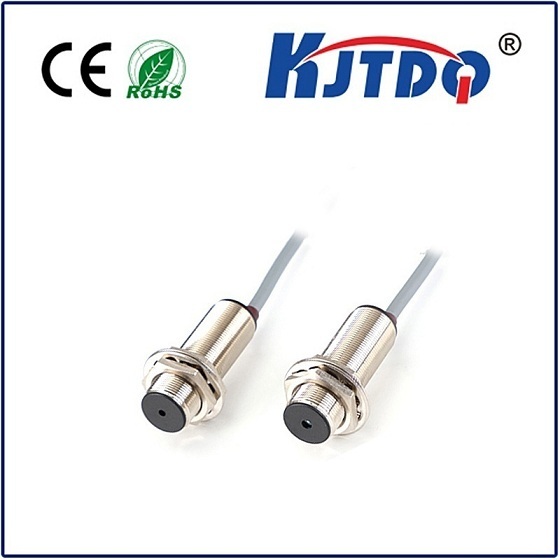
The core innovation of the KJTDQ high-temperature resistant laser rangefinder lies in its sophisticated thermal management system. Unlike standard sensors whose internal components—like laser diodes, optics, and processing units—degrade or produce erroneous data when overheated, the KJTDQ incorporates advanced heat-dissipating materials and a proprietary cooling architecture. This design effectively isolates critical electronic parts from ambient heat, maintaining a stable internal operating temperature even when external conditions exceed 150°C or more. The housing is constructed from specialized alloys and ceramics that not only withstand direct radiant heat but also resist thermal expansion, ensuring the laser's alignment and calibration remain precise over time.
Precision is non-negotiable in applications such as molten metal level detection in steel mills, distance monitoring in glass manufacturing furnaces, or component alignment in high-temperature curing processes. The KJTDQ sensor utilizes a time-of-flight (ToF) laser measurement principle, known for its long-range accuracy and speed. The high-temperature resistance ensures that this laser pulse generation and reception are not compromised. Users can expect sub-millimeter accuracy for distances up to several hundred meters, with a consistent performance that is immune to the thermal noise and blackbody radiation typical of hot environments. This reliability eliminates costly measurement errors, reduces material waste, and enhances overall process safety.
Durability and minimal maintenance are critical for equipment in harsh settings. The KJTDQ sensor is built to endure not just heat, but also associated challenges like dust, vibrations, and occasional splashes. Its sealed design meets high IP ratings, protecting it from particulate ingress that could be exacerbated by thermal currents. This rugged construction translates to significantly extended service intervals and lower total cost of ownership. Facilities can integrate these sensors into their control systems with confidence, knowing they will perform continuously without frequent shutdowns for cooling or recalibration.
The integration of the KJTDQ into modern Industrial Internet of Things (IIoT) frameworks is seamless. It features robust communication protocols like IO-Link, PROFINET, or EtherNet/IP, allowing real-time distance data to be fed directly into programmable logic controllers (PLCs) and supervisory control and data acquisition (SCADA) systems. This enables predictive maintenance algorithms; for instance, the sensor can monitor the wear of a refractory lining in a kiln by tracking subtle changes in distance, alerting operators long before a failure occurs. This proactive approach prevents unplanned downtime, which is especially valuable in continuous production environments.
From automotive paint shops with curing ovens to power generation plants monitoring turbine clearances, the applications are vast. In the renewable energy sector, these sensors assist in the precise positioning of components in concentrated solar power systems, where temperatures are intensely high. Their use ensures that energy capture is optimized. By providing a reliable "eye" in places where human operators cannot safely go, the high-temperature resistant laser rangefinder sensor like the KJTDQ is not just a tool but a foundational component for advancing industrial efficiency, safety, and automation in the most challenging conditions on the planet.