check

check

check

check

check

check
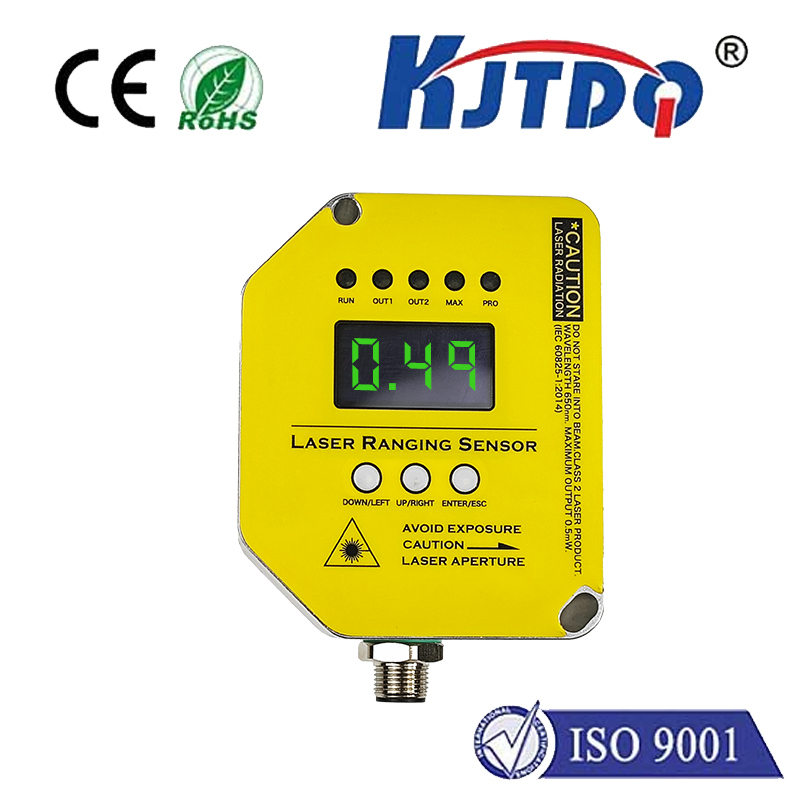
In the landscape of modern technology, where precision and accuracy are paramount, the short-range laser rangefinder sensor has emerged as a critical component across a diverse array of industries. This sophisticated device, often compact and highly efficient, utilizes laser technology to measure distances with exceptional accuracy over relatively short spans, typically from a few centimeters to several hundred meters. Unlike its long-range counterparts used in surveying or military applications, the short-range variant is engineered for integration into systems where space, speed, and pinpoint accuracy are non-negotiable.
The core principle behind a short-range laser rangefinder sensor is time-of-flight measurement. The sensor emits a focused pulse of laser light towards a target. This pulse reflects off the target's surface and returns to a detector within the sensor. By precisely calculating the time elapsed between the emission and the reception of the laser pulse, and knowing the constant speed of light, the sensor's internal processor can determine the exact distance to the target. This process occurs in microseconds, enabling real-time, continuous distance monitoring. Advanced models incorporate phase-shift measurement for even greater resolution at very close ranges.
The applications for this technology are vast and continually expanding. In the realm of industrial automation and robotics, these sensors are indispensable. Robotic arms on assembly lines use them for precise part positioning, object avoidance, and quality control measurements. They guide automated guided vehicles (AGVs) through dynamic warehouse environments, ensuring safe navigation by constantly mapping distances to obstacles, pallets, and walls. In logistics, they are key for pallet dimensioning, volume scanning, and automated storage/retrieval systems, optimizing space and operational flow.
Consumer electronics and smart devices have also embraced short-range laser rangefinders. Modern smartphones incorporate them as part of their camera autofocus systems, enabling faster and more accurate focus, especially in low-light conditions, which directly enhances photo quality. They are fundamental in gesture recognition interfaces, allowing users to control devices with simple hand movements without physical contact. Furthermore, in the burgeoning field of augmented reality (AR) and virtual reality (VR), these sensors help in spatial mapping and depth sensing, creating more immersive and interactive environments by understanding the user's physical surroundings.
The construction and interior design sectors benefit significantly. Professionals use handheld devices equipped with these sensors for quick and accurate room measurements, calculating areas and volumes for material estimation. Integrated into tools like laser tape measures, they eliminate the inaccuracies and inefficiencies of traditional measuring tapes, speeding up projects and reducing material waste. Similarly, in forestry and agriculture, they assist in measuring tree heights, canopy density, and crop growth with minimal intrusion.
Key advantages of modern short-range laser rangefinder sensors include their high precision, often down to millimeter-level accuracy, and their ability to function reliably in various lighting conditions. Their compact form factor allows for seamless integration into existing systems without demanding significant space. They are also known for their low power consumption, making them ideal for battery-operated portable devices. Durability is another critical factor, with many sensors designed to withstand industrial environments involving dust, vibrations, and moderate temperature fluctuations.
When selecting a short-range laser rangefinder sensor, several technical specifications demand attention. The measuring range defines its operational limits, while accuracy and resolution indicate its precision. The response time or measurement rate is crucial for high-speed applications. The laser class (typically Class 1 or 1M, which are eye-safe) is a vital safety consideration. Interface options, such as USB, RS232, or analog outputs, determine how easily it can connect to a host controller or computer. Environmental ratings like IP codes indicate resistance to dust and water ingress.
Looking ahead, the evolution of short-range laser rangefinder technology is geared towards even smaller sizes, lower costs, and enhanced intelligence. Integration with artificial intelligence and machine learning algorithms will enable sensors not only to measure distance but also to identify objects and predict movements. The proliferation of the Internet of Things (IoT) will see these sensors becoming ubiquitous data points in smart factories, cities, and homes, feeding real-time spatial data into larger networks for automated decision-making.
In conclusion, the short-range laser rangefinder sensor is far more than a simple measuring tool. It is a foundational enabling technology that drives automation, enhances safety, and unlocks new functionalities in products and systems we interact with daily. From the factory floor to the smartphone in your pocket, its role in delivering precise, reliable, and instantaneous distance data is irreplaceable, quietly powering the efficiency and innovation of the modern technological era.