check

check

check

check

check

check
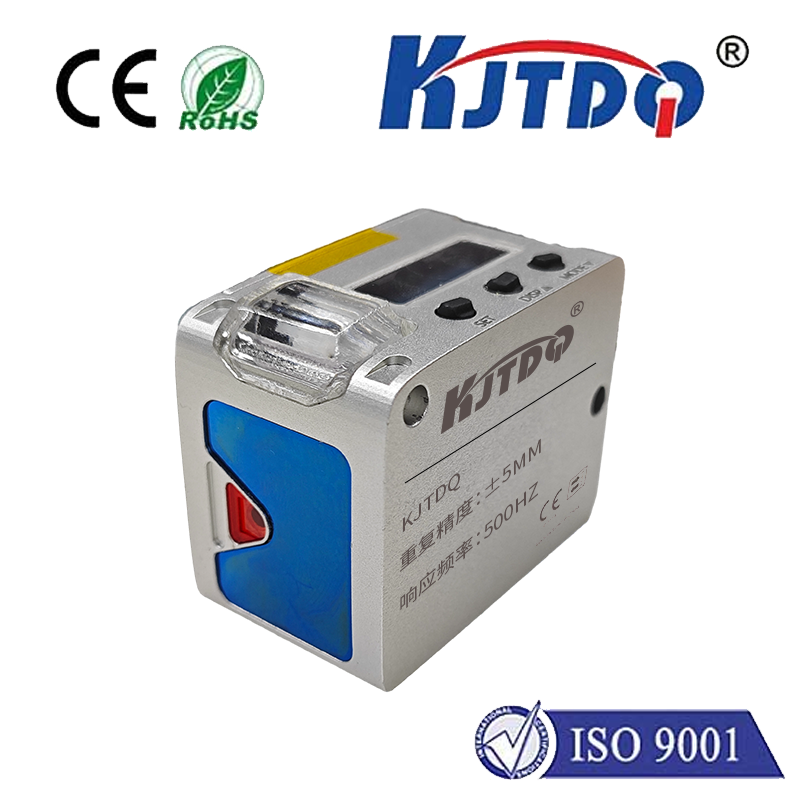
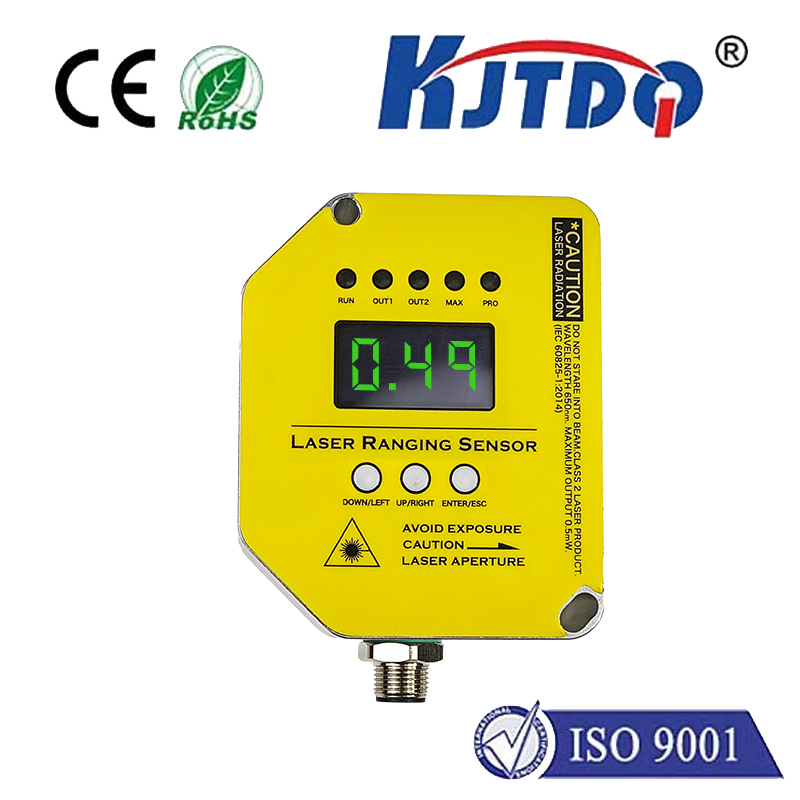
In the world of industrial automation, robotics, and smart devices, the ability to measure distance with pinpoint accuracy is not just a convenience—it's a necessity. This is where the Short-Range Laser Ranging Sensor steps into the spotlight, offering a blend of high precision, reliability, and compact design that is transforming how machines perceive and interact with their immediate environment.
Unlike traditional ultrasonic or infrared sensors, a short-range laser ranging sensor operates on the principle of time-of-flight or phase-shift measurement using a focused laser beam. This technology allows for non-contact measurement of distances typically within a few centimeters to several meters. The core advantage lies in its exceptional accuracy, often down to sub-millimeter levels, and its insensitivity to ambient light, surface color, or material texture, which can plague other sensing methods. This makes it an indispensable tool for applications where minute variations matter.
The applications for this technology are vast and growing. On factory assembly lines, these sensors are deployed for precise positioning of components, gap and thickness measurement, and robotic guidance. A robotic arm equipped with such a sensor can delicately pick and place fragile items by accurately gauging the distance to the target. In the logistics sector, they are integral to automated guided vehicles (AGVs) for obstacle detection and navigation, ensuring safe and efficient movement within warehouses.
Consumer electronics have also embraced this precision. Modern smartphones and tablets incorporate miniature versions for autofocus enhancement and augmented reality features, providing users with a seamless interactive experience. Furthermore, in the burgeoning field of drones, short-range laser sensors, often referred to as LiDAR in this context, are crucial for terrain following, obstacle avoidance during low-altitude flights, and safe landing procedures.
Selecting the right short-range laser ranging sensor involves considering several key parameters. The measuring range is primary—ensuring it covers the required distances for your specific task. Accuracy and resolution determine the fineness of the measurement data. The response time, or how quickly the sensor can take and output a reading, is critical for high-speed automation processes. Environmental robustness is another vital factor; look for sensors with high Ingress Protection (IP) ratings to withstand dust, moisture, and vibrations commonly found in industrial settings. Finally, the output interface (analog, digital, or industrial bus protocols) must be compatible with your existing control system.
The integration of these sensors into larger systems is typically straightforward. Modern sensors come with user-friendly software for configuration and calibration, allowing engineers to set measurement windows, filter out noise, and define output formats. Their compact form factor enables easy mounting in space-constrained applications. When installed, regular maintenance is minimal, often limited to keeping the laser lens clean to ensure optimal performance.
Looking ahead, the evolution of short-range laser ranging technology points towards even smaller sizes, lower power consumption, and enhanced smart features. The integration of artificial intelligence for edge computing—where the sensor itself can pre-process data and make simple decisions—is on the horizon. This will lead to faster system responses and reduced load on central processors. Additionally, advancements in laser safety and cost reduction are making this high-precision technology accessible to a broader range of industries and applications, from smart home appliances to advanced driver-assistance systems (ADAS) in vehicles.
In conclusion, the Short-Range Laser Ranging Sensor is far more than a simple measuring device. It is a fundamental enabler of precision, automation, and intelligence across diverse sectors. By providing reliable, micron-level distance data in real-time, it empowers machines to operate with a level of awareness and dexterity previously unattainable. For engineers and designers aiming to build the next generation of smart, responsive, and efficient systems, understanding and leveraging the capabilities of this sensor technology is a decisive step forward.