check

check

check

check

check

check
In the rapidly evolving landscape of industrial automation, autonomous vehicles, and smart robotics, the margin for error is vanishingly small. A single unanticipated obstacle can lead to costly downtime, damaged equipment, or even safety incidents. This is where the collision-avoidance rangefinder sensor steps in, not merely as a component, but as a critical guardian system. Far from being a simple proximity alert, this sophisticated technology forms the foundational layer of spatial awareness for intelligent machines.
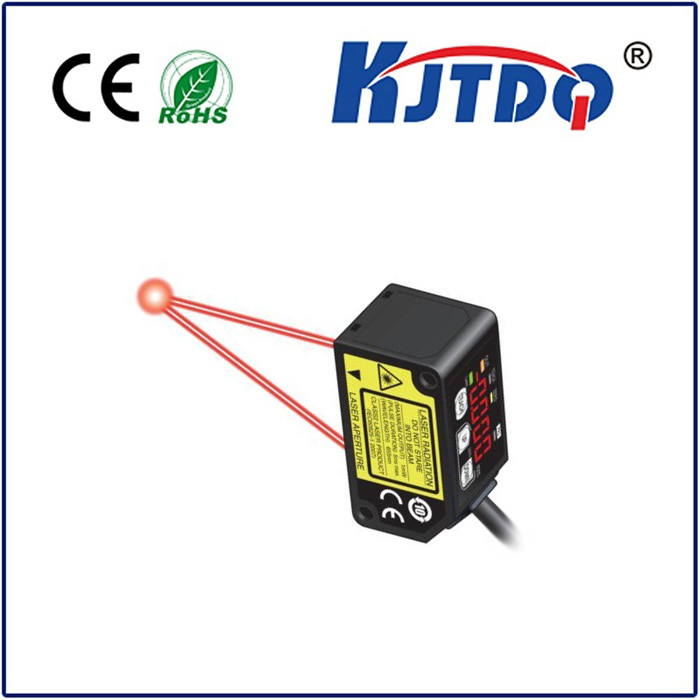
At its core, a collision-avoidance rangefinder sensor is a device that accurately measures the distance to objects in its field of view. It continuously emits a signal—be it laser light, ultrasonic waves, or radio waves—and calculates the time it takes for the reflection to return. This real-time data stream creates a dynamic map of the immediate environment. Modern iterations go beyond basic distance measurement; they integrate advanced algorithms to interpret this data, distinguishing between a stationary wall, a moving person, and irrelevant background clutter. This discernment is crucial for making informed navigational decisions.
The applications are vast and transformative. In automated guided vehicles (AGVs) navigating busy warehouse floors, these sensors enable smooth, efficient, and safe material handling, preventing collisions with infrastructure, pallets, or human workers. For collaborative robots (cobots) sharing workspace with humans, the sensor acts as a non-negotiable safety layer, allowing the robot to slow down or stop its motion gracefully upon detecting an intrusion into its predefined safety zone. In the realm of drones, particularly for indoor inspection or delivery services, collision-avoidance rangefinders are indispensable for navigating complex, GPS-denied environments, avoiding pillars, cables, and other aerial hazards.
The true power of this technology lies in its integration and proactive functionality. A superior system doesn't just react when an object is dangerously close; it predicts potential hazards. By analyzing the relative speed and trajectory of both the host vehicle and detected objects, the sensor's onboard intelligence can initiate evasive maneuvers or controlled stops well before a critical threshold is reached. This predictive capability transforms it from a passive alarm into an active participant in system control, enhancing operational fluency and trust.
Selecting the right collision-avoidance sensor requires careful consideration of several factors. The operating range must suit the application, from short-range detection on a robotic arm to long-range scanning for an autonomous forklift. Environmental robustness is key; sensors must perform reliably in challenging conditions like dust, fog, varying light levels, or acoustic noise, depending on their underlying technology (LiDAR, ultrasonic, radar). Furthermore, the field of view—whether wide-angle for broad coverage or focused for precision—needs alignment with the machine's operational profile. The integration of sensor fusion, combining data from multiple sensor types, is becoming the gold standard for creating a resilient and comprehensive perception system that leaves no blind spots.
Ultimately, the deployment of a reliable collision-avoidance rangefinder sensor is an investment in safety, efficiency, and operational continuity. It mitigates risk, protects capital assets, and safeguards personnel. More than that, it unlocks higher levels of automation by providing machines with the confidence to operate independently in dynamic, unstructured settings. As industries continue to push the boundaries of autonomy, this sensor technology remains the silent, vigilant sentinel, ensuring that progress moves forward not just quickly, but safely and intelligently. It is the unseen cornerstone upon which the future of automated interaction is being built.