check

check

check

check
check
check
check
check

check
check
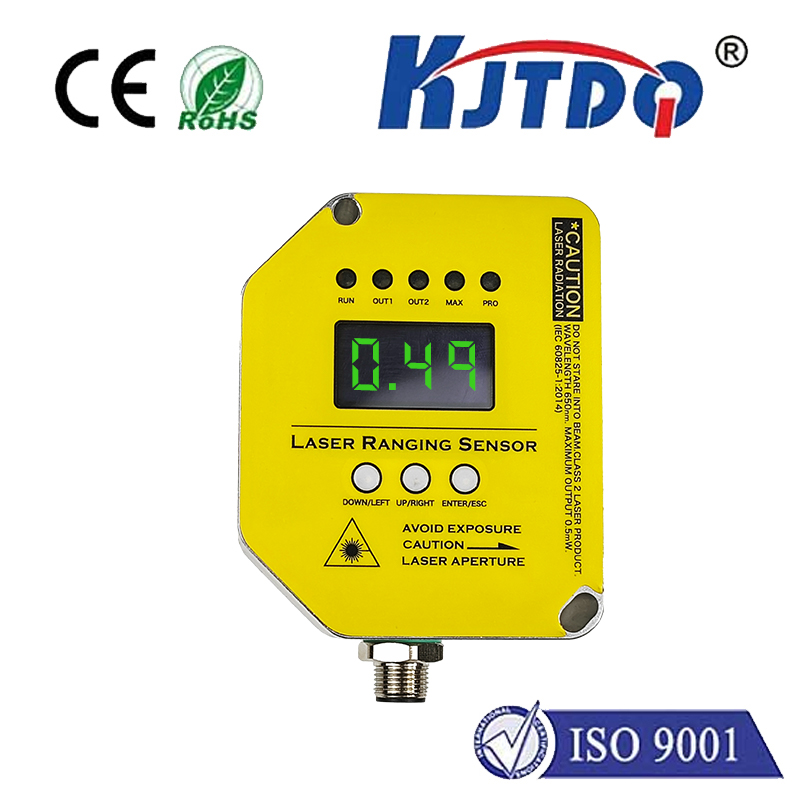
In the realm of precision measurement and industrial automation, the quest for higher accuracy is relentless. The introduction of a laser rangefinder sensor boasting a remarkable accuracy of 0.1mm marks a significant technological leap forward. This level of precision, once confined to specialized laboratory environments, is now becoming accessible for a wide array of real-world applications, fundamentally changing how industries approach measurement and quality control.
The core of this advancement lies in sophisticated time-of-flight (ToF) measurement principles combined with advanced signal processing algorithms. Traditional laser sensors often grapple with environmental interference, target surface properties, and signal noise, which limit their ultimate precision. The new generation of sensors, however, employs ultra-stable laser diodes emitting highly focused beams. Coupled with high-speed, low-noise photodetectors, these systems can capture the reflected signal with exceptional fidelity. The true breakthrough is in the onboard computational power. By utilizing multi-pulse averaging and advanced waveform analysis, the sensor can effectively filter out noise and compensate for variables like ambient light and surface reflectivity, consistently delivering measurements with a tolerance of just 0.1mm.
This unprecedented accuracy opens doors to applications previously deemed too demanding for non-contact measurement. In high-precision manufacturing, such as aerospace component assembly or semiconductor wafer alignment, the sensor enables real-time, micron-level verification of part positioning and dimensions. Robotic arms equipped with these sensors can perform intricate tasks like precise part picking, assembly, and inspection with a new level of confidence, reducing waste and improving production yields. The field of 3D scanning and metrology is also revolutionized. When integrated into scanning systems, these sensors allow for the creation of highly detailed digital twins of objects, crucial for reverse engineering, quality assurance, and archival of critical components with complex geometries.
Beyond the factory floor, the impact is equally profound. In civil engineering and construction, ensuring structural alignment and monitoring minute deformations in bridges or buildings becomes more reliable and efficient. The logistics and warehousing sector can utilize this technology for ultra-precise inventory management, automated palletizing, and dimensional weighing, optimizing space and operational flow. Even in emerging fields like autonomous mobile robots (AMRs) and advanced driver-assistance systems (ADAS), such precise distance measurement enhances navigation safety and environmental perception capabilities.
The integration of a laser rangefinder sensor with 0.1mm accuracy is not without its engineering challenges. It requires robust housing to protect sensitive optics from dust, vibrations, and temperature fluctuations commonly found in industrial settings. Manufacturers are addressing this by designing sensors with high Ingress Protection (IP) ratings and implementing internal temperature compensation circuits to maintain accuracy across a wide operating range. Furthermore, seamless communication via standard industrial protocols like IO-Link, Ethernet/IP, or PROFINET is essential. This allows the sensor to not only transmit its precise measurement data but also receive configuration updates and diagnostic information, fitting neatly into the Industry 4.0 ecosystem of interconnected devices.
For engineers and system integrators, selecting such a high-accuracy sensor involves considering several factors beyond the specification sheet. The effective measuring range, the minimum and maximum detectable object sizes, and the sensor's response time are critical for dynamic applications. The type of output—whether analog voltage/current, digital switch, or serial data—must align with the existing control architecture. Perhaps most importantly, the sensor's performance with different surface materials (matte, shiny, transparent) should be validated for the specific use case, as extreme reflectivity can sometimes influence readings.
The arrival of the 0.1mm-accurate laser rangefinder sensor represents a pivotal moment. It transcends being merely an incremental improvement; it is an enabling technology that pushes the boundaries of what is possible in automation, quality control, and data capture. By providing reliable, non-contact measurements at a near-metrological grade, it empowers industries to enhance product quality, optimize processes, and innovate in product design. As this technology continues to evolve and become more cost-effective, its adoption will undoubtedly expand, setting a new standard for precision in an increasingly automated world.