check

check

check

check

check

check
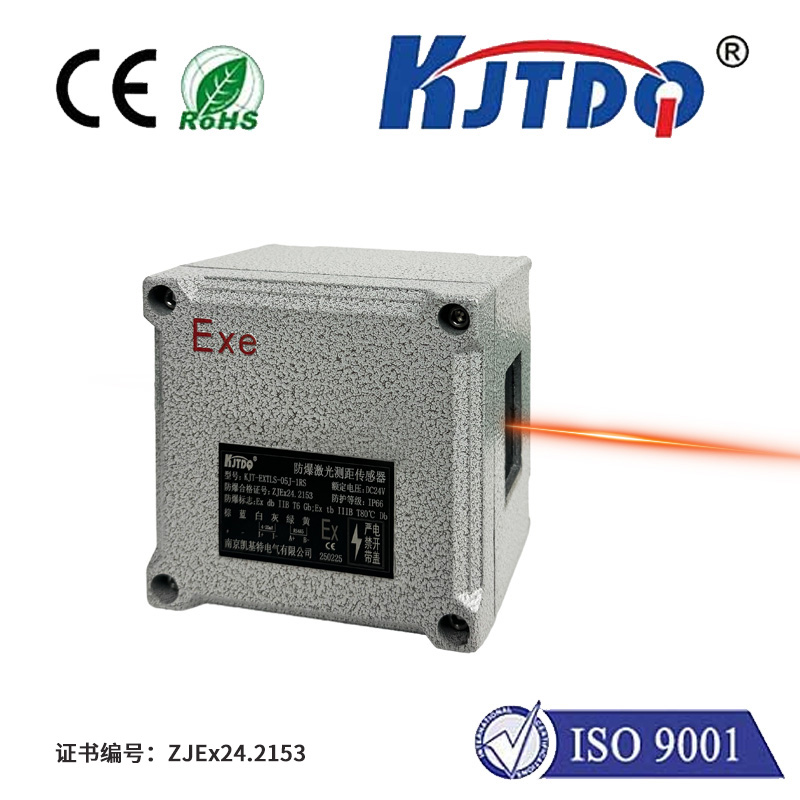
In the world of precise measurement and spatial awareness, the Laser Infrared Rangefinder Sensor stands as a cornerstone technology. This sophisticated device, often abbreviated as LIDAR in broader applications, utilizes a focused beam of infrared laser light to determine the distance to an object or surface with remarkable accuracy. Unlike traditional measuring tapes or ultrasonic sensors, it offers non-contact, high-speed, and highly reliable data, making it indispensable across a diverse range of modern industries.
The core principle behind a Laser Infrared Rangefinder Sensor is elegantly simple yet powerful: time-of-flight (ToF). The sensor emits a short, invisible pulse of infrared laser light towards a target. This light reflects off the surface and returns to a detector within the sensor. An internal high-precision clock measures the exact time elapsed between the emission and the reception of the pulse. Since the speed of light is a known constant, the sensor's processor can calculate the distance to the target using the formula: Distance = (Speed of Light × Time of Flight) / 2. This method allows for measurements that are incredibly fast and accurate, often within millimeters over considerable ranges.
The applications for this technology are vast and growing. In the construction and surveying sectors, professionals rely on these sensors for tasks like land surveying, building layout, and volume calculations, drastically reducing human error and time spent on-site. Within the realm of robotics and automation, Laser Infrared Rangefinder Sensors are the "eyes" of autonomous mobile robots (AMRs) and automated guided vehicles (AGVs), enabling them to navigate complex environments, avoid obstacles, and map their surroundings in real-time. Industrial automation leverages them for precise positioning, object detection on conveyor belts, and quality control inspections.
The automotive industry is undergoing a revolution partly fueled by this technology. Advanced Driver-Assistance Systems (ADAS) and emerging autonomous vehicles integrate multiple Laser Infrared Rangefinder Sensors, often as part of more complex LIDAR systems. These sensors help create a dynamic, three-dimensional map of the vehicle's environment, detecting pedestrians, other vehicles, and road boundaries to enable features like adaptive cruise control, automatic emergency braking, and self-parking. In consumer electronics, the technology has found its way into smartphones and tablets, enabling features like augmented reality (AR) experiences, improved camera autofocus, and gesture recognition.
When selecting a Laser Infrared Rangefinder Sensor for a specific application, several critical specifications must be considered. The measurement range defines the minimum and maximum distances the device can accurately cover. The accuracy and resolution indicate how close the measurement is to the true value and the smallest detectable change in distance, respectively. The measurement rate or frequency determines how many distance readings the sensor can take per second, which is crucial for tracking fast-moving objects. Other factors include the laser class (for safety), environmental robustness (resistance to dust, water, and temperature extremes), and the output interface (analog, digital, serial communication) for integration with other systems.
Modern advancements continue to push the boundaries of what these sensors can do. Innovations are leading to sensors with longer ranges, higher accuracy, and significantly reduced size and power consumption. The development of solid-state LIDAR, which has no moving mechanical parts, promises greater durability, lower cost, and faster scanning speeds, paving the way for even wider adoption in consumer and industrial markets. Furthermore, the integration of artificial intelligence and machine learning with sensor data is creating smarter systems capable of not just measuring distance, but also classifying objects and predicting movements.
In conclusion, the Laser Infrared Rangefinder Sensor is far more than a simple measuring tool. It is a fundamental enabling technology that drives precision, efficiency, and autonomy in our increasingly automated world. From building the structures we live in to guiding the vehicles we drive and empowering the robots that work alongside us, its role is both critical and expanding. As the technology evolves, becoming more accessible and capable, we can expect its influence to permeate even more aspects of our daily lives and industrial processes, solidifying its status as a key component in the toolkit of modern innovation.