check

check

check

check
check
check
check
check

check

check
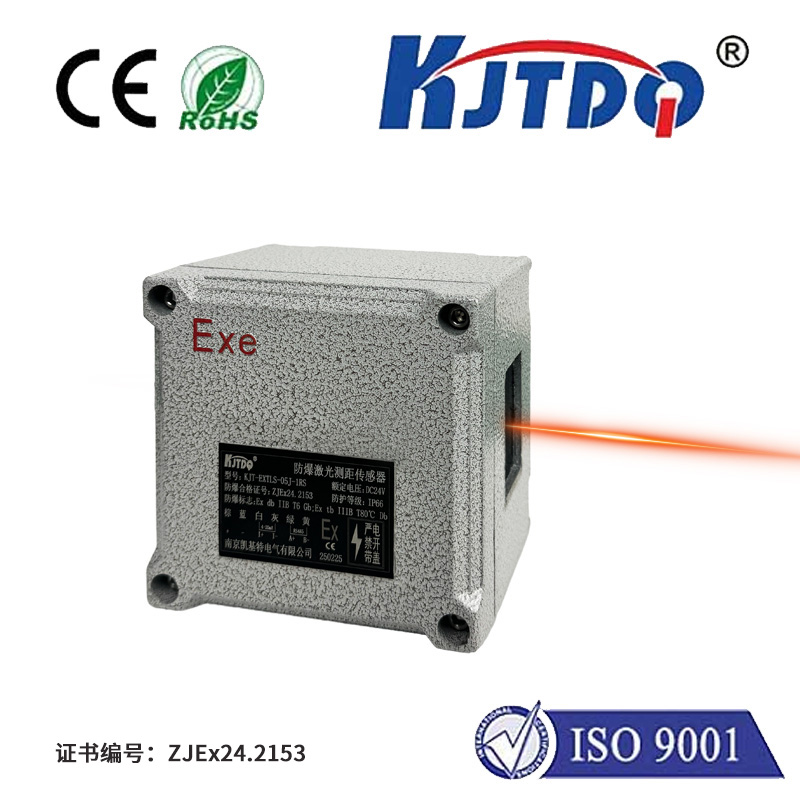
In the realm of industrial automation, robotics, and quality control, the demand for non-contact, high-precision measurement is paramount. The Laser Rangefinder Displacement Sensor stands as a cornerstone technology, enabling accurate distance and position measurement with unparalleled speed and reliability. Unlike traditional contact methods, this sensor projects a focused laser beam onto a target surface. By analyzing the reflected light—typically using time-of-flight, triangulation, or phase-shift principles—it calculates the exact distance to the object with micron-level resolution. This capability is transformative for applications requiring meticulous dimensional inspection, vibration analysis, or real-time monitoring of component thickness and alignment.
The operational advantages of a high-quality laser displacement sensor are significant. Its non-contact nature eliminates mechanical wear and prevents damage to delicate surfaces, ensuring long-term stability and reducing maintenance costs. The sensor responds with exceptional speed, capable of taking thousands of measurements per second, which is critical for dynamic processes on fast-moving production lines. Furthermore, its performance remains consistent regardless of material type, effectively measuring everything from shiny metals to dark, absorbent surfaces with advanced algorithms compensating for optical challenges. This versatility makes it indispensable in sectors like automotive manufacturing for panel gap inspection, in electronics for wafer and component profiling, and in civil engineering for structural deformation monitoring.
Integrating a Laser Rangefinder Displacement Sensor into a system enhances overall intelligence and efficiency. Modern sensors come equipped with digital interfaces (e.g., Ethernet, RS-485) and programmable logic, allowing seamless communication with PLCs, PCs, and data acquisition systems. Users can set tolerance windows, trigger alarms for out-of-spec conditions, and log vast amounts of measurement data for statistical process control and predictive maintenance analytics. This data-driven approach not only improves product quality by catching defects early but also optimizes production throughput and reduces material waste.
When selecting a sensor, key specifications must be evaluated to match the application needs. The measuring range, from a few millimeters to several meters, defines the operational distance. Resolution, often in the micrometer range, determines the smallest detectable change. Linearity error indicates measurement consistency across the entire range, while spot size affects the minimum measurable feature. Environmental factors like ambient light, temperature fluctuations, and dust require consideration, with many industrial-grade sensors featuring robust housings (IP67 ratings) and built-in temperature compensation. Proper installation, alignment, and periodic calibration are also crucial for maintaining stated accuracy over time.
Looking ahead, the evolution of laser displacement sensing continues. Advancements in laser diode technology, CMOS/CCD detectors, and embedded signal processing are pushing the boundaries of speed, accuracy, and compactness. The integration of AI for smarter data interpretation and the development of multi-point or profile scanning sensors are expanding application frontiers. From ensuring the perfect assembly of consumer gadgets to safeguarding the precision of aerospace components, the Laser Rangefinder Displacement Sensor remains a silent yet powerful enabler of modern manufacturing and scientific inquiry, delivering the exact data needed to drive innovation and ensure excellence.