check

check

check

check

check

check
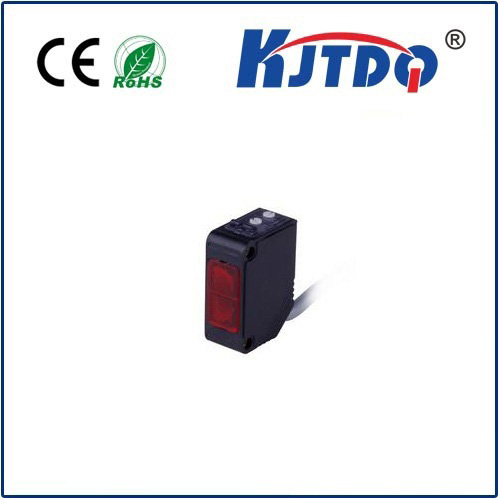
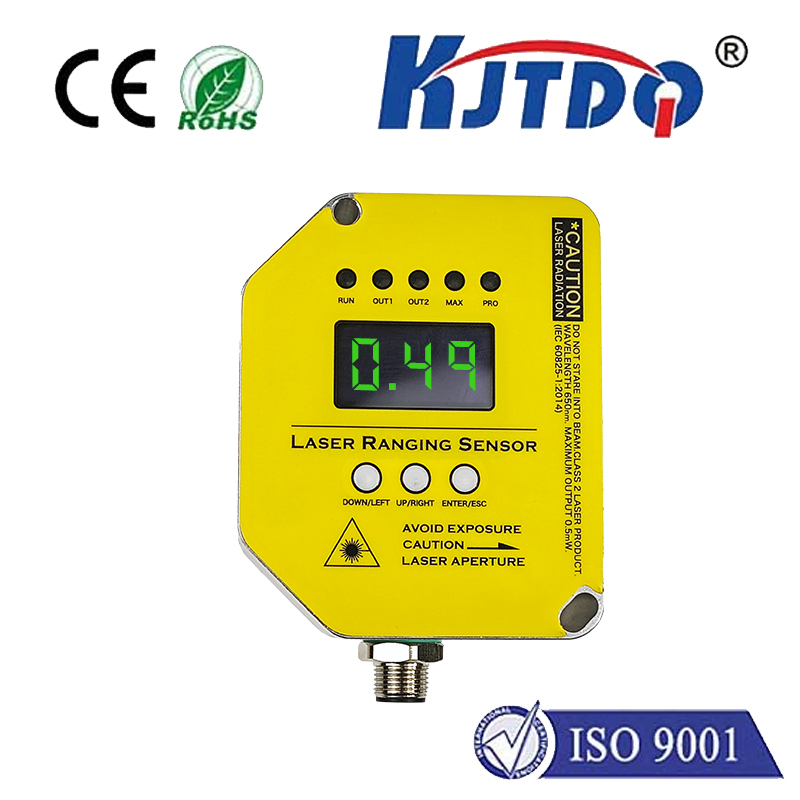
In the rapidly evolving landscape of industrial automation and smart technology, the demand for compact, high-precision measurement tools has never been greater. Enter the miniature laser sensor, a device that is quietly transforming how industries approach accuracy, efficiency, and integration. Unlike traditional bulky sensors, these sleek units pack powerful capabilities into a footprint often smaller than a matchbox, enabling applications previously deemed impossible due to space or environmental constraints.
The core technology behind these sensors typically involves laser triangulation or time-of-flight principles. A focused laser beam is projected onto a target surface. By analyzing the reflected light's position or the time it takes to return, the sensor calculates distance, displacement, or profile with micron-level precision. This non-contact method is crucial for measuring delicate, hot, or fast-moving objects without causing wear or interference. The miniaturization of optical components, advanced photodiodes, and sophisticated onboard signal processing algorithms have been key to shrinking these systems without sacrificing performance.
The applications are vast and cross-sector. In electronics manufacturing, miniature laser sensors perform critical tasks like inspecting micro-soldering joints on circuit boards, measuring the thickness of wafer coatings, and ensuring the precise alignment of smartphone components. The automotive industry relies on them for robotic guidance during assembly, checking gap dimensions between body panels, and monitoring brake disc wear. In pharmaceuticals, they verify fill levels in tiny vials and inspect pill coatings for consistency. Even in consumer robotics, such as autonomous vacuum cleaners, these sensors provide essential environmental mapping and obstacle detection.
Several compelling advantages drive their adoption. First is their unparalleled precision in a tiny package, allowing integration into dense machinery. Second, their non-contact nature ensures no damage to the target and minimal maintenance. Third, high-speed response times enable real-time process control in high-throughput production lines. Fourth, many models are designed to be robust, resisting vibrations, ambient light interference, and varying temperatures, making them suitable for harsh factory floors. Finally, digital interfaces like IO-Link facilitate easy integration into Industry 4.0 networks, allowing for predictive maintenance and data analytics.
However, selecting the right miniature laser sensor requires careful consideration. Key specifications include measuring range, resolution, repeatability, spot size, and response frequency. The material and surface finish of the target object (e.g., shiny, dark, or transparent) can significantly affect performance and may require sensors with specialized algorithms or supplementary lighting. Environmental factors like dust, steam, or strong ambient light must also be accounted for, potentially necessitating protective housings or specific laser wavelengths.
Looking ahead, the trajectory for miniature laser sensors points toward even greater intelligence and connectivity. Future iterations will likely feature enhanced embedded intelligence for self-calibration and adaptive measurement, lower power consumption for battery-operated IoT devices, and tighter integration with AI systems for complex pattern recognition and anomaly detection. As the backbone of precision in miniaturized and automated systems, these sensors are not just components but enablers of innovation, pushing the boundaries of what can be measured, controlled, and optimized in our increasingly precise world. Their role in enabling smarter factories, advanced medical devices, and next-generation consumer products is set to expand, making them a cornerstone of technological progress.