check

check

check

check

check

check
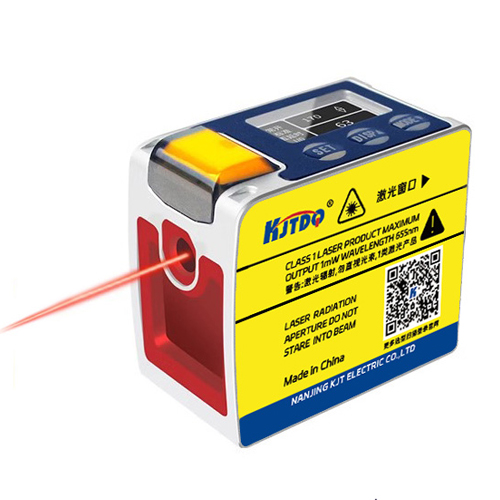
In the rapidly evolving landscape of industrial automation, robotics, and smart systems, the demand for accurate, reliable, and fast distance measurement has never been greater. Enter the High-frequency Time-of-Flight (ToF) laser sensor, a technological marvel that is setting new benchmarks for precision and speed. Unlike conventional sensors that may struggle with latency or environmental interference, these advanced devices operate on a principle of exceptional simplicity and effectiveness. They emit modulated laser pulses at very high frequencies and measure the time it takes for the light to reflect off a target and return to the sensor. This time interval, directly proportional to the distance, is calculated with astonishing accuracy.
The core advantage of the High-frequency ToF laser sensor lies in its operational frequency. By utilizing a high modulation frequency, the sensor can perform millions of measurements per second. This results in an incredibly high data refresh rate, enabling the capture of fast-moving objects with minimal motion blur and providing real-time, dynamic 3D data. For applications such as autonomous vehicle navigation, where split-second decisions are critical, or on high-speed production lines inspecting thousands of items per minute, this speed is not just an advantage—it is an absolute necessity. The sensor's ability to deliver dense point clouds at high frame rates allows for detailed environmental mapping and object recognition that was previously difficult to achieve.
Furthermore, these sensors exhibit remarkable robustness against challenging ambient conditions. Advanced signal processing algorithms filter out noise from ambient light, ensuring stable performance even in brightly lit or variably lit environments. The use of laser light, as opposed to other spectral methods, provides a focused beam that minimizes crosstalk and allows for precise measurement of specific points or areas. This makes the High-frequency ToF laser sensor indispensable in logistics for volume measurement, in robotics for bin-picking and collision avoidance, and in security systems for intrusion detection and people counting.
The integration of such sensors into the Internet of Things (IoT) ecosystem and Industry 4.0 frameworks is a natural progression. They provide the critical raw data—accurate distance and depth information—that drives intelligent decision-making in automated systems. From optimizing warehouse storage by accurately measuring pallet dimensions to enabling gesture control in consumer electronics, the applications are vast and growing. The development of more compact, energy-efficient, and cost-effective models is further accelerating their adoption across diverse sectors, including agriculture, healthcare, and smart buildings.
In conclusion, the High-frequency ToF laser sensor represents a significant leap forward in sensing technology. Its unparalleled combination of speed, accuracy, and reliability addresses the core requirements of modern automated and intelligent systems. As technology continues to advance, these sensors will undoubtedly become even more integral, forming the eyes of machines and driving innovation across countless industries, paving the way for a more efficient, automated, and data-driven future.