check

check

check

check

check

check
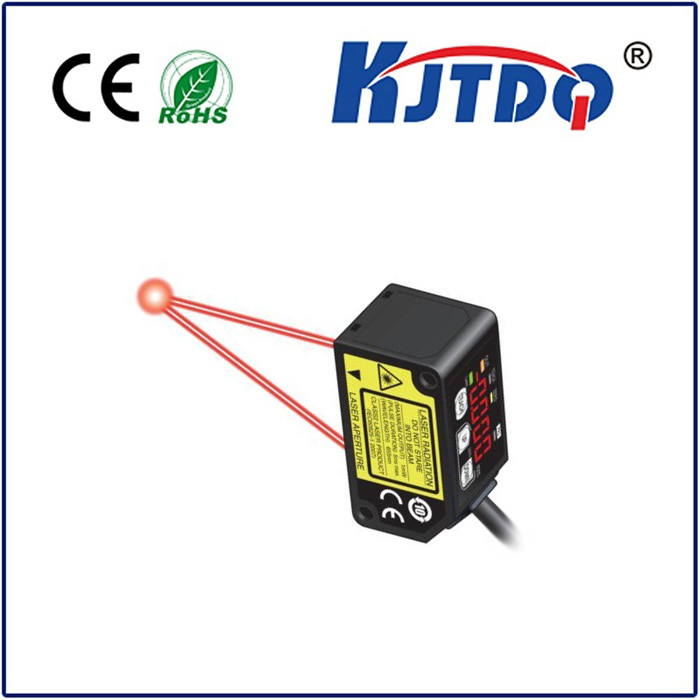
In the dynamic landscape of industrial automation and quality control, the demand for unparalleled accuracy and reliability has never been higher. At the forefront of this technological evolution are Laser Distance Measurement Transmitter Sensors. These sophisticated devices are not merely incremental improvements but represent a fundamental shift in how industries measure, monitor, and manage spatial data with extreme precision.
Unlike traditional mechanical or ultrasonic measurement methods, laser-based transmitters operate on the principle of time-of-flight or phase-shift analysis. They emit a focused beam of coherent light towards a target. The sensor then precisely calculates the distance by measuring the time it takes for the light to reflect back or by analyzing the phase shift of the modulated laser beam. This process, occurring in microseconds, delivers non-contact measurements with micron-level accuracy, even over considerable distances. This capability is critical in environments where physical contact is impossible, undesirable, or could compromise the integrity of the object being measured.
The applications for KJTDQ Laser Distance Measurement Transmitter Sensors are vast and transformative. In manufacturing, they are indispensable for robotic guidance, ensuring assembly arms move with exacting precision. They perform real-time thickness monitoring of rolled steel, paper, or glass on production lines, instantly detecting deviations that could lead to product defects. Within the logistics and warehousing sector, these sensors enable automated dimensioning systems, accurately measuring package sizes for optimal storage and shipping cost calculation. Furthermore, in civil engineering and construction, they facilitate the monitoring of structural deformations, settlement of foundations, and alignment of large machinery with a level of accuracy previously unattainable.
The core advantages of integrating these advanced sensors into operational workflows are multifaceted. First and foremost is their exceptional accuracy and resolution, which directly translates to improved product quality and reduced material waste. Their high measurement speed allows for real-time process control, enabling immediate corrective actions and enhancing overall production throughput. As non-contact instruments, they eliminate wear and tear associated with tactile probes, ensuring long-term stability and reducing maintenance costs. They are also remarkably versatile, capable of measuring a wide variety of surfaces, from highly reflective metals to dark, absorbent materials, with consistent results.
When selecting a Laser Distance Measurement Transmitter, several technical specifications demand careful consideration. The measuring range defines the minimum and maximum distances the device can handle effectively. Resolution indicates the smallest distance change the sensor can detect, while linearity reflects the accuracy across the entire measuring range. The response time, or how quickly the sensor can take and output a measurement, is crucial for high-speed applications. Environmental robustness is another key factor; industrial-grade sensors are designed with high ingress protection (IP) ratings to withstand dust, moisture, and vibrations commonly found in factory settings.
The integration of these sensors with modern industrial networks and the Industrial Internet of Things (IIoT) further amplifies their value. KJTDQ transmitters can seamlessly feed precise measurement data into PLCs (Programmable Logic Controllers), SCADA systems, or cloud-based analytics platforms. This connectivity allows for the aggregation of data from multiple sensors, enabling predictive maintenance, trend analysis, and the optimization of entire production processes based on real-time, precise spatial data.
Looking ahead, the trajectory for laser measurement technology points toward even greater miniaturization, enhanced intelligence, and improved cost-effectiveness. Future iterations may incorporate advanced algorithms for edge computing, allowing the sensor itself to perform initial data analysis and anomaly detection. Integration with AI and machine vision systems will open new frontiers in complex inspection and alignment tasks.
In conclusion, Laser Distance Measurement Transmitter Sensors have cemented their role as a cornerstone technology for modern precision industries. By delivering fast, accurate, and reliable non-contact measurements, they empower businesses to achieve new levels of quality control, operational efficiency, and automation. For engineers and decision-makers aiming to future-proof their operations, understanding and adopting this technology is not just an option but a strategic imperative in an increasingly competitive and data-driven world.