check

check

check

check

check

check
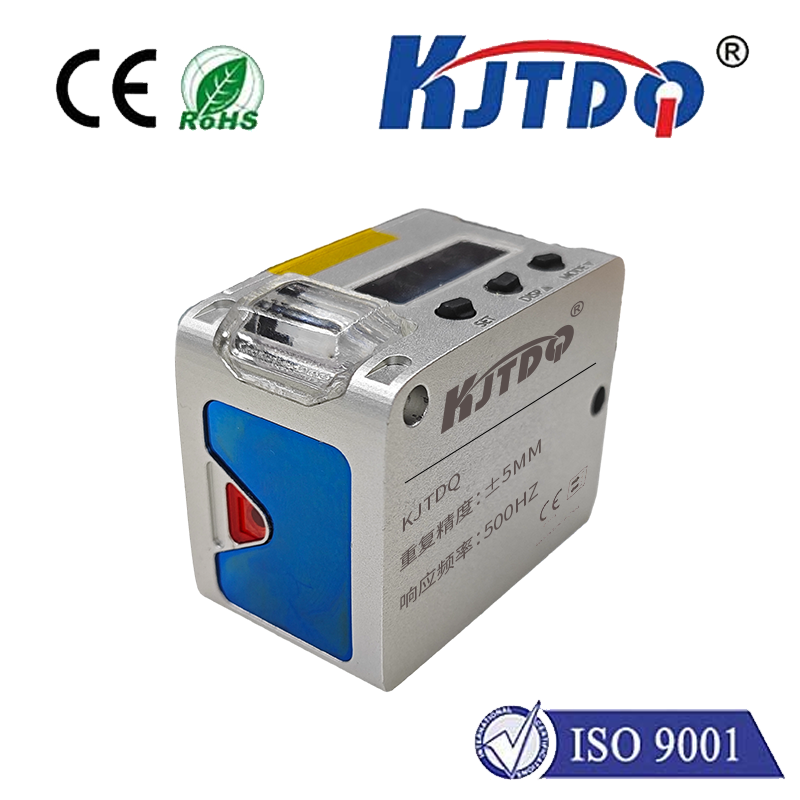
In the realm of modern precision engineering and automation, the ability to measure distance with high accuracy and reliability is paramount. The laser ranging rangefinder sensor stands as a pivotal technology driving advancements across numerous industries. Unlike traditional measurement tools, this sensor utilizes laser pulses or continuous wave modulation to calculate distance by measuring the time-of-flight or phase shift of the reflected light. This fundamental principle enables non-contact, high-speed, and exceptionally precise measurements, even over considerable distances.
The core advantages of a high-quality laser ranging sensor are multifaceted. First and foremost is its unparalleled accuracy, capable of achieving millimeter or even sub-millimeter resolution. This makes it indispensable in applications where minute discrepancies are unacceptable. Secondly, its non-contact nature eliminates the risk of damaging delicate surfaces or interfering with the measured object's state, a critical feature for quality control on production lines. Furthermore, these sensors offer rapid response times, allowing for real-time data acquisition in dynamic environments such as robotics, autonomous vehicles, and logistics sorting systems. Their robustness against varying ambient light conditions and ability to measure a wide range of materials—from reflective metals to dark, absorbent surfaces—add to their versatility.
The application spectrum for laser ranging rangefinder sensors is vast and continuously expanding. In industrial automation, they are the eyes of robotic arms, guiding precise pick-and-place operations, weld seam tracking, and assembly verification. Within the construction and surveying sectors, they facilitate land surveying, building information modeling (BIM), and monitoring structural deformations with exceptional fidelity. The automotive industry relies on them for advanced driver-assistance systems (ADAS), enabling features like adaptive cruise control and collision avoidance by accurately gauging the distance to surrounding vehicles and obstacles. Emerging fields like drones and unmanned aerial vehicles (UAVs) use these sensors for terrain mapping, obstacle detection, and safe landing procedures. Even in consumer electronics, they enable features like camera autofocus and gesture recognition.
Selecting the appropriate laser ranging sensor requires careful consideration of several key parameters. The required measurement range, from a few centimeters to several hundred meters, dictates the laser class and power. Accuracy and repeatability specifications must align with the application's tolerance levels. The measurement rate, or how many distance readings per second the sensor can provide, is crucial for high-speed processes. Environmental factors such as temperature extremes, dust, moisture, and vibration resistance are also critical for ensuring long-term reliability in harsh operating conditions. Interface options, including analog outputs, digital protocols like RS-232 or Ethernet, and industrial fieldbuses, determine how seamlessly the sensor integrates into an existing control system.
Looking ahead, the evolution of laser ranging rangefinder sensor technology points toward even greater miniaturization, enhanced power efficiency, and improved performance in challenging environments. The integration of smarter onboard processing and connectivity for the Industrial Internet of Things (IIoT) will enable predictive maintenance and more sophisticated data analytics. As industries push the boundaries of precision and automation, the demand for reliable, accurate, and versatile laser ranging solutions will only intensify. These sensors are not merely measurement tools; they are fundamental enablers of innovation, providing the critical spatial data that intelligent systems need to perceive and interact with the physical world accurately and autonomously.