check

check

check

check

check

check
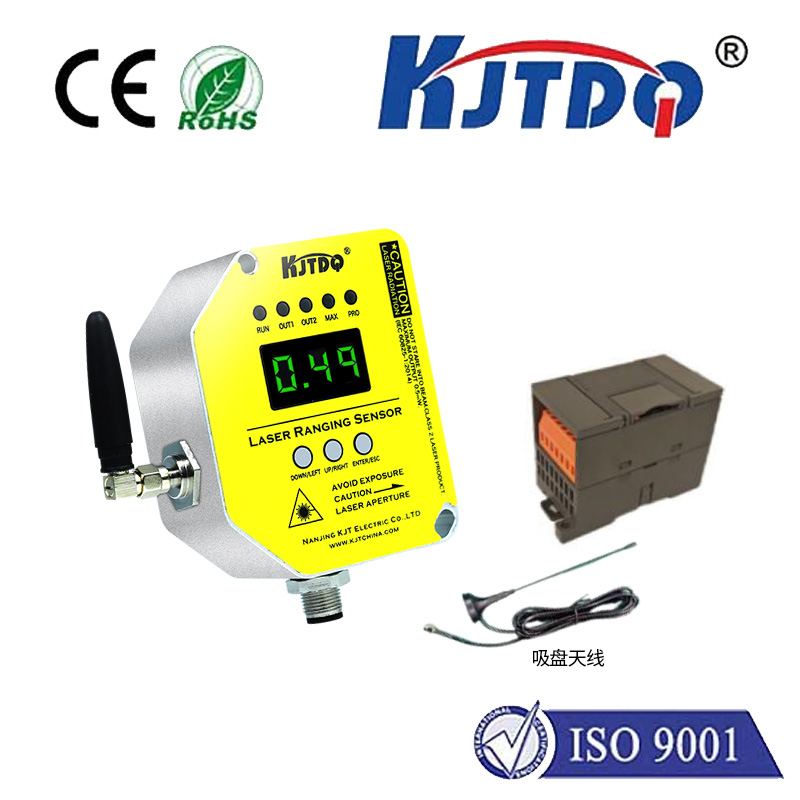
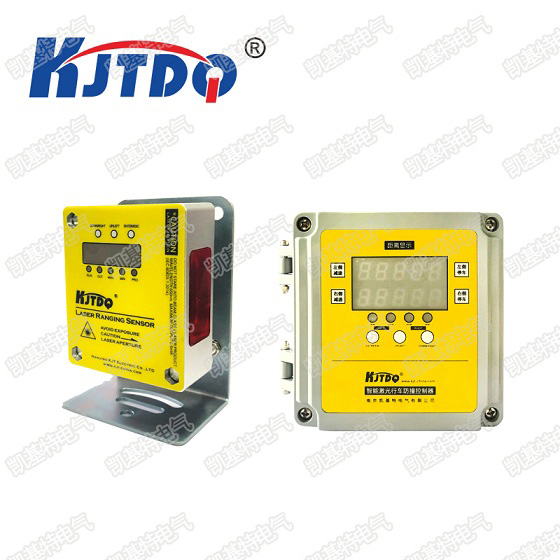
In an era where precision is not just desired but demanded, the laser rangefinder sensor stands as a pivotal technology driving innovation across countless fields. Far from being a simple tool for measuring distance, this sophisticated device embodies the convergence of optics, electronics, and advanced signal processing. At its heart, a laser rangefinder sensor operates on the principle of Time-of-Flight (ToF) or phase-shift measurement. It emits a focused, coherent beam of light—a laser pulse—towards a target. The sensor then meticulously calculates the time it takes for that pulse to reflect back to its receiver. This fundamental process, executed with nanosecond precision, translates into accurate distance data, forming the bedrock for applications that shape our world.
The utility of the laser rangefinder sensor extends far beyond the golf course or construction site. In the realm of autonomous vehicles, these sensors are indispensable eyes. They create real-time, high-resolution 3D maps of the surrounding environment, allowing self-driving cars to identify obstacles, pedestrians, and other vehicles with remarkable accuracy. This data is crucial for navigation and collision avoidance systems, making our roads safer. Similarly, in robotics, whether for industrial automation in smart factories or for sophisticated drones performing aerial surveys, laser rangefinders provide the spatial awareness necessary for precise movement, object manipulation, and terrain mapping.
The industrial and engineering sectors rely heavily on the unwavering accuracy of these sensors. In large-scale construction and civil engineering projects, they enable surveyors to measure vast distances and complex topographies quickly and reliably, replacing cumbersome traditional methods. In manufacturing, they are integrated into quality control systems to verify dimensions, align components, and guide assembly robots, ensuring products meet exacting specifications with zero tolerance for error. Forestry and agriculture have also been transformed; handheld or drone-mounted laser rangefinders can measure tree height, canopy density, and plot sizes, facilitating sustainable resource management and precision farming.
Consumer electronics have eagerly adopted miniaturized versions of this technology. The latest smartphones and tablets incorporate tiny laser autofocus sensors within their cameras. By instantly gauging the distance to a subject, these sensors enable the camera to lock focus with unprecedented speed and accuracy, even in low-light conditions, ensuring that every photo is sharp and clear. This integration showcases how laser rangefinder technology has evolved from specialized equipment to an everyday enhancement of user experience.
Looking ahead, the future of the laser rangefinder sensor is one of continuous refinement and broader integration. Researchers are focused on enhancing their performance in adverse weather conditions, reducing their size and power consumption further, and increasing their measurement range and frequency. The advent of solid-state LiDAR, which uses an array of laser sensors without moving parts, promises more durable and cost-effective solutions for mass-market applications. As the Internet of Things (IoT) and smart city infrastructures expand, these sensors will play a critical role in traffic management, security systems, and environmental monitoring, feeding data into networks that make urban spaces more efficient and responsive.
In conclusion, the laser rangefinder sensor is a quintessential example of a foundational technology whose impact is both profound and pervasive. It is the silent, precise force behind the scenes, enabling machines to see, understand, and interact with the physical world. From guiding autonomous vehicles and building skyscrapers to capturing perfect smartphone photos, its role is integral to modern technological progress. As development pushes forward, the laser rangefinder sensor will undoubtedly remain at the core of the next wave of innovations, continuing to measure and define the boundaries of what is possible.