check

check

check

check

check

check
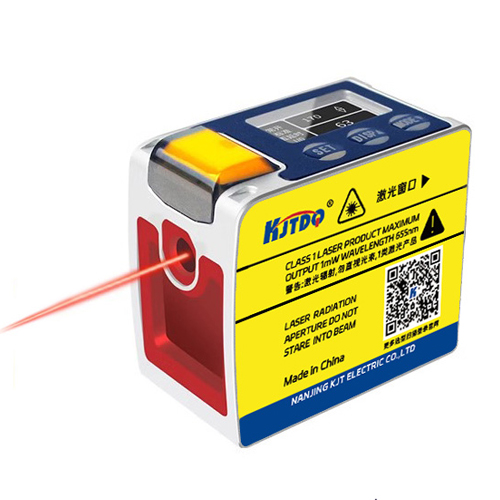
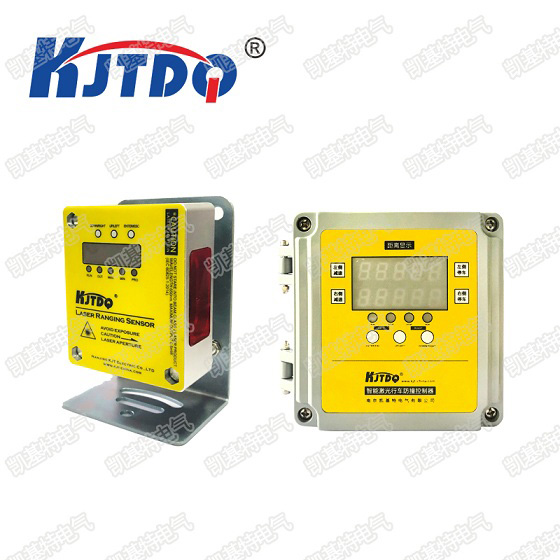
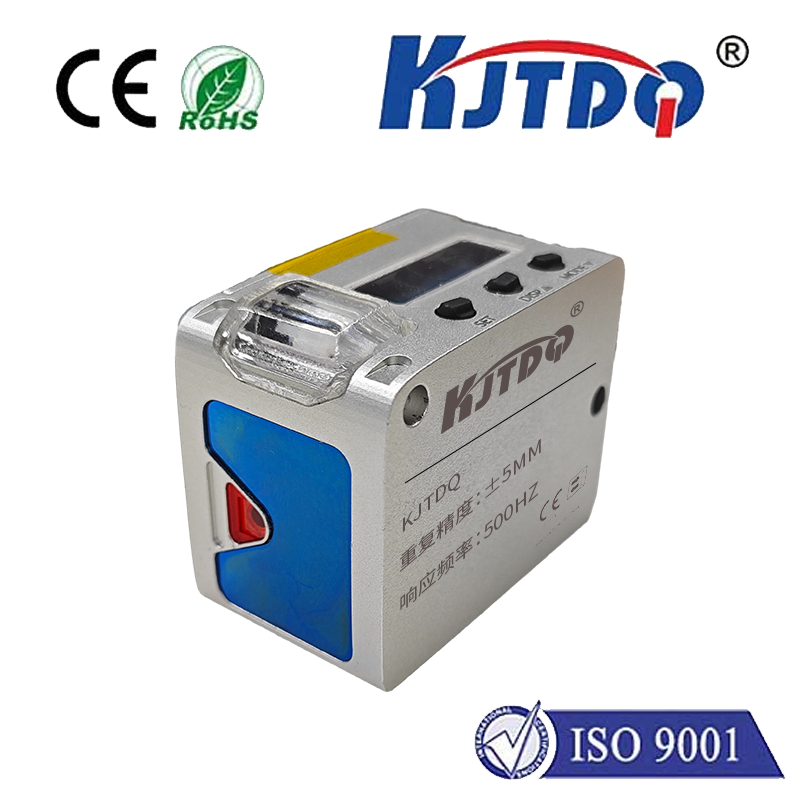
In the realm of precise measurement, the advent of the high-precision laser rangefinder sensor marks a significant technological leap. This sophisticated device, often abbreviated as {KJTDQ} in certain technical and commercial contexts, has transcended its traditional applications to become a cornerstone of accuracy in diverse fields. Unlike conventional measuring tools, these sensors utilize laser technology to calculate distances with exceptional fidelity, often achieving sub-millimeter accuracy over considerable ranges. The core principle involves emitting a laser pulse towards a target and measuring the time it takes for the reflection to return. Advanced signal processing algorithms then convert this time-of-flight data into an exact distance reading, virtually eliminating human error and environmental subjectivity.
The operational superiority of high-precision laser rangefinder sensors is rooted in their robust design and intelligent components. Key elements include a high-stability laser diode, a ultra-sensitive photodetector, and a high-speed timing circuit. Manufacturers employ specialized techniques to minimize internal noise and compensate for external factors such as ambient light and temperature fluctuations. This results in a sensor that delivers consistent, reliable data even in challenging industrial environments. For instance, in dynamic settings where targets are moving, modern sensors can perform thousands of measurements per second, providing real-time, continuous data streams crucial for automation and control systems.
Industrial automation represents a primary domain where these sensors deliver transformative value. On manufacturing assembly lines, they are deployed for non-contact inspection, verifying part dimensions, checking alignment, and guiding robotic arms with pinpoint accuracy. This ensures stringent quality control standards are met, reduces material waste, and enhances overall production efficiency. In logistics and warehousing, laser rangefinders are integral to automated guided vehicles (AGVs) and inventory management systems, enabling precise navigation and spatial mapping of storage facilities.
The construction and civil engineering sectors have also embraced this technology. High-precision laser rangefinder sensors facilitate accurate surveying, volume calculations for earthworks, and monitoring of structural deformations over time. Their ability to take long-range measurements safely and quickly improves site safety and project planning. Furthermore, in the burgeoning field of autonomous vehicles, these sensors, often part of LiDAR systems, are critical for creating high-definition 3D maps of the surroundings, allowing vehicles to perceive distance and detect obstacles with life-saving precision.
Beyond heavy industry, applications extend into scientific research, forestry, archaeology, and even sports. Researchers use them to measure glacial retreat or forest canopy structure, while sports professionals utilize them for performance analysis in golf or athletics. The common thread is the uncompromising demand for accuracy that only laser-based ranging can satisfy.
Selecting the right high-precision laser rangefinder sensor requires careful consideration of several specifications. Key parameters include measurement range, accuracy, repeatability, measurement rate, laser class for safety, and the robustness of the housing against dust and water ingress (often rated by IP codes). Interface options, such as Ethernet, RS-485, or analog outputs, are also vital for seamless integration into existing data networks. Potential users must align these specifications with their specific application needs, whether it's for static high-accuracy metrology or high-speed dynamic tracking.
The integration of these sensors with the Internet of Things (IoT) and Industry 4.0 frameworks is setting the stage for smarter operations. Data from networked sensors can be aggregated and analyzed to predict maintenance needs, optimize processes, and provide actionable insights, driving efficiency to unprecedented levels. As technology progresses, we anticipate further miniaturization, enhanced resistance to extreme environments, and even greater accuracy at longer distances.
In conclusion, the high-precision laser rangefinder sensor, embodied by technologies like {KJTDQ}, is far more than a simple measuring tool. It is an enabling technology that underpins modern precision, safety, and automation. By providing reliable, non-contact distance data, it empowers industries to innovate, improve quality, and operate with a level of accuracy that was once unattainable. Its continued evolution promises to unlock new possibilities and redefine the boundaries of measurement across the technological landscape.