check

check

check

check

check

check
In the rapidly evolving landscape of automotive technology, safety remains the paramount concern for manufacturers and consumers alike. Among the myriad of advanced driver-assistance systems (ADAS), the driving collision avoidance laser rangefinder sensor stands out as a critical component, acting as a vigilant electronic eye that continuously scans the road ahead. This sophisticated technology is not just an add-on; it is becoming a fundamental pillar in the quest to prevent accidents and save lives on our roadways.
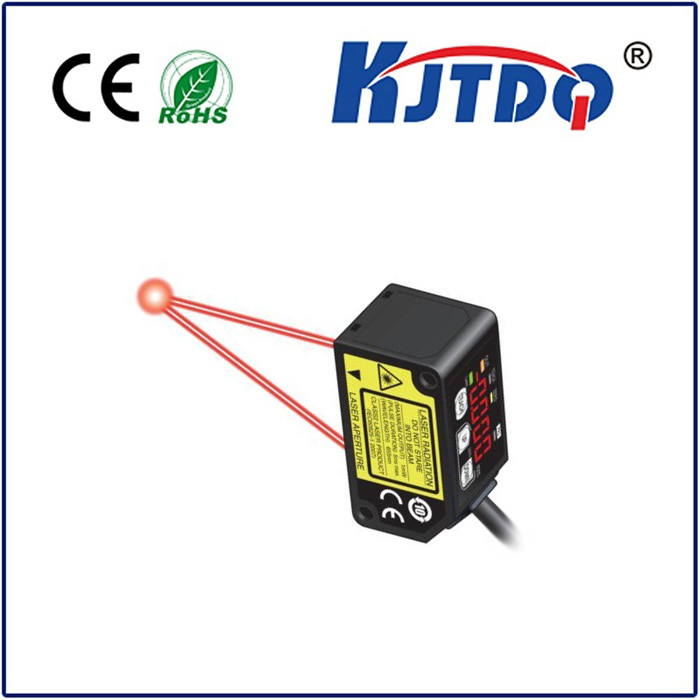
At its core, a laser rangefinder sensor, often based on LiDAR (Light Detection and Ranging) principles, operates by emitting rapid pulses of laser light. These pulses travel outward, strike objects in the vehicle's path—be it another car, a pedestrian, a cyclist, or static obstacles—and reflect back to the sensor. By calculating the time it takes for each pulse to return, the system generates a highly accurate, real-time three-dimensional map of the surrounding environment. This map is not a simple picture; it is a precise point cloud of data, detailing the distance, size, shape, and even the relative speed of objects with remarkable accuracy, often within centimeters.
The integration of this sensor into a collision avoidance system transforms raw data into life-saving actions. The vehicle's central computer processes the continuous stream of information from the laser sensor. When it identifies a potential collision threat, such as a rapidly decelerating vehicle or an unexpected obstacle, the system can initiate a multi-stage response. First, it provides audible and visual warnings to alert the driver. If the driver does not react in time, the system can autonomously apply partial or full braking to either mitigate the impact or avoid the collision altogether. In more advanced implementations, it can work in concert with steering assist systems to guide the vehicle into a safer path.
The advantages of using laser technology for this purpose are significant. Compared to radar, which is also commonly used in ADAS, laser sensors typically offer superior resolution and accuracy at shorter to medium ranges. They excel at detecting the precise contours of objects, which is crucial for identifying vulnerable road users like pedestrians and distinguishing them from other roadside clutter. While camera-based systems provide rich visual data, they can be hampered by poor lighting conditions, glare, or fog. Laser sensors, particularly those using specific wavelengths, are less susceptible to these environmental challenges, providing reliable performance day and night, in rain or mild fog.
The application of the driving collision avoidance laser rangefinder sensor extends beyond emergency braking. It is a foundational technology for the development of higher levels of autonomous driving. By providing a reliable and detailed perception of the world, it enables features like adaptive cruise control with stop-and-go capability, traffic jam assist, and pedestrian/cyclist detection systems. For commercial fleets, such as trucks and delivery vehicles, these sensors contribute to operational safety and efficiency, protecting both the driver and other road users.
However, the technology is not without its considerations. Early LiDAR systems were notably expensive and bulky, but ongoing innovation is driving down costs and reducing size, making them more accessible for mainstream vehicles. Engineers also continue to work on enhancing performance in extreme weather conditions, such as heavy snow or dense fog, where laser pulses can be scattered. The future points towards solid-state LiDAR sensors, which have no moving parts, offering greater durability, faster response times, and even more compact designs suitable for seamless integration into vehicle bodywork.
For the modern driver, a vehicle equipped with a collision avoidance system powered by a laser rangefinder sensor is more than a convenience; it is an intelligent partner. It provides an extra layer of defense, compensating for momentary lapses in attention—a major cause of accidents. It acts without fatigue or distraction, constantly monitoring the road with a level of precision beyond human capability.
As regulatory bodies push for higher safety standards and consumer demand for intelligent vehicles grows, the driving collision avoidance laser rangefinder sensor will undoubtedly become more ubiquitous. It represents a key step in the journey towards a future with significantly fewer road accidents. This technology, working silently behind the scenes, embodies the proactive shift in automotive safety—from mitigating injury during a crash to actively preventing the collision from happening in the first place. It is, in every sense, a guardian angel for the modern vehicle and its occupants.