check

check

check

check

check

check
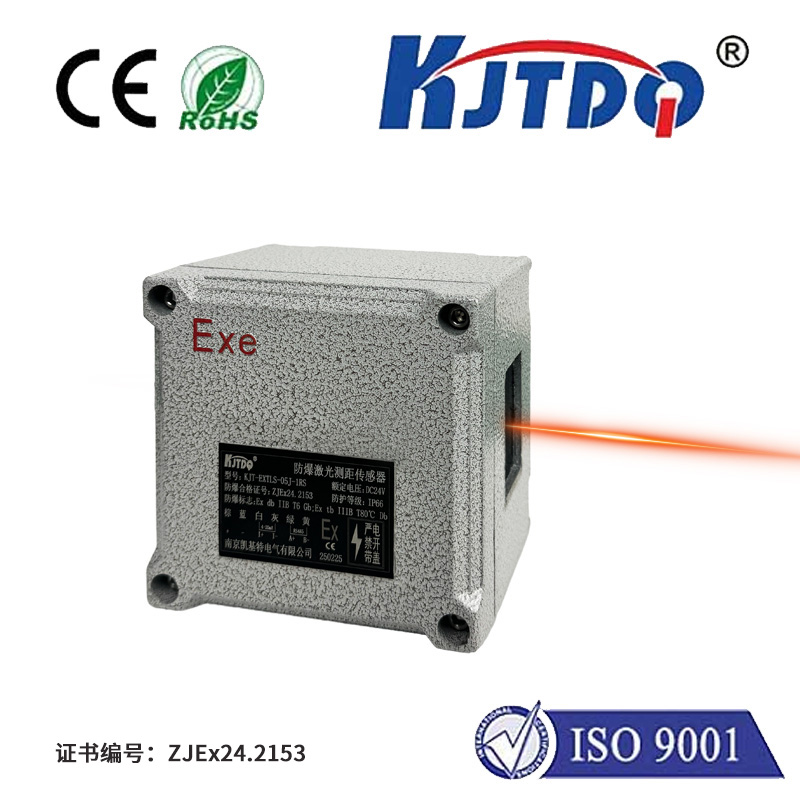
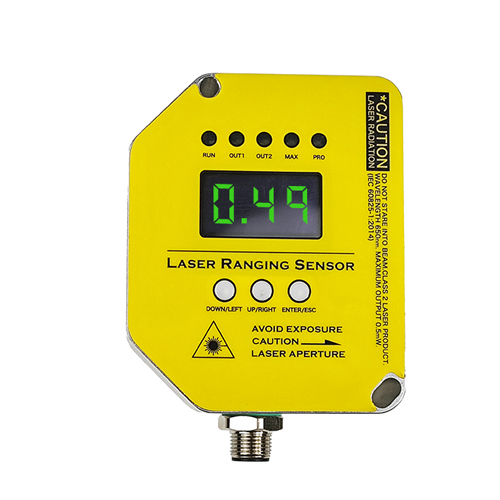
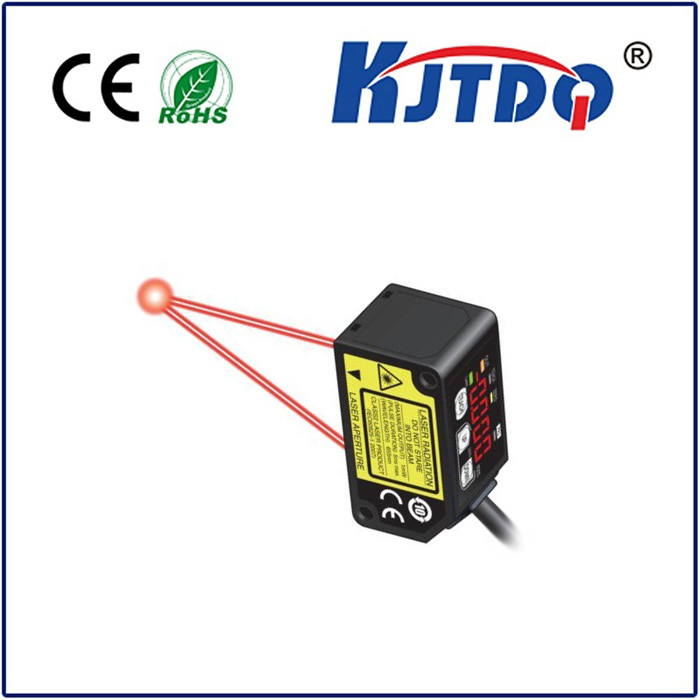
In the rapidly evolving landscape of sensing technology, one innovation stands out for its precision, versatility, and growing ubiquity: the Time-of-Flight (TOF) laser sensor. This advanced device is fundamentally changing how machines perceive and interact with their environment, offering capabilities far beyond traditional measurement tools. By emitting a laser pulse and precisely measuring the time it takes for the light to reflect off a target and return, a TOF sensor calculates distance with remarkable accuracy. This simple yet powerful principle is the engine behind a silent revolution in fields ranging from industrial automation to consumer electronics.
The core advantage of the TOF laser sensor lies in its non-contact, high-speed, and high-accuracy measurement. Unlike mechanical probes or ultrasonic sensors, it provides instantaneous data without physical interaction, making it ideal for delicate objects or high-speed production lines. In automotive applications, TOF sensors are pivotal for advanced driver-assistance systems (ADAS), enabling features like adaptive cruise control and collision avoidance by creating a detailed 3D map of the vehicle's surroundings. They provide the critical depth perception that cameras alone cannot achieve, especially in challenging lighting conditions.
Beyond automotive, the industrial sector heavily relies on TOF technology for robotics and automation. Robotic arms equipped with TOF laser sensors can navigate complex environments, perform precise pick-and-place operations, and ensure worker safety by detecting human presence in restricted zones. In logistics, these sensors optimize warehouse management by accurately measuring package dimensions for volumetric calculations and guiding autonomous mobile robots (AMRs) through dynamic spaces. The ability to generate real-time 3D data streamlines processes, reduces errors, and enhances overall operational efficiency.
The consumer electronics market has also warmly embraced TOF laser sensors, integrating them into smartphones and tablets for enhanced photography and augmented reality (AR) experiences. They enable portrait mode with sophisticated background blur (bokeh effect) by accurately mapping depth, and they power immersive AR applications that overlay digital content onto the real world with convincing spatial awareness. Furthermore, in smart home devices, TOF sensors contribute to gesture control interfaces, presence detection for lighting systems, and improved functionality in robotic vacuum cleaners for efficient room mapping and obstacle avoidance.
Looking forward, the potential applications for TOF laser sensors continue to expand. They are finding roles in healthcare for patient monitoring and surgical assistance, in agriculture for crop monitoring and yield estimation, and in security systems for intrusion detection and crowd monitoring. As the technology matures, we see trends toward miniaturization, reduced power consumption, and increased resolution. The integration of TOF sensors with artificial intelligence (AI) and machine learning algorithms promises even smarter systems capable of not just measuring distance, but also interpreting scenes, recognizing objects, and making predictive decisions.
The adoption of TOF laser sensor technology does come with considerations. Factors such as ambient light interference, the reflectivity of target surfaces, and the sensor's field of view must be accounted for in system design. However, ongoing advancements in optical filters, signal processing algorithms, and sensor fusion—combining TOF data with inputs from cameras or inertial measurement units (IMUs)—are continuously mitigating these challenges. The result is a robust and reliable sensing solution ready for mass deployment.
In conclusion, the TOF laser sensor is more than just a component; it is a foundational technology enabling the next wave of intelligent automation and interactive experiences. Its ability to deliver fast, accurate, and contactless distance and 3D data makes it indispensable for building smarter machines, safer vehicles, and more intuitive devices. As research pushes the boundaries of its performance and cost-effectiveness, the TOF laser sensor is poised to become an even more invisible yet integral part of our technological infrastructure, quietly shaping a future where machines see and understand the world with unprecedented clarity.