check

check

check

check

check

check
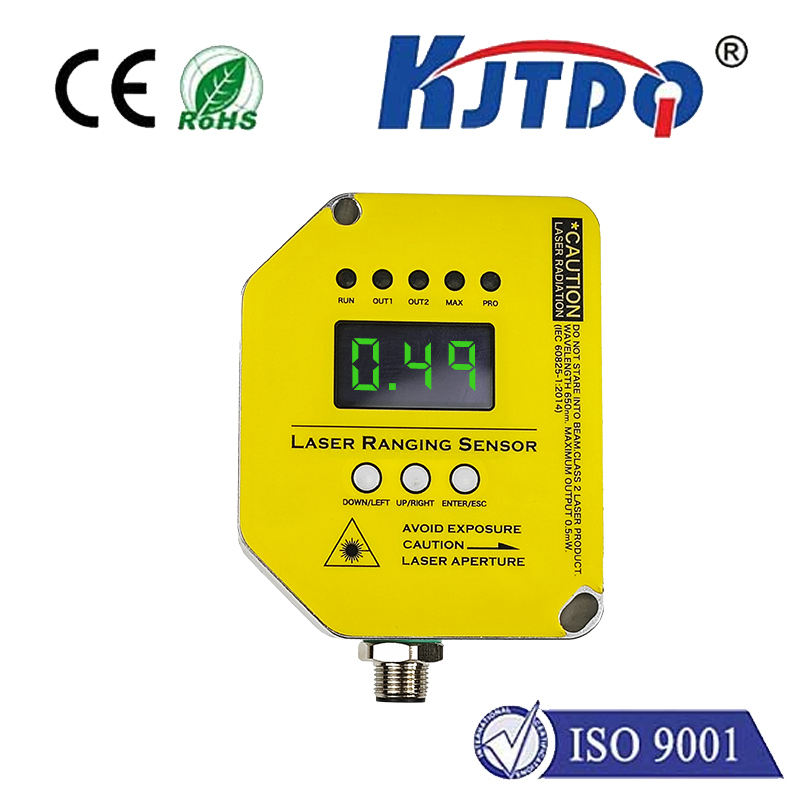
In the rapidly evolving landscape of industrial automation and precision engineering, the demand for accurate, reliable, and efficient measurement solutions is paramount. Among the array of technologies available, the domestic laser displacement sensor has emerged as a cornerstone for non-contact measurement, offering unparalleled precision and versatility. This technology, developed and refined by local manufacturers, is now competing on a global scale, providing robust alternatives for a wide range of applications.
At its core, a laser displacement sensor operates by projecting a laser beam onto a target surface. The sensor then detects the reflected light, and using triangulation or time-of-flight principles, calculates the exact distance to the object with micron-level accuracy. This non-contact method is crucial for measuring delicate, hot, fast-moving, or otherwise inaccessible surfaces without causing any damage or interference. The advancement in domestic production has led to sensors that are not only highly accurate but also cost-effective and tailored to meet specific regional industrial needs.
The applications for these domestically produced sensors are vast and varied. In the automotive industry, they are indispensable for quality control, measuring panel gaps, inspecting weld seams, and ensuring the precise assembly of components. In electronics manufacturing, they verify the coplanarity of chip leads and the thickness of coatings on circuit boards. Furthermore, in the burgeoning field of robotics, these sensors provide essential feedback for guidance, positioning, and obstacle avoidance, enabling more autonomous and precise robotic operations. The logistics and warehousing sector utilizes them for dimensioning packages and palletizing, optimizing storage space and handling efficiency.
One of the significant advantages of modern domestic laser displacement sensors is their enhanced performance in challenging environments. Many models are designed with robust housings, offering high resistance to dust, water, oil, and electromagnetic interference. This durability ensures stable operation in harsh factory conditions, such as those found in metalworking, foundries, or outdoor applications. Additionally, advancements in laser source technology and signal processing algorithms have resulted in faster sampling rates, allowing for real-time measurement on high-speed production lines without sacrificing accuracy.
Integration into existing systems has also become remarkably straightforward. Contemporary domestic sensors often come with a variety of digital and analog output options, such as Ethernet, RS-485, or IO-Link, facilitating seamless communication with PLCs (Programmable Logic Controllers), PCs, and other industrial control systems. User-friendly configuration software allows engineers to quickly set measurement parameters, create logic functions, and monitor data, reducing setup time and complexity. This plug-and-play capability accelerates deployment and minimizes downtime, a critical factor for maintaining productivity.
The development of the domestic laser sensor industry also reflects a commitment to innovation and customization. Local manufacturers are increasingly responsive to client-specific requirements, developing specialized models for unique applications, whether it's measuring transparent objects like glass, detecting ultra-fine details on semiconductor wafers, or operating in extreme temperature ranges. This flexibility, combined with localized technical support and shorter supply chains, provides end-users with significant operational advantages and peace of mind.
Looking ahead, the trajectory for domestic laser displacement sensors is closely tied to broader trends like Industry 4.0 and smart manufacturing. These sensors are fundamental data acquisition nodes, feeding critical dimensional information into digital twins and AI-driven analytics platforms. This data enables predictive maintenance, process optimization, and enhanced overall equipment effectiveness (OEE). As domestic technology continues to advance, integrating more intelligent features like embedded edge computing and self-diagnostic capabilities, these sensors will become even more integral to building agile, efficient, and competitive modern factories.
In conclusion, the domestic laser displacement sensor represents a mature and sophisticated technological achievement. It delivers the high-precision, non-contact measurement capabilities essential for today's quality-driven and automated industrial processes. By offering reliable performance, environmental resilience, easy integration, and tailored solutions, domestically produced sensors are empowering industries worldwide to achieve new levels of precision, efficiency, and innovation in their operations.