check

check

check

check

check

check
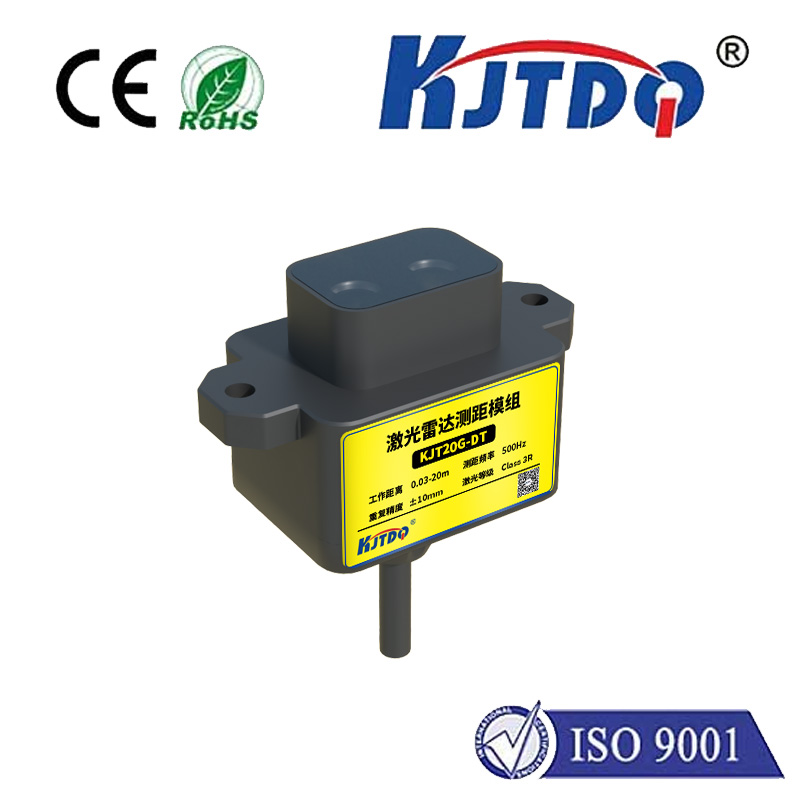
In the rapidly evolving landscape of industrial automation, robotics, and smart infrastructure, the demand for accurate, reliable, and cost-effective distance measurement solutions has never been higher. Enter the Domestic Laser Rangefinder Sensor, a technological advancement that is setting new benchmarks for precision and accessibility. This innovation represents a significant leap forward, empowering a wide range of sectors with tools that were once the exclusive domain of high-end, imported systems.
The core technology behind these sensors is Time-of-Flight (ToF) measurement. By emitting a laser pulse and precisely calculating the time it takes for the reflection to return, the sensor determines distance with remarkable accuracy. Modern domestic manufacturers have mastered this principle, integrating sophisticated signal processing algorithms and high-quality optical components. This results in sensors capable of sub-millimeter precision over distances that can range from a few centimeters to several hundred meters, depending on the model and application. The robustness of the design ensures stable performance even in challenging environments with variable lighting or moderate dust, making them suitable for both indoor and outdoor use.
One of the most compelling advantages of the domestic laser rangefinder sensor is its exceptional value proposition. By leveraging local supply chains and streamlined manufacturing processes, producers can offer high-performance sensors at a fraction of the cost of comparable imported units. This cost-effectiveness does not come at the expense of quality. Rigorous testing protocols ensure durability, long-term stability, and compliance with international safety standards for laser products. This democratization of precision technology opens doors for small and medium-sized enterprises, startups, and educational institutions that previously found such equipment financially out of reach.
The applications for these versatile sensors are vast and growing. In the construction and surveying industries, they are integral to modern total stations and handheld distance meters, speeding up land measurement and building layout with digital accuracy. Within smart factories, these sensors are the eyes of automated guided vehicles (AGVs) and robotic arms, enabling precise navigation, object avoidance, and component placement. They play a critical role in logistics for warehouse inventory management, parcel dimensioning, and automated sorting systems. Furthermore, their integration into security systems for perimeter monitoring and into agricultural technology for crop monitoring and forestry demonstrates their cross-industry utility.
A key trend driving adoption is the seamless integration capability of modern domestic sensors. They are designed with standard communication interfaces like RS-485, Modbus, analog outputs, or Ethernet, allowing for easy connection to Programmable Logic Controllers (PLCs), industrial computers, and IoT platforms. This plug-and-play philosophy reduces system integration time and complexity, allowing engineers to focus on application development rather than hardware compatibility issues. The availability of comprehensive Software Development Kits (SDKs) and technical support from domestic suppliers further accelerates the deployment process.
Looking ahead, the future of domestic laser rangefinder sensors is intertwined with advancements in artificial intelligence and the Internet of Things. The next generation of sensors will not only provide raw distance data but will also incorporate on-board edge processing for object recognition, pattern analysis, and predictive diagnostics. This evolution will enable smarter, more autonomous systems across smart cities, advanced manufacturing, and consumer electronics. The ongoing investment in research and development by domestic companies promises continuous improvement in measurement speed, power efficiency, and miniaturization.
In conclusion, the domestic laser rangefinder sensor is more than just a measuring device; it is a foundational technology enabling precision and intelligence across the modern economy. By offering a powerful combination of accuracy, reliability, affordability, and ease of integration, it empowers innovators and industries to build smarter, more efficient solutions. As this technology continues to mature and find new applications, it solidifies its position as an indispensable tool for progress, driving innovation from the factory floor to the frontiers of scientific research.