check

check

check

check

check

check
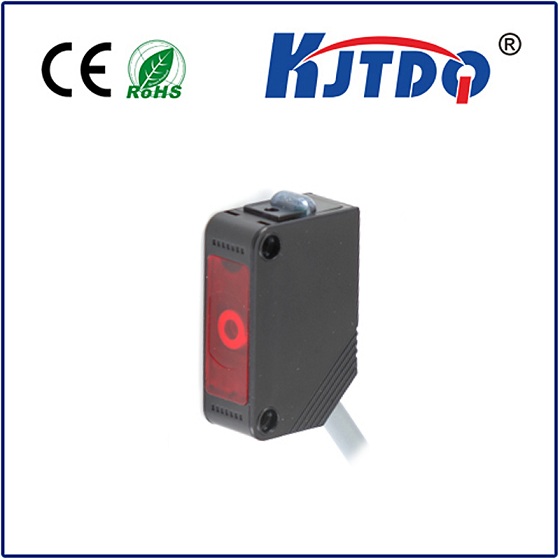
In the world of modern engineering, manufacturing, and automation, the demand for accurate, reliable, and fast distance measurement is paramount. At the heart of many advanced systems lies a critical component: the Standard Laser Rangefinder Sensor. This technology has evolved from a specialized tool into a fundamental building block for a vast array of applications, driving efficiency and innovation across industries.
The principle behind a Standard Laser Rangefinder Sensor is elegantly precise. It emits a focused pulse or modulated beam of laser light towards a target. The sensor then precisely measures the time it takes for the light to reflect back to its receiver. Using the constant speed of light, the sensor's internal processor calculates the distance with exceptional accuracy. This time-of-flight (ToF) method provides a non-contact measurement solution that is both swift and dependable, eliminating the errors and wear associated with physical contact methods.
What defines a "standard" sensor in this context is its balanced combination of key performance parameters suitable for widespread industrial and commercial use. Typically, these sensors offer a measurement range that covers common operational distances, from a few centimeters to several hundred meters, depending on the model. Their accuracy is consistently high, often within millimeter or even sub-millimeter tolerances, ensuring data integrity for critical processes. Standard models also feature robust housing to withstand typical environmental challenges like dust, moisture, and vibration, ensuring longevity in demanding settings. Communication is streamlined through common industrial interfaces like analog voltage/current, RS232, RS485, or Ethernet, allowing for seamless integration into existing control systems.
The versatility of the Standard Laser Rangefinder Sensor is demonstrated through its pervasive use. In industrial automation, these sensors are indispensable for positioning robotic arms, controlling material handling systems, and monitoring product dimensions on assembly lines. They ensure robots place components with pinpoint accuracy and verify that every product meets strict size specifications. In the construction and surveying sectors, they expedite tasks like area calculation, volume estimation, and layout planning, replacing cumbersome tape measures with instant digital readings. Furthermore, they are integral to the development of autonomous vehicles and drones, providing essential data for obstacle detection, navigation, and terrain mapping.
When selecting a Standard Laser Rangefinder Sensor for a project, several practical factors must be considered. The required measurement range and resolution are primary drivers. The reflectivity and nature of the target material can affect performance; some sensors are optimized for low-reflectivity surfaces. Environmental conditions such as ambient light, fog, or temperature extremes may necessitate sensors with specific filtering or protective features. Finally, the choice of output signal and the ease of integration with the host controller are crucial for a successful implementation.
Looking ahead, the trajectory for Standard Laser Rangefinder Sensors points toward even greater miniaturization, enhanced power efficiency, and improved performance in adverse conditions. As the Internet of Things (IoT) and Industry 4.0 continue to expand, these sensors will become even more interconnected and intelligent, providing not just raw distance data but also diagnostic information and predictive insights. Their role as a fundamental enabler of precision will only grow, solidifying their position as a key technology for building smarter, more efficient, and more automated systems across the globe.